


Progressive regression of left ventricular hypertrophy two years after bariatric surgery
- PMID: 20569762
- PMCID: PMC2935191
- DOI: 10.1016/j.amjmed.2009.11.020
Progressive regression of left ventricular hypertrophy two years after bariatric surgery
Erratum in
- Am J Med. 2010 Oct;123(10):e13
Abstract
Background: Obesity is a systemic disorder associated with an increase in left ventricular mass and premature death and disability from cardiovascular disease. Although bariatric surgery reverses many of the hormonal and hemodynamic derangements, the long-term collective effects on body composition and left ventricular mass have not been considered before. We hypothesized that the decrease in fat mass and lean mass after weight loss surgery is associated with a decrease in left ventricular mass.
Methods: Fifteen severely obese women (mean body mass index [BMI]: 46.7+/-1.7 kg/m(2)) with medically controlled hypertension underwent bariatric surgery. Left ventricular mass and plasma markers of systemic metabolism, together with body mass index (BMI), waist and hip circumferences, body composition (fat mass and lean mass), and resting energy expenditure were measured at 0, 3, 9, 12, and 24 months.
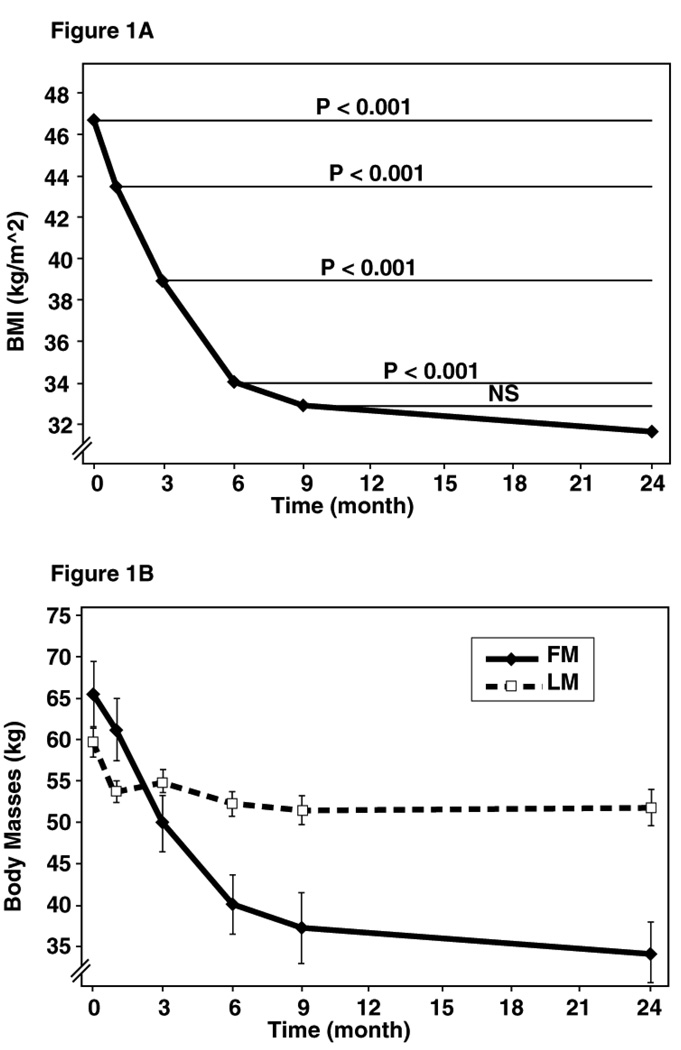
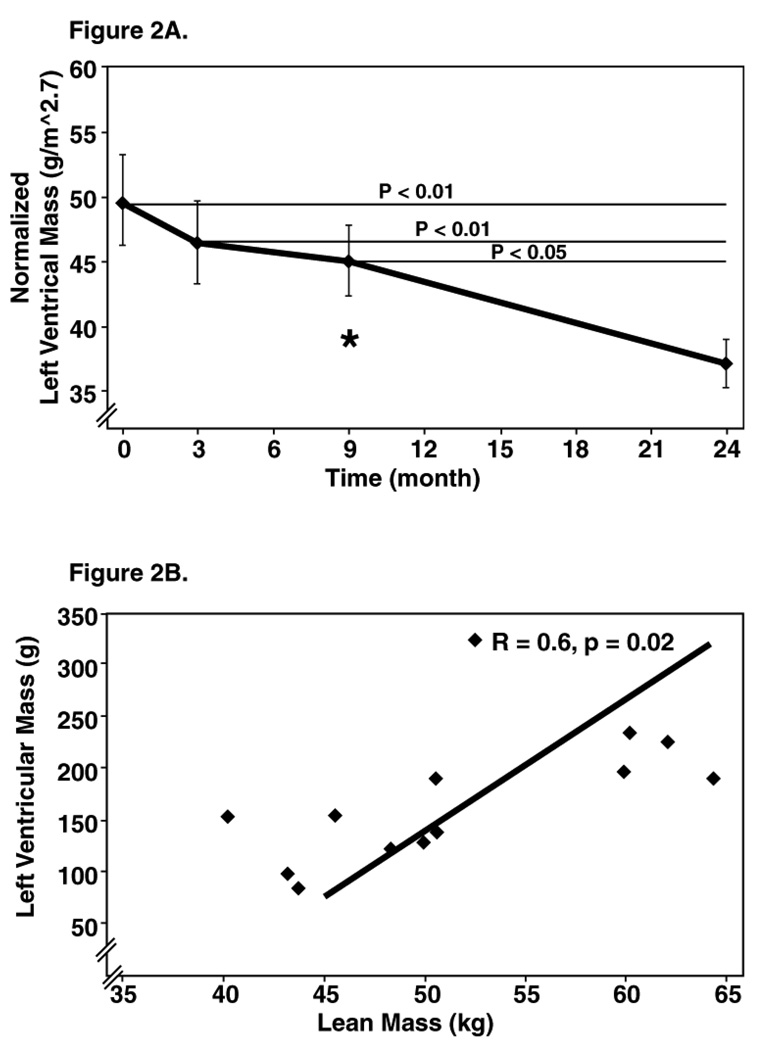
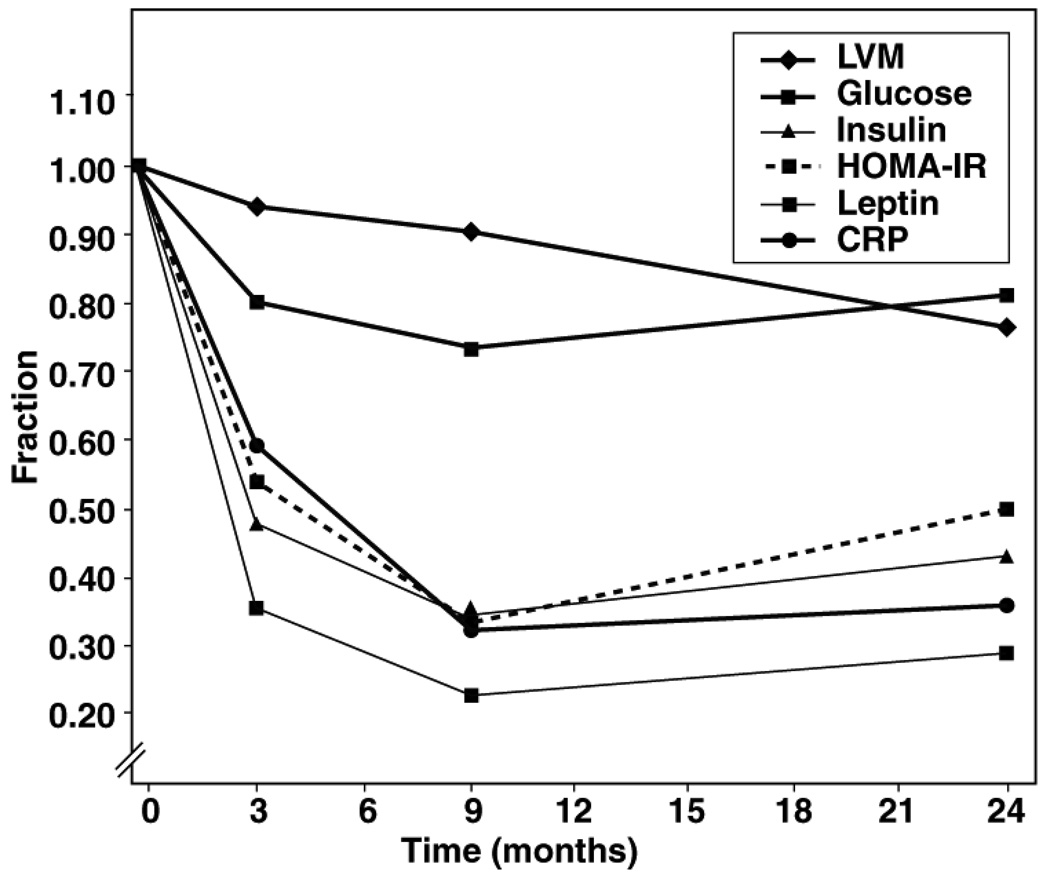
Results: Left ventricular mass continued to decrease linearly over the entire period of observation, while rates of weight loss, loss of lean mass, loss of fat mass, and resting energy expenditure all plateaued at 9 [corrected] months (P <.001 for all). Parameters of systemic metabolism normalized by 9 months, and showed no further change at 24 months after surgery.
Conclusions: Even though parameters of obesity, including BMI and body composition, plateau, the benefits of bariatric surgery on systemic metabolism and left ventricular mass are sustained. We propose that the progressive decrease of left ventricular mass after weight loss surgery is regulated by neurohumoral factors, and may contribute to improved long-term survival.
Copyright 2010 Elsevier Inc. All rights reserved.
Conflict of interest statement
Figures
References
-
- Mokdad AH, Marks JS, Stroup D, Gerberding J. Actual Causes of Death in the United States, 2000. J Am Med Assoc. 2004;291:1238–1245. - PubMed
-
- Olshansky SJ, Passaro DJ, Hershow RC, et al. A potential decline in life expectancy in the United States in the 21st century. N Engl J Med. 2005;352:1138–1145. - PubMed
-
- Adams TD, Gress RE, Smith SC, et al. Long-term mortality after gastric bypass surgery. N Engl J Med. 2007;357:753–761. - PubMed
-
- Brolin RE. Bariatric surgery and long-term control of morbid obesity. J Am Med Assoc. 2002;288:2793–2796. - PubMed
-
- Shah M, Simha V, Garg A. Review: long-term impact of bariatric surgery on body weight, comorbidities, and nutritional status. J Clin Endocrinol Metab. 2006;91:4223–4231. - PubMed
Publication types
MeSH terms
Grants and funding
LinkOut - more resources
Full Text Sources
Medical
