


Peroxisome proliferator-activated receptors-alpha modulate dopamine cell activity through nicotinic receptors
- PMID: 20570248
- PMCID: PMC2907468
- DOI: 10.1016/j.biopsych.2010.04.016
Peroxisome proliferator-activated receptors-alpha modulate dopamine cell activity through nicotinic receptors
Abstract
Background: Modulation of midbrain dopamine neurons by nicotinic acetylcholine receptors (nAChRs) plays an important role in behavior, cognition, motivation, and reward. Specifically, nAChRs containing beta2 subunits (beta2-nAChRs) switch dopamine cells from a resting to an excited state. However, how beta2-nAChRs can be modulated and thereby how dopamine firing activity is affected remains elusive. Because changes in dopamine cell activity are reflected in the dynamics of microcircuits generating altered responses to stimuli and inputs, factors regulating their state are fundamental. Among these, endogenous ligands to the nuclear receptor-transcription factor peroxisome proliferator-activated receptors type-alpha (PPARalpha) have been recently found to suppress nicotine-induced responses of dopamine neurons.
Methods: We used both in vitro and in vivo electrophysiological techniques together with behavioral analysis to investigate on the effects of modulation of PPARalpha in Sprague-Dawley rat and C57BLJ/6 mouse dopamine neurons and their interactions with beta2-nAChRs. To this aim, we took advantage of a selective reexpression of beta2-nAChR exclusively in dopamine cells by stereotaxically injecting a lentiviral vector in the mouse ventral tegmental area.
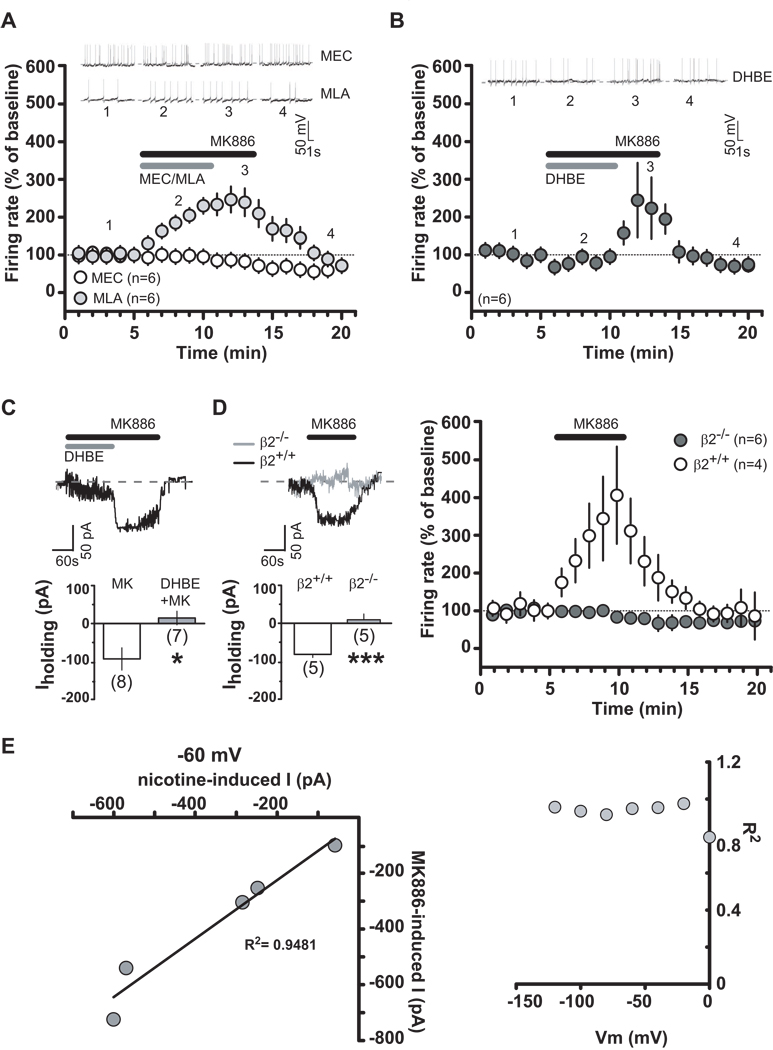
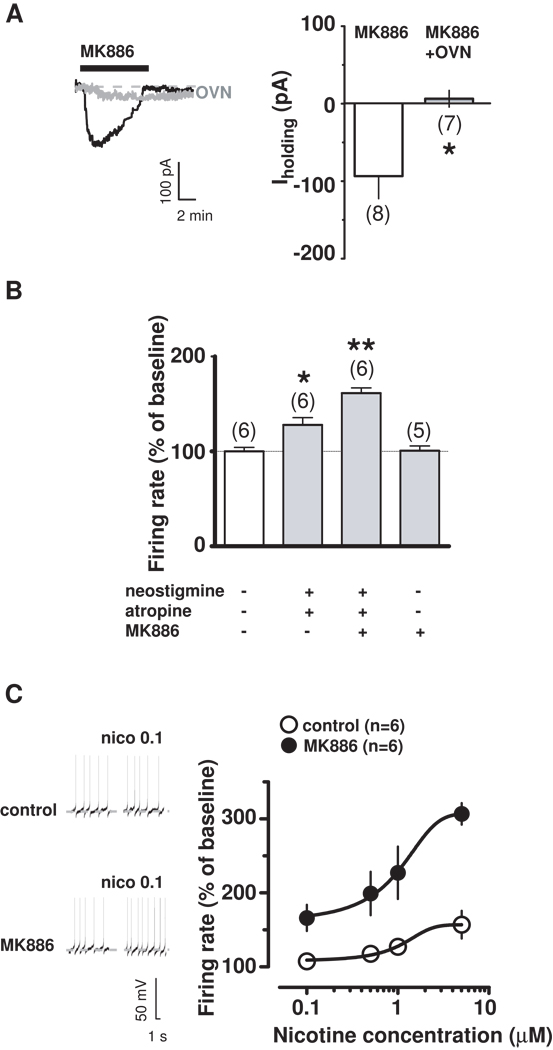
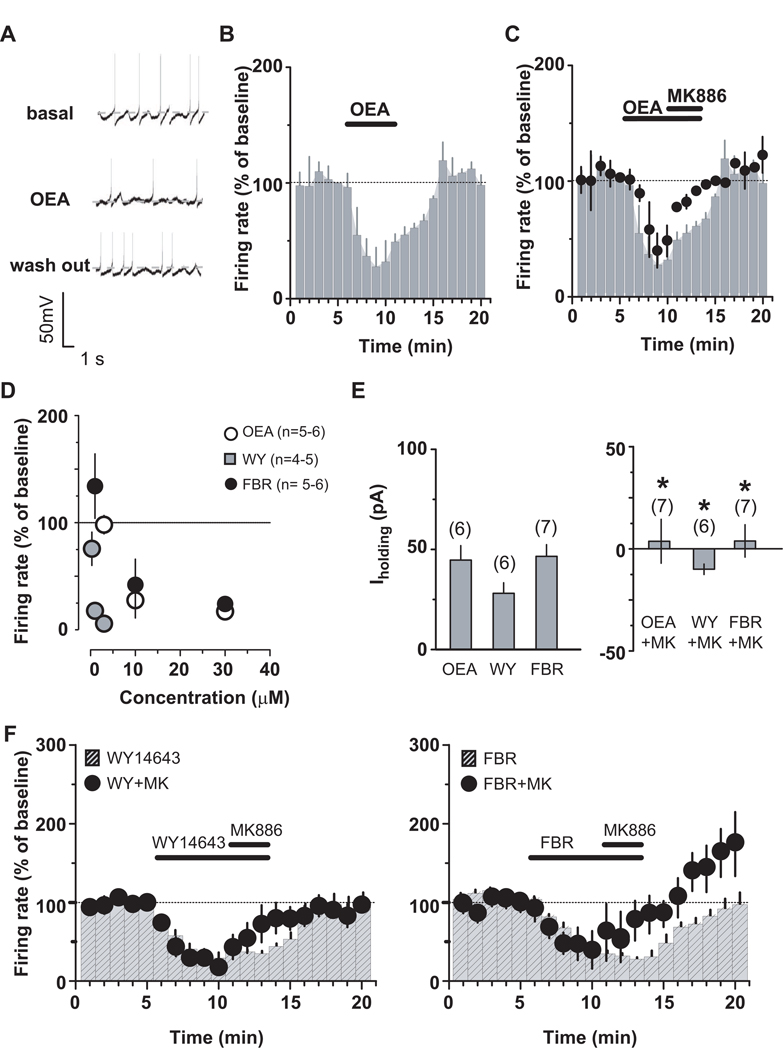
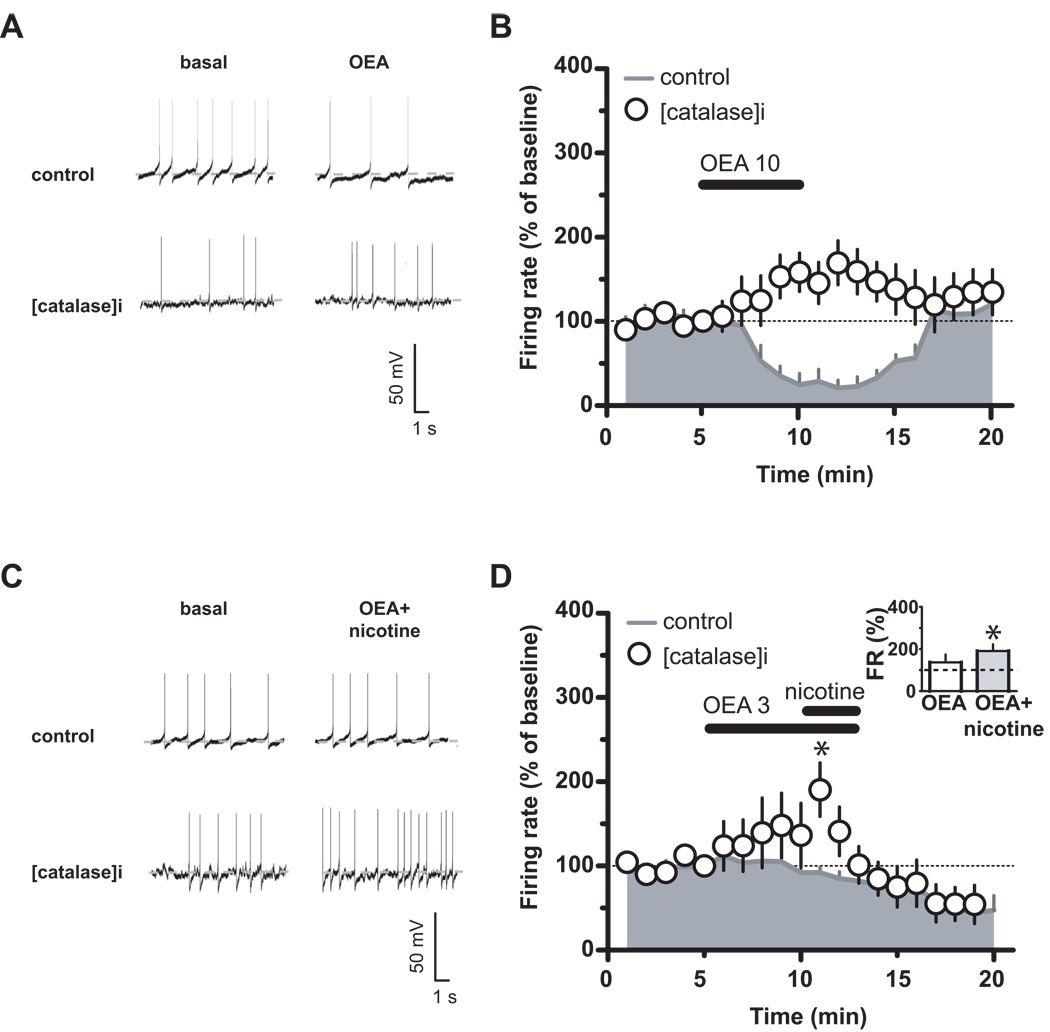
Results: We found that activation of PPARalpha decreases in vitro both dopamine cell activity and ventral tegmental area net output through negative modulation of beta2-nAChRs. Additionally, PPARalpha activation in vivo reduces both the number of spontaneously active dopamine neurons and nicotine-induced increased locomotion.
Conclusions: Our combined findings suggest PPARalpha ligands as important negative modulators of beta2-nAChRs on dopamine neurons. Thus, PPARalpha ligands might prove beneficial in treating disorders in which dopamine dysfunction plays a prominent role, such as schizophrenia and nicotine addiction.
Copyright 2010 Society of Biological Psychiatry. All rights reserved.
Conflict of interest statement
The authors reported no biomedical financial interests or potential conflicts of interest.
Figures


References
-
- Rebec GV, Grabner CP, Johnson M, Pierce RC, Bardo MT. Transient increases in catecholaminergic activity in medial prefrontal cortex and nucleus accumbens shell during novelty. Neuroscience. 1997;76:707–714. - PubMed
-
- Schultz W. Behavioral dopamine signals. Trends Neurosci. 2007;30:203–210. - PubMed
-
- Schultz W. The phasic reward signal of primate dopamine neurons. Adv Pharmacol. 1998;42:686–690. - PubMed
-
- Fields HL, Hjelmstad GO, Margolis EB, Nicola SM. Ventral tegmental area neurons in learned appetitive behavior and positive reinforcement. Annu Rev Neurosci. 2007;30:289–316. - PubMed
Publication types
MeSH terms
Substances
Grants and funding
LinkOut - more resources
Full Text Sources
Other Literature Sources
