


Alcohol-induced facial dysmorphology in C57BL/6 mouse models of fetal alcohol spectrum disorder
- PMID: 20570474
- PMCID: PMC2955190
- DOI: 10.1016/j.alcohol.2010.04.002
Alcohol-induced facial dysmorphology in C57BL/6 mouse models of fetal alcohol spectrum disorder
Abstract
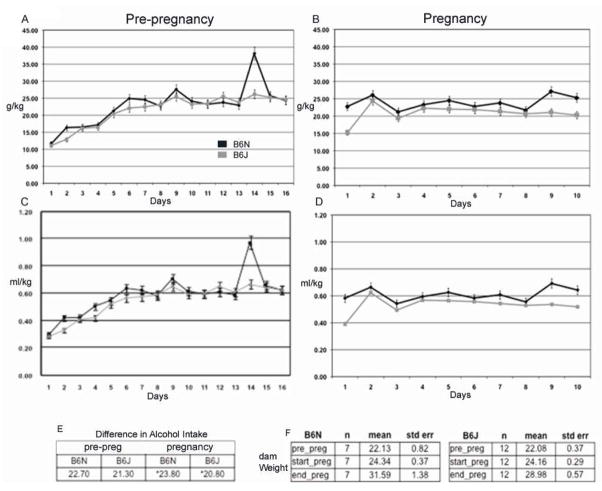
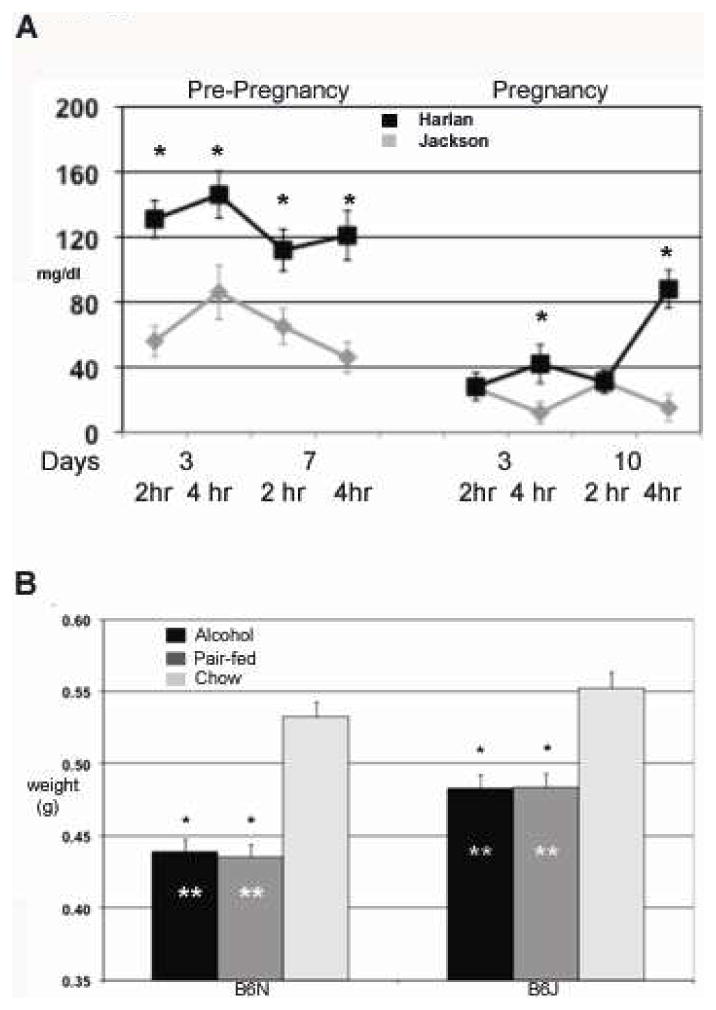
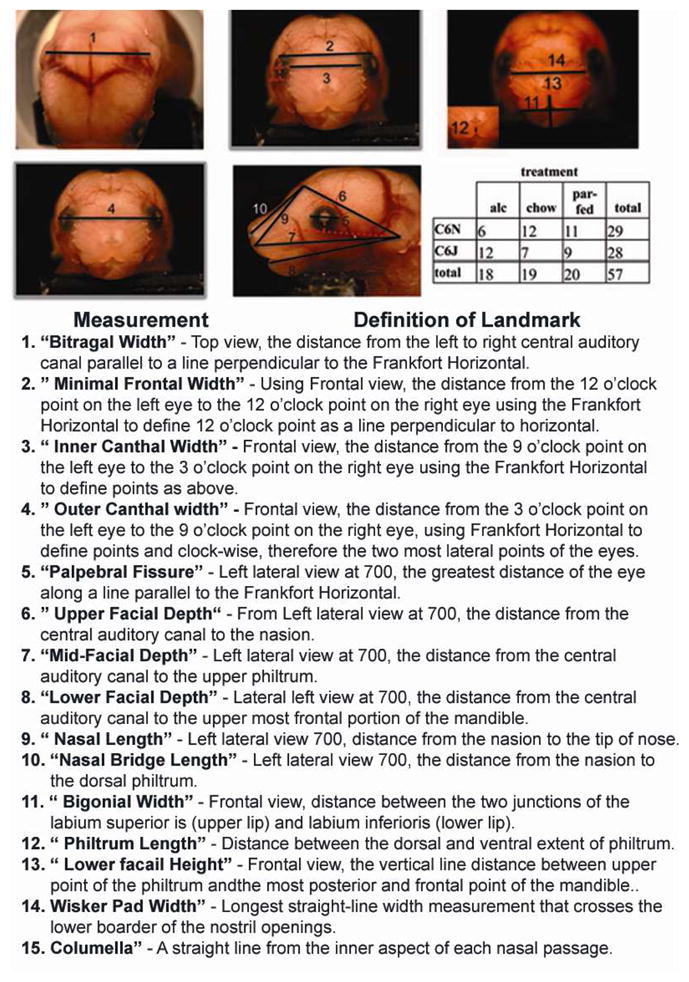
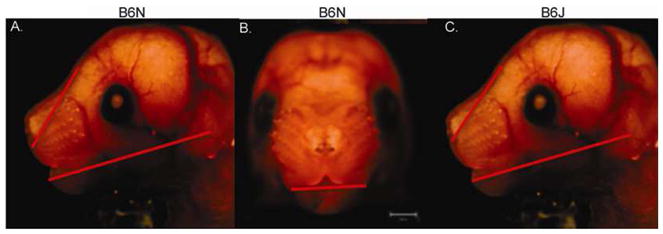
Alcohol consumption during pregnancy causes fetal alcohol spectrum disorder (FASD), which includes a range of developmental deficits. Fetal alcohol syndrome is the most severe form of FASD and can be diagnosed with pathognomonic facial features such as a smooth philtrum, short palpebral fissure, and thin upper vermilion. However, many children with developmental damage because of prenatal alcohol exposure exhibit none, or only a subset, of the above features, making diagnosis difficult. This study explored novel analyses to quantify the effect of a known dose of alcohol on specific facial measurements in substrains C57BL/B6J (B6J) and C57BL/6NHsd (B6N) mice. Mouse dams were provided alcohol (Alc) consisting of 4.8% (vol/vol) alcohol in a liquid diet for 16 days prepregnancy and chow and water diet during mating, and then the alcohol liquid diet was reinstated on gestational days 7 (E7) to gestational day 17 (E17). Treatment controls included a pair-fed (PF) group given matched volumes of an alcohol-free liquid diet made isocalorically and a group given ad lib access to lab chow and water (Chow). Maternal diet intake (Alc and PF), blood alcohol concentrations (BACs), embryo weights, and 15 morphometric facial measurements for E17 embryos were analyzed. B6N dams drank more alcohol during pregnancy and generated higher BAC than B6J dams. Both the Alc and PF treatments induced significant reductions in embryo weights relative to Chow in both substrains. Alcohol treatments produced significant changes, relative to controls, in 4 of the 15 facial measures for the B6N substrain but only in two measures for the B6J substrain. Discriminant analysis demonstrated successful classification of the alcohol-exposed versus nonalcohol-exposed B6N embryos, with a high sensitivity of 86%, specificity 80%, and overall classification (total correct 83%), whereas B6J mice yielded sensitivity of 80%, specificity 78%, and overall correct classification in 79%. In addition, B6N mice showed significantly more effects of pair feeding on these facial measures than did B6J mice, suggesting that the B6N substrain may be more vulnerable to nutritional stress during pregnancy. Overall, these data indicate that both B6N and B6J mice were vulnerable to alcohol but show differences in the severity and location of alcohol-induced dysmorphic facial features and may parallel findings from human studies comparing different ethnic groups. Furthermore, these findings suggest that discriminant analysis may be useful in predicting alcohol exposure in either mouse substrains.
Copyright © 2010 Elsevier Inc. All rights reserved.
Figures
References
-
- Astley SJ. Comparison of the 4-digit diagnostic code and the Hoyme diagnostic guidelines for fetal alcohol spectrum disorders. Pediatrics. 2006;118:1532–1545. - PubMed
-
- Astley SJ, Clarren SK. Measuring the facial phenotype of individuals with prenatal alcohol exposure: correlations with brain dysfunction. Alcohol Alcohol. 2001;36:147–159. - PubMed
-
- Astley SJ, Clarren SK. Diagnosing the full spectrum of fetal alcohol-exposed individuals: introducing the 4-digit diagnostic code. Alcohol Alcohol. 2000;35:400–410. - PubMed
-
- Astley SJ, Stachowiak J, Clarren SK, Clausen C. Application of the fetal alcohol syndrome facial photographic screening tool in a foster care population. J Pediatrics. 2002;141:712–717. - PubMed
-
- Barr HM, Streissguth AP. Identifying maternal self-reported alcohol use associated with fetal alcohol spectrum disorders. Alcohol Clin Exp Res. 2001;25:283–287. - PubMed
Publication types
MeSH terms
Substances
Grants and funding
LinkOut - more resources
Full Text Sources
Other Literature Sources
Medical
Miscellaneous
