. 2010 Jul;9(7):1977-84.
doi: 10.1158/1535-7163.MCT-10-0141. Epub 2010 Jun 22.

PS-341 and histone deacetylase inhibitor synergistically induce apoptosis in head and neck squamous cell carcinoma cells

Affiliations

PS-341 and histone deacetylase inhibitor synergistically induce apoptosis in head and neck squamous cell carcinoma cells

Jinkoo Kim et al. Mol Cancer Ther. 2010 Jul.

Abstract

Proteasome inhibitor PS-341 (also known as bortezomib) and histone deacetylase (HDAC) inhibitors have emerged as novel therapeutic agents for a variety of malignancies. In this study, we examined whether PS-341 and the HDAC inhibitor trichostatin A (TSA) induced apoptosis in head and neck squamous cell carcinoma (HNSCC), a common and lethal malignancy. We found that, although TSA treatment alone did not induce apoptosis in HNSCC cells, it significantly enhanced PS-341-induced apoptosis in HNSCC cells in vitro. Consistently, TSA significantly improved PS-341-mediated inhibition of HNSCC tumor growth in nude mice. Mechanistically, we found that TSA increased PS-341-induced Noxa expression and caspase activation in HNSCC cells. The knockdown of Noxa significantly reduced apoptosis induced by cotreatment of PS-341 and TSA. Taken together, our results provide new insight into the mechanisms of synergistic antitumor activity of the PS-341 and HDAC inhibitor regimen, offering a new therapeutic strategy for HNSCC patients.


Conflict of interest statement

No potential conflicts of interest were disclosed.

Figures
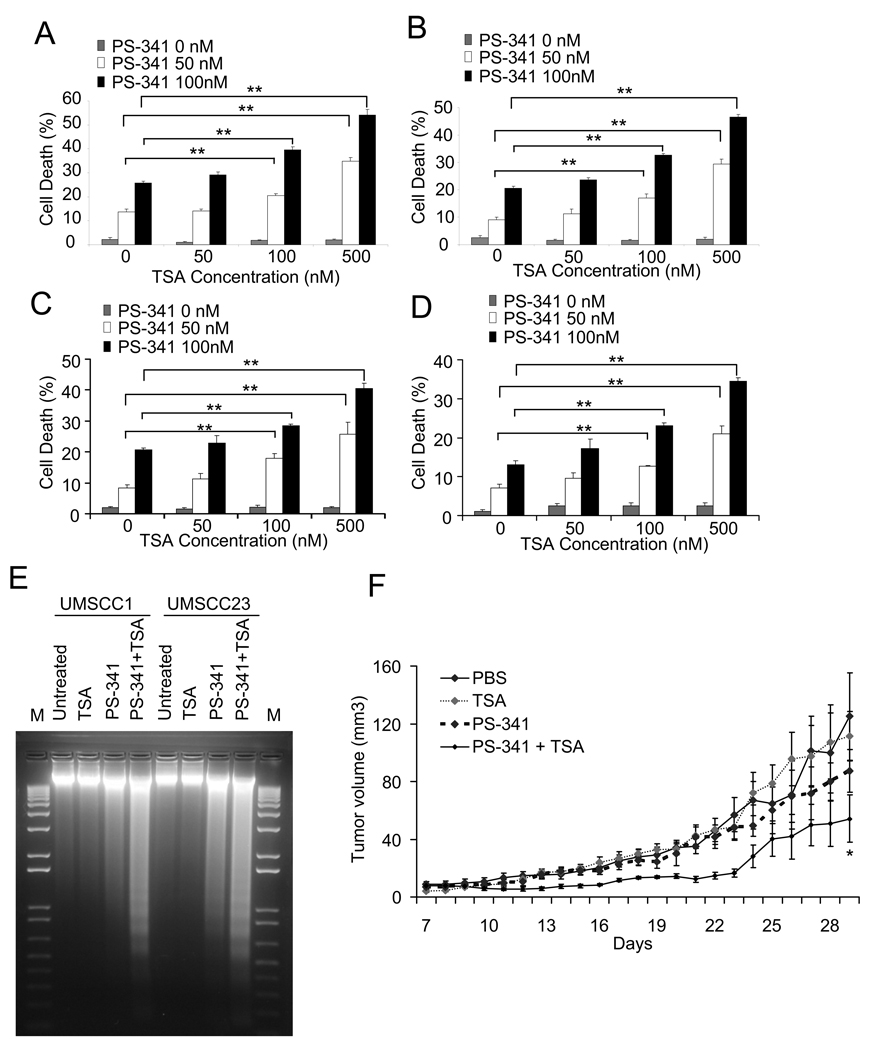
Figure 1
Figure 1
TSA enhances PS-341-mediated apoptosis in HNSCC cells. A, TSA enhanced the cell death induced by PS-341 in UMSCC1 cells. Cell viability was determined by the trypan blue exclusion assay. The assays were performed with triplicate samples, and the results are representative of three independent experiments (**P < 0.01). Error bars depict standard deviation. B, C and D, TSA enhanced PS-341-induced cell death in UMSCC23 (B), UMSCC9 (C), and FaDu (D). **P < 0.01. E, TSA enhanced PS-341-mediated apoptosis in HNSCC cells. UMSCC-1 and UMSCC-23 cells were treated with PS-341 alone, TSA alone, and PS-341 and TSA together for 24 h. After treatment, the detached and attached cells were pooled, and genomic DNA was extracted with phenol-chloroform-isoamyl alcohol and genomic DNAs were separated on a 1.5% agarose gel. M, 1 kb DNA ladder. F. TSA enhanced PS-341-mediated inhibition of HNSCC tumor growth in vivo. UMSCC1 cells were subcutaneously inoculated into nude mice for one week and then treated with vehicle control, TSA, PS-341, or PS-341 plus TSA for three weeks. Tumor size was daily measured for indicated days. *P < 0.05 (n = 5; PS-341 plus TSA vs PS-341 or TSA).
Figure 2
Figure 2
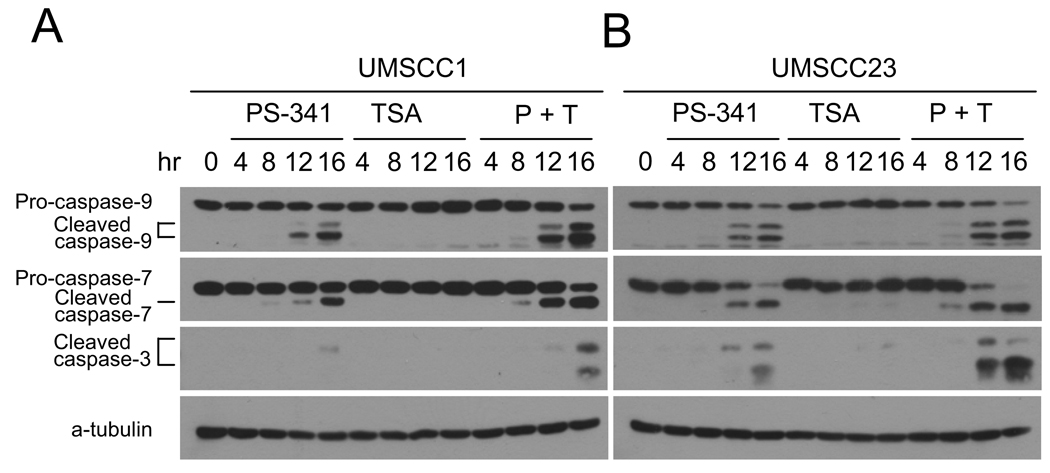
TSA enhances caspase activation induced by PS-341 in HNSCC cells. A, TSA enhanced caspase activation induced by PS-341 in UMSCC1 cells. UMSCC-1 cells were treated with PS-341 alone, TSA alone, or PS-341 and TSA together for 0, 4, 8, 12, or 16 h. Whole cell extracts were prepared, and 50- µg aliquots of proteins were probed with anti-caspase-3, anti-caspase-7, and anti-caspase-9 antibodies. For the loading control, the membrane was stripped and re-probed with monoclonal antibodies against α-tubulin. B, TSA enhanced caspase activation induced by PS-341 in UMSCC23 cells. P+T, PS-341 + TSA.
Figure 3
Figure 3
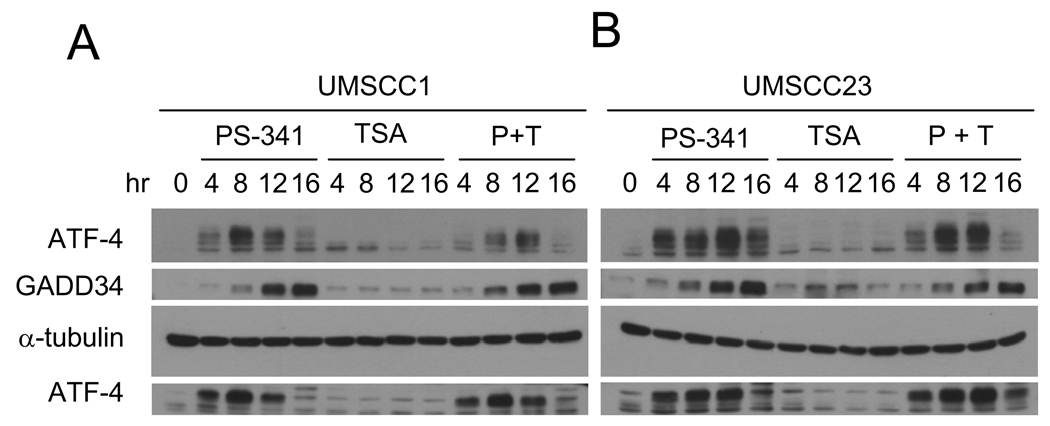
TSA does not modulate PS-341-induced ER stress in HNSCC cells. A and B, TSA did not affect the expression of ATF4 and GADD34 induced by PS-341 in HNSCC cells. Whole cell extracts were prepared, and 50- µg aliquots of proteins were examined with polyclonal antibodies against ATF-4 and GADD-34. For loading control, the membranes were stripped and re-probed with monoclonal antibodies against α-tubulin. P + T, PS-341 + TSA.
Figure 4
Figure 4
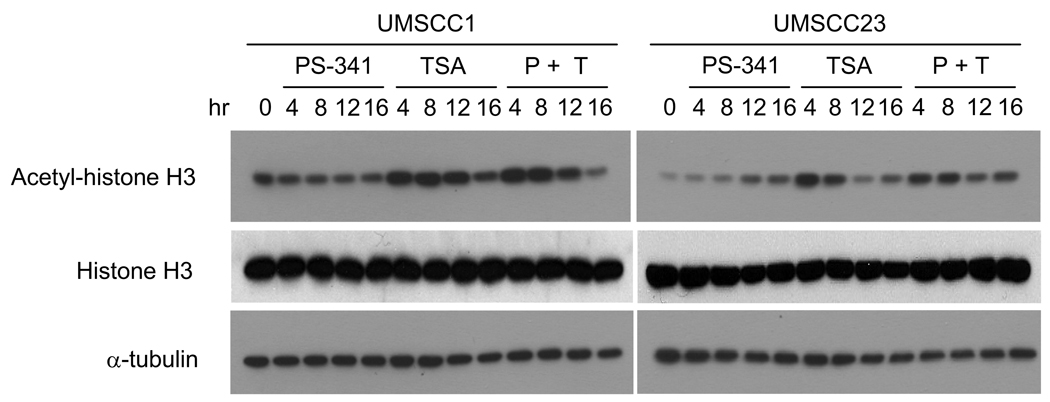
Promoting histone H3 acetylation in HNSCC cells by TSA. A and B, TSA induced hyperacetylation of histone H3 in HNSCC cells. UMSCC1 and UMSCC23 cells were treated with PS-341 alone (0.5 µM), TSA alone (300 nM), or PS-341 and TSA together for indicated times. 50- µg aliquots of proteins were probed with anti-acetyl-histone H3 antibodies (1:1000). For a loading control, the membrane were stripped and re-probed with monoclonal antibodies against α-tubulin.
Figure 5
Figure 5
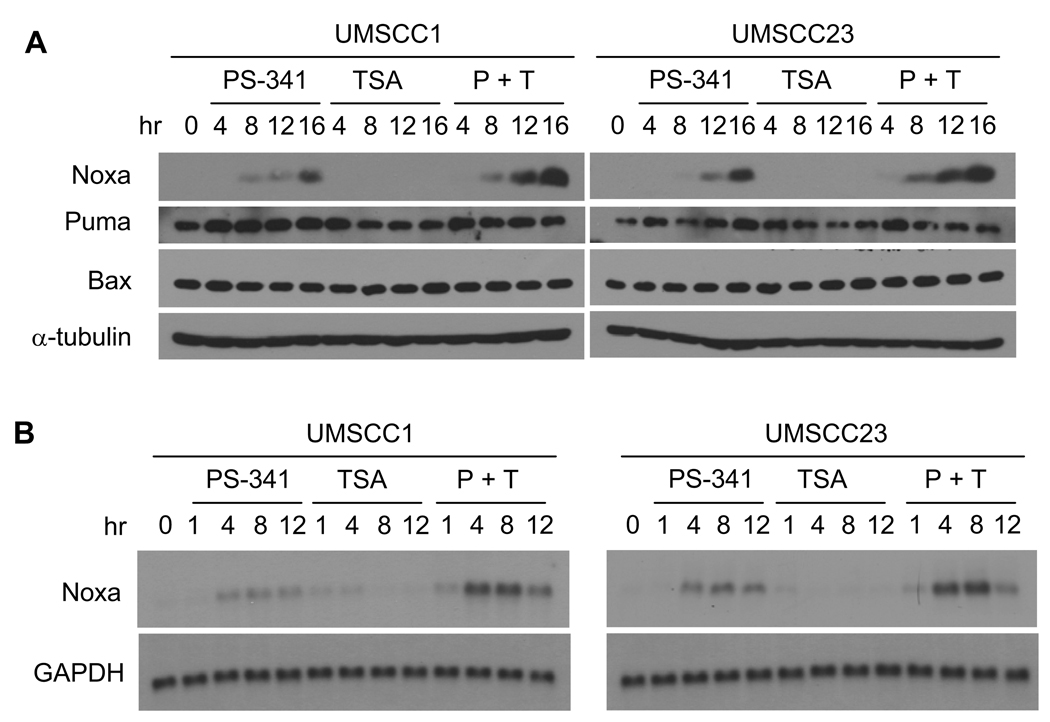
TSA enhances PS-341-induced Noxa expression. A, TSA enhanced PS-341-induced Noxa expression as determined by Western blot analysis. Cells were treated with PS-341 alone, TSA alone, or PS-341 and TSA together for indicated time periods. 50-µg aliquots of cell lysates were probed with anti-Noxa, anti-Puma, or anti-Bax antibodies. α-Tubulin was utilized as an internal control. B, TSA enhanced Noxa mRNA expression induced by PS-341. Total RNA was isolated and determined by Real-time PCR.
Figure 6
Figure 6
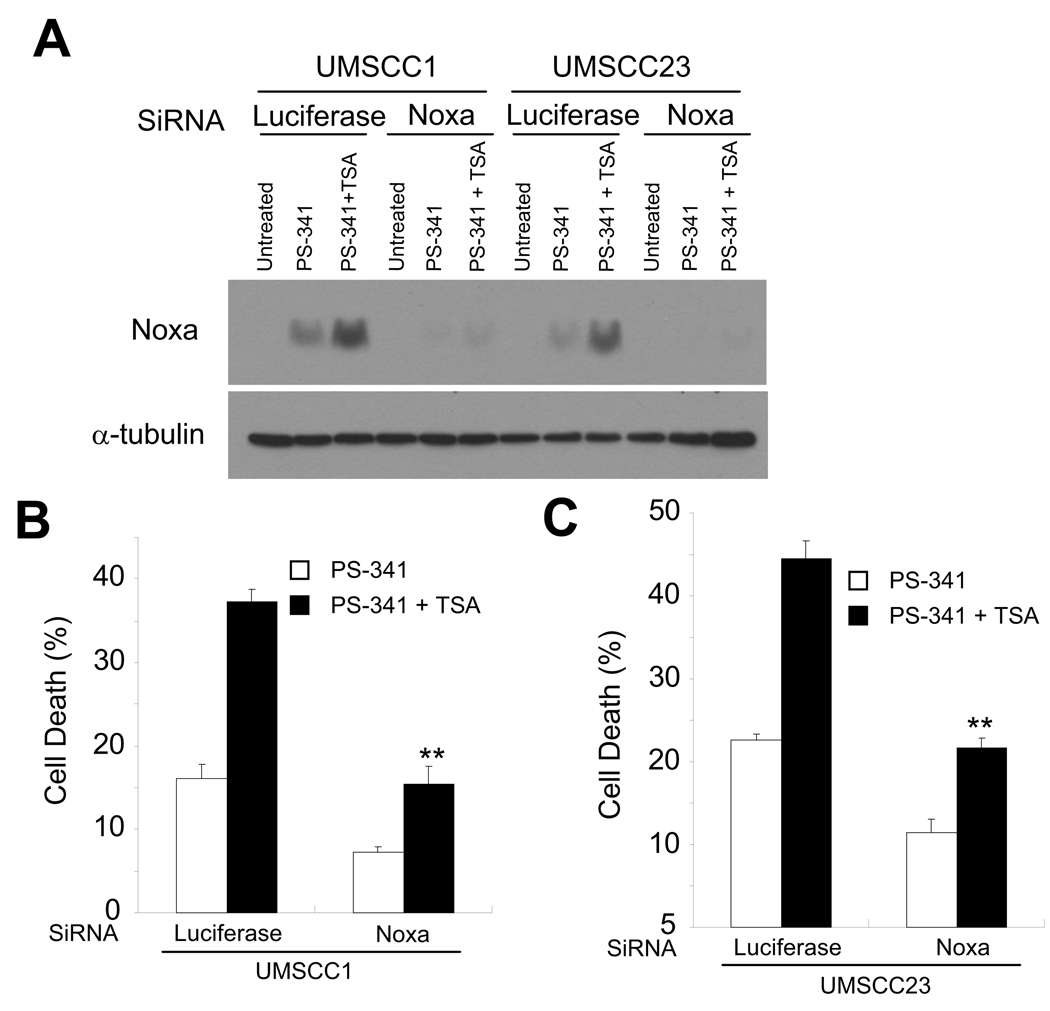
Noxa plays a critical role in TSA- and PS-341-induced apoptosis in HNSCC cells. A, Knock-down of Noxa in UMSCC1 and UMSCC23 cells. SCC cells were transfected with Noxa siRNA or control luciferase siRNA using fugene. Cell lysates were probed with anti-Noxa antibodies. α-Tubulin was utilized as an internal control. B, Knock-down of Noxa inhibited PS-341 and TSA-induced apoptosis. Cells were transfected with siRNA as described in A. 48 h after transfection, cells were treated with PS-341 alone or PS-341 and TSA together for 16 h. Cell viability was determined by Trypan blue exclusion assay. The results are average values from three independent experiments (** P < 0.01).

References

    1. Lemaire F, Millon R, Wasylyk B, et al. Differential expression profiling of head and neck squamous cell carcinoma (HNSCC) Br J Cancer. 2003;89:1940–1949. - PMC - PubMed
    1. Pisani P, Bray F, Parkin DM. Estimates of the world-wide prevalence of cancer for 25 sites in the adult population. Int J Cancer. 2002;97:72–81. - PubMed
    1. Pisani P, Bray F, Ferlay J, Parkin DM. Global Cancer Statistics, 2002. CA Cancer J Clin. 2005;55:74–108. - PubMed
    1. Fribley A, Evenchik B, Wang CY, et al. Proteasome inhibitor PS-341 induces apoptosis in cisplatin-resistant squamous cell carcinoma cells by induction of Noxa. J Biol Chem. 2006;281:31440–31447. - PubMed
    1. Fribley A, Zeng Q, Wang CY. Proteasome inhibitor PS-341 induces apoptosis through induction of endoplasmic reticulum stress-reactive oxygen species in head and neck squamous cell carcinoma cells. Mol Cell Biol. 2004;24 9695-04. - PMC - PubMed

Publication types

MeSH terms