


Using the information-motivation behavioral model to predict sexual behavior among underserved minority youth
- PMID: 20573141
- PMCID: PMC4720171
- DOI: 10.1111/j.1746-1561.2010.00503.x
Using the information-motivation behavioral model to predict sexual behavior among underserved minority youth
Abstract
Background: Testing, refining, and tailoring theoretical approaches that are hypothesized to reduce sexual risk behaviors among adolescent subpopulations is an important task. Relatively little is known about the relationship between components of the information-motivation-behavior (IMB) model and sexual behaviors among underage minority youth. Using the IMB model, this study examines predictors of risky sexual behavior among underserved Hispanic and African-American youth.
Methods: This cross-sectional study was conducted with a sample of 380 youths aged 11-17 years recruited in Los Angeles, California, and utilized latent variable models to examine interrelationships and predictive relations among IMB model variables associated with risky sexual behavior.
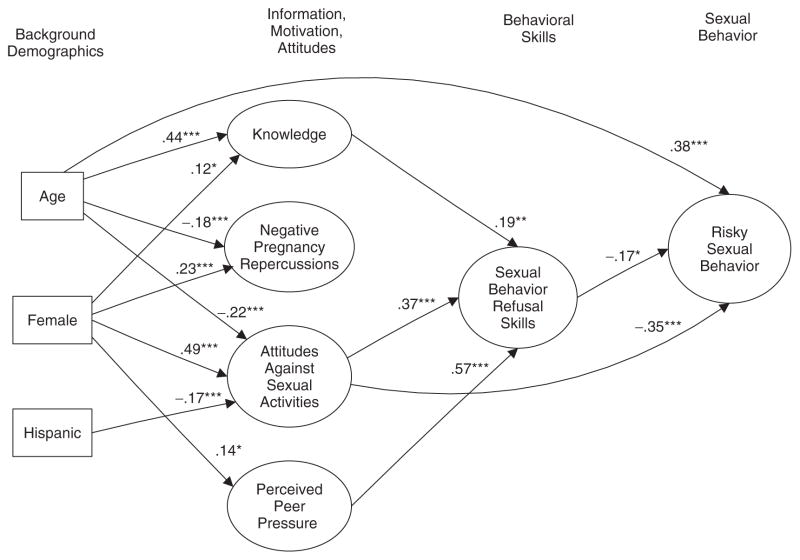
Results: Sixty percent of the participants aged 15-17 and 1 out of 10 participants aged 11-12 reported prior sexual intercourse. Of the sexually active, more than half reported having unprotected sex and 11% had sexual intercourse with 4 or more partners. Results of the structural equation model indicated that older age and attitudes against sexual activities had significant, direct impacts on risky sexual behaviors. Behavioral refusal skills, positioned as an intervening variable, also significantly predicted less risky sex. Knowledge, attitudes against sexual activities, and perceived peer pressure against sexual behavior predicted sexual refusal skills. Additionally, there were significant indirect effects on risky sexual behavior mediated through behavioral refusal skills.
Conclusion: A large number of disadvantaged minority urban youth are engaged in risky sexual behaviors. Intervention programs, particularly those targeting preadolescents, should focus on building long-lasting behavioral skills that emphasize the reduction of peer pressure and normative influences on risky sexual behaviors. Components of the IMB model clearly have a role in the design of efficacious interventions.
Figures
References
-
- Fisher JD, Fisher WA, Misovich SJ, Kimble DL, Malloy TE. Changing AIDS risk behavior: effects of an intervention emphasizing AIDS risk reduction information, motivation, and behavioral skills in a college student population. Health Psychol. 1996;15(2):114–123. - PubMed
-
- Fisher JD, Fisher WA, Bryan AD, Misovich SJ. Information-motivation-behavioral skills model-based HIV risk behavior change intervention for inner-city high school youth. Health Psychol. 2002;21(2):177–186. - PubMed
-
- Kiene SM, Barta WD. A brief individualized computer-delivered sexual risk reduction intervention increases HIV/AIDS preventive behavior. J Adolesc Health. 2006;39(3):404–410. - PubMed
Publication types
MeSH terms
Grants and funding
LinkOut - more resources
Full Text Sources
Medical
