


Sequence and phylogenetic analysis of H7N3 avian influenza viruses isolated from poultry in Pakistan 1995-2004
- PMID: 20576101
- PMCID: PMC2901269
- DOI: 10.1186/1743-422X-7-137
Sequence and phylogenetic analysis of H7N3 avian influenza viruses isolated from poultry in Pakistan 1995-2004
Abstract
Background: Avian influenza virus (AIV) infections have caused heavy economic losses to the poultry industry in Pakistan as well as numerous other regions worldwide. The first introduction of H7N3 AIV to Pakistan occurred during 1995, since then H7N3, H9N2 and H5N1 AIVs have each been sporadically isolated. This report evaluates the genetic origin of the H7N3 viruses from Pakistan collected 1995-2004 and how they disseminated within the country. To accomplish this we produced whole genome sequences for 6 H7N3 viruses and data for the HA and NA genes of an additional 7 isolates. All available sequence from H7N3 AIV from Pakistan was included in the analysis.
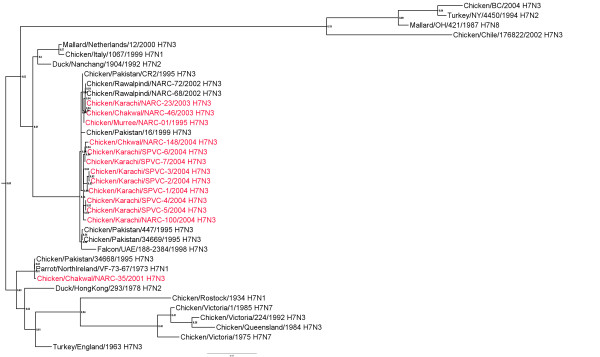
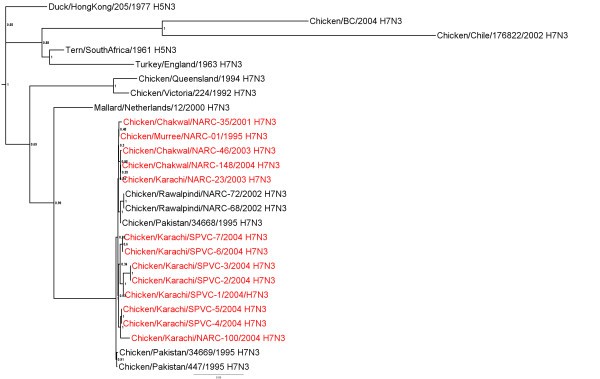
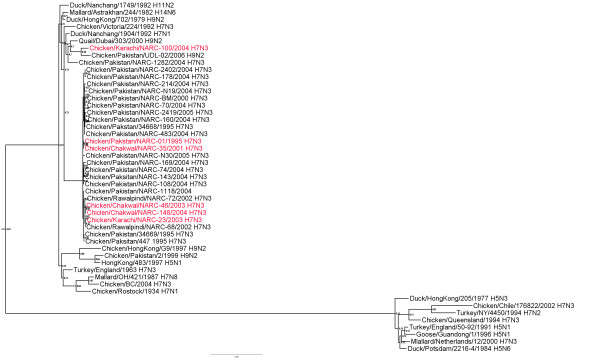
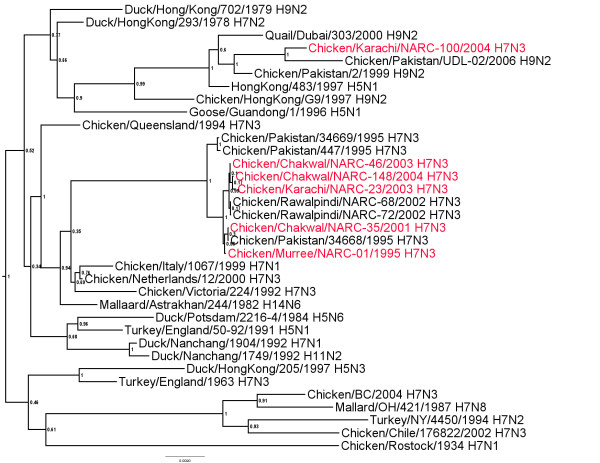
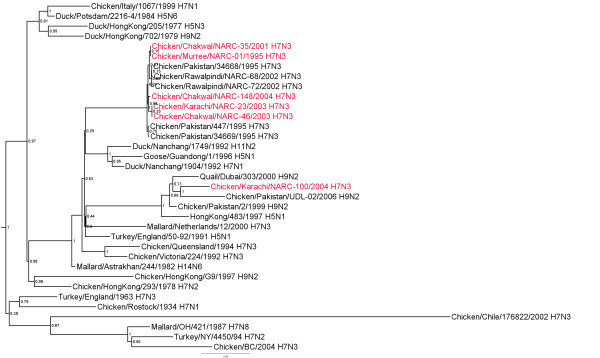
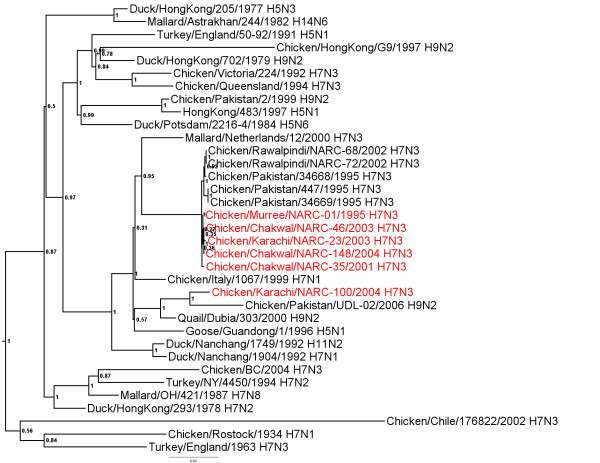
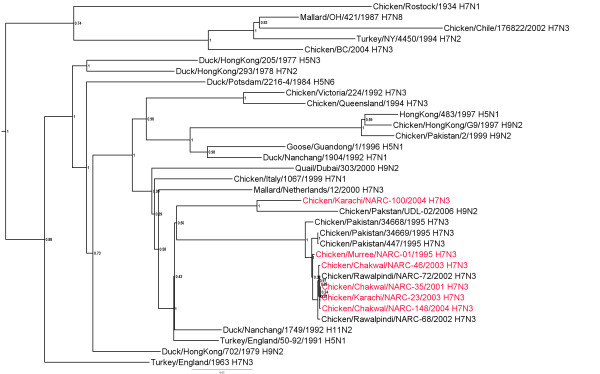
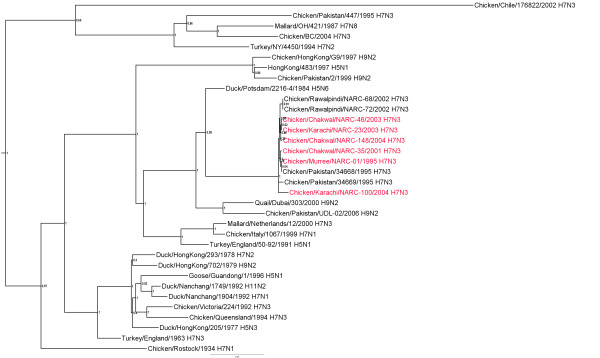
Results: Phylogenetic analysis revealed that there were two introductions of H7 into Pakistan and one N3 introduction. Only one of the H7 introductions appears to have become established in poultry in Pakistan, while the other was isolated from two separate outbreaks 6 years apart. The data also shows that reassortment has occurred between H7N3 and H9N2 viruses in the field, likely during co-infection of poultry. Also, with the exception of these few reassortant isolates, all 8 genes in the predominant H7N3 virus lineage have evolved to be phylogenetically distinct.
Conclusions: Although rigorous control measures have been implemented in commercial poultry in Pakistan, AIV is sporadically transmitted to poultry and among the different poultry industry compartments (broilers, broiler breeders, table egg layers). Since there is one primary H7 lineage which persists and that has reassorted with the H9N2 AIV in poultry, it suggests that there is a reservoir with some link commercial poultry. On a general level, this offers insight into the molecular ecology of AIV in poultry where the virus has persisted despite vaccination and biosecurity. This data also illustrates the importance of sustained surveillance for AIVs in poultry.
Figures
References
-
- Naeem K, Hussain M. An outbreak of avian influenza in poultry in Pakistan. Vet Rec. 1995;137:439. - PubMed
-
- Naeem K, Ullah A, Manvell RJ, Alexander DJ. Avian influenza A subtype H9N2 in poultry in Pakistan. Vet Rec. 1999;145:560. - PubMed
-
- Naeem K, Siddique N. Use of strategic vaccination for the control of avian influenza in Pakistan. DevBiol(Basel) 2006;124:145–150. - PubMed
-
- Naeem K. Proceedings of the Fourth International Symposium on Avian Influenza: avian influenza, a global problem. Georgia Center for Continuing Education, the University of Georgia, Athens, Georgia, USA; 1998. The Avian Influenza H7N3 outbreak in South Central Asia; pp. 31–35. May 28-31, 1997.
Publication types
MeSH terms
Substances
LinkOut - more resources
Full Text Sources
Medical
