


Women in Steady Exercise Research (WISER): study design and methods
- PMID: 20576482
- PMCID: PMC2930115
- DOI: 10.1016/j.cct.2010.05.008
Women in Steady Exercise Research (WISER): study design and methods
Abstract
Purpose: Observational studies have shown that physical activity is inversely associated with breast cancer etiology. WISER is a randomized controlled trial examining the effects of exercise training on oxidative stress, and hormonal and metabolic factors associated with breast cancer risk.
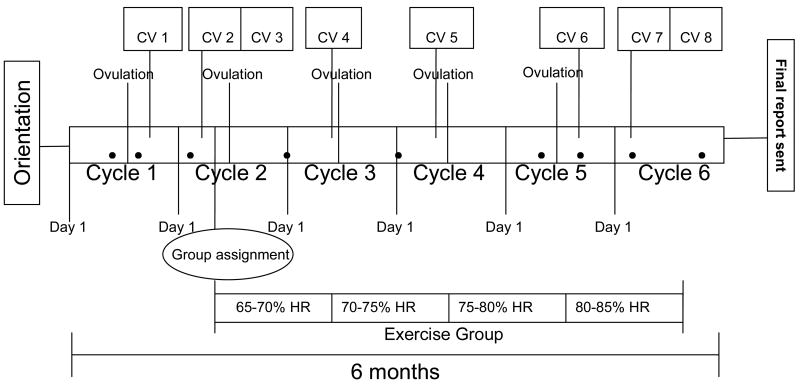
Method: Subjects were recruited via emails, flyers, and mass media advertising. Inclusion criteria included: sedentary, age 18-30 years, non-smokers, BMI 18-40 kg/m2, not using any hormonal contraceptives. After completion of all baseline measures subjects were randomized into a control group or an exercise intervention for 4 menstrual cycles. The exercise group was asked to complete five 45 min exercise sessions per week. Exercise intensity was set at 65-70% of maximum age- predicted heart rate (max HR) and increased every four weeks. All women provided blood samples four times during the study for measurement of blood F2-isoprostanes, hormones and IGF-axis proteins. In addition, 24-hour urine samples were collected at baseline and follow-up for measurement of estrogen metabolites, as well as 24-hour food records to monitor participants' diets.
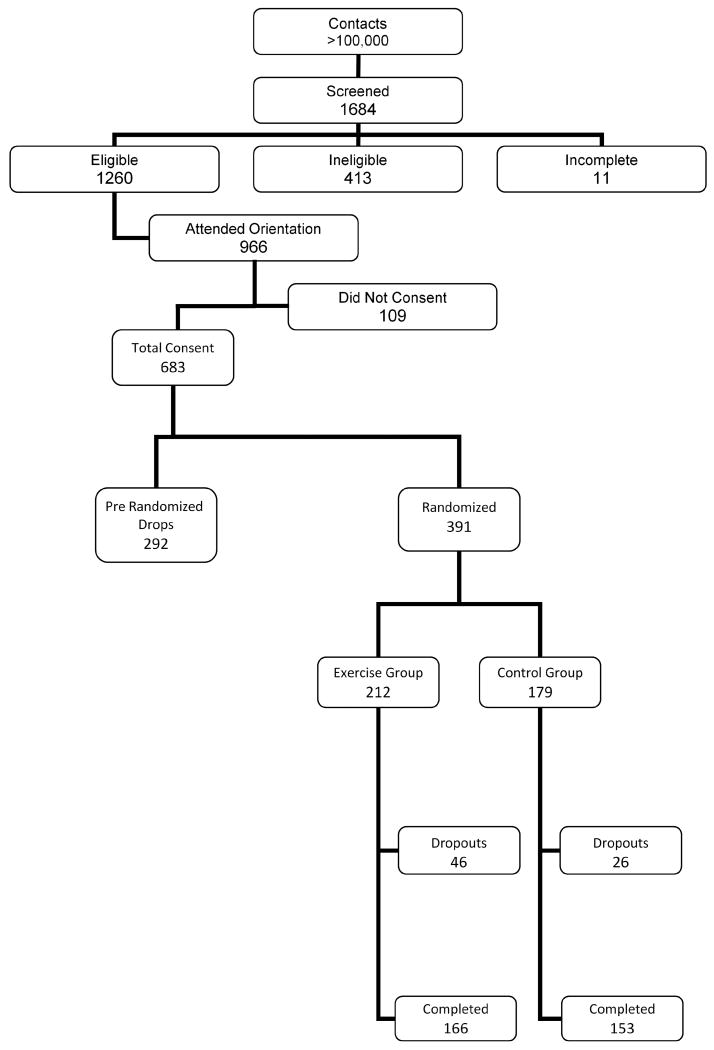
Discussion: WISER consented 683 women among which 391 enrolled and 319 successfully completed the study. The overall dropout rate was 18.4% (n=72) with a higher number of participants dropping from the exercise group (n=46). No differences were found between dropouts and completers with respect to age, body weight, BMI, and demographic characteristics with the exception of degree of education. Findings from this trial will be useful in understanding the physiologic mechanisms by which exercise possibly contributes to decreased breast cancer risk.
Published by Elsevier Inc.
Figures
References
-
- American Cancer Society. Cancer facts and figures 2009. Atlanta: American Cancer Society; 2009.
-
- Friedenreich CM, Cust AE. Physical activity and breast cancer risk: impact of timing, type and dose of activity and population subgroup effects. Br J Sports Med. 2008;42:636–47. - PubMed
-
- Vanio H, Bianchini F. Weight control and physical activity. Lyon: IARC Press; 2002. - PubMed
-
- Friedenreich CM. Physical activity and cancer prevention: from observational to intervention research. Cancer Epidemiol Biomarkers Prev. 2001;10:287–301. - PubMed
-
- Kaaks R, Lundin E, Rinaldi S, Manjer J, Biessy C, Soderberg S, et al. Prospective study of IGF-I, IGF-binding proteins, and breast cancer risk, in northern and southern Sweden. Cancer Causes Control. 2002;13:307–16. - PubMed
Publication types
MeSH terms
Substances
Grants and funding
LinkOut - more resources
Full Text Sources
Medical
Miscellaneous
