


Reconstituting organ-level lung functions on a chip
- PMID: 20576885
- PMCID: PMC8335790
- DOI: 10.1126/science.1188302
Reconstituting organ-level lung functions on a chip
Abstract
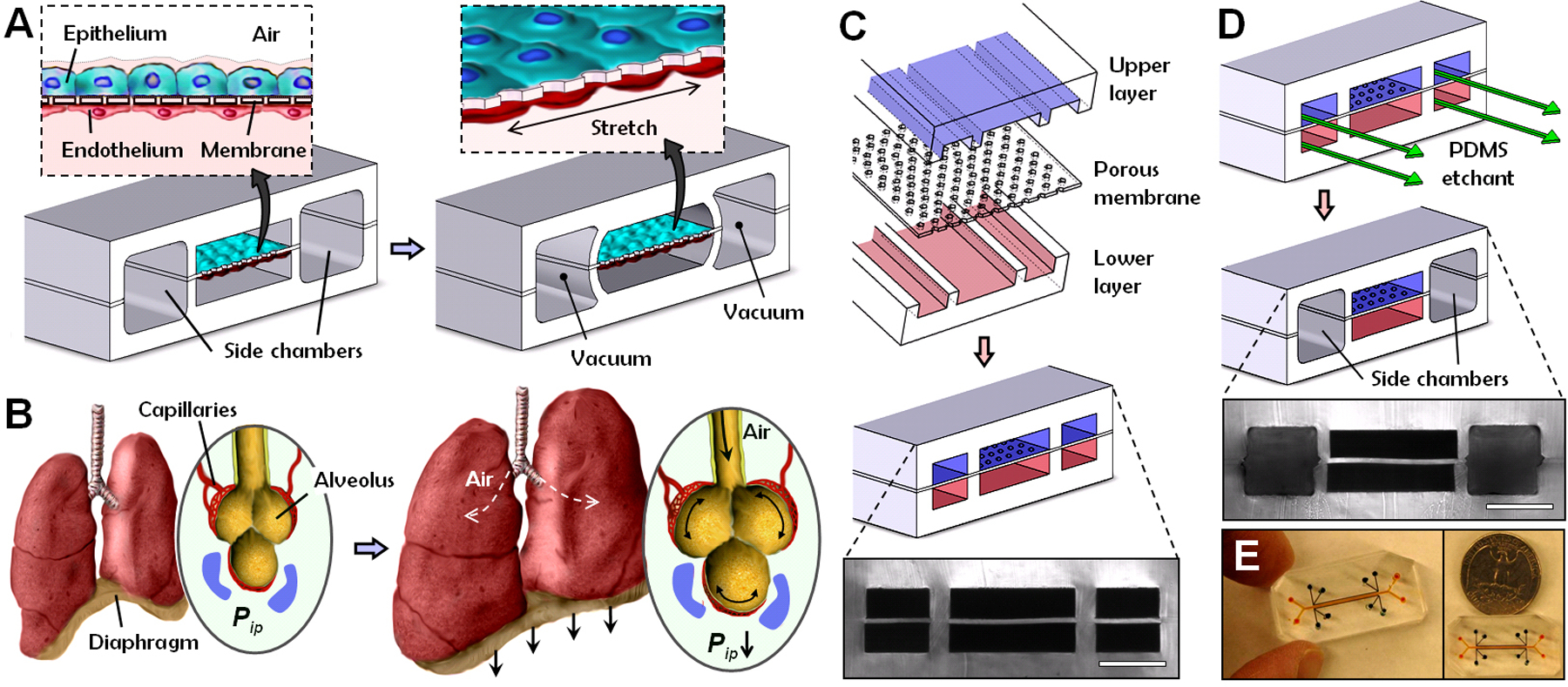
Here, we describe a biomimetic microsystem that reconstitutes the critical functional alveolar-capillary interface of the human lung. This bioinspired microdevice reproduces complex integrated organ-level responses to bacteria and inflammatory cytokines introduced into the alveolar space. In nanotoxicology studies, this lung mimic revealed that cyclic mechanical strain accentuates toxic and inflammatory responses of the lung to silica nanoparticles. Mechanical strain also enhances epithelial and endothelial uptake of nanoparticulates and stimulates their transport into the underlying microvascular channel. Similar effects of physiological breathing on nanoparticle absorption are observed in whole mouse lung. Mechanically active "organ-on-a-chip" microdevices that reconstitute tissue-tissue interfaces critical to organ function may therefore expand the capabilities of cell culture models and provide low-cost alternatives to animal and clinical studies for drug screening and toxicology applications.
Figures


References
-
- Davila JC, Rodriguez RJ, Melchert RB, Acosta D., Annu. Rev. Pharmacol. Toxicol 38, 63 (1998). - PubMed
-
- Pampaloni F, Reynaud EG, Stelzer EHK, Nat. Rev. Mol. Cell Biol 8, 839 (2007). - PubMed
-
- Ingber DE, FASEB J 20, 811 (2006). - PubMed
-
- Whitesides GM, Ostuni E, Takayama S, Jiang XY, Ingber DE, Annu. Rev. Biomed. Eng 3, 335 (2001). - PubMed
Publication types
MeSH terms
Substances
Grants and funding
LinkOut - more resources
Full Text Sources
Other Literature Sources
