


Inhibition of angiopoietin-2 in LuCaP 23.1 prostate cancer tumors decreases tumor growth and viability
- PMID: 20583134
- PMCID: PMC3104406
- DOI: 10.1002/pros.21216
Inhibition of angiopoietin-2 in LuCaP 23.1 prostate cancer tumors decreases tumor growth and viability
Abstract
Background: Angiopoietin-2 is expressed in prostate cancer (PCa) bone, liver, and lymph node metastases, whereas, its competitor angiopoietin-1 has limited expression in these tissues. Therefore, we hypothesized that the inhibition of angiopoietin-2 activity in PCa will impede angiogenesis, tumor growth, and alter bone response in vivo.
Methods: To test our hypothesis we used L1-10, a peptide-Fc fusion that inhibits interactions between angiopoietin-2 and its receptor tie2. We blocked angiopoietin-2 activity using L1-10 in established subcutaneous and intra-tibial LuCaP 23.1 xenografts. We then determined the effect of L1-10 on survival, tumor growth, serum PSA, proliferation, microvessel density, and angiogenesis-associated gene expression in subcutaneous tumors. We also determined serum PSA, tumor area, and bone response in intra-tibial tumors.
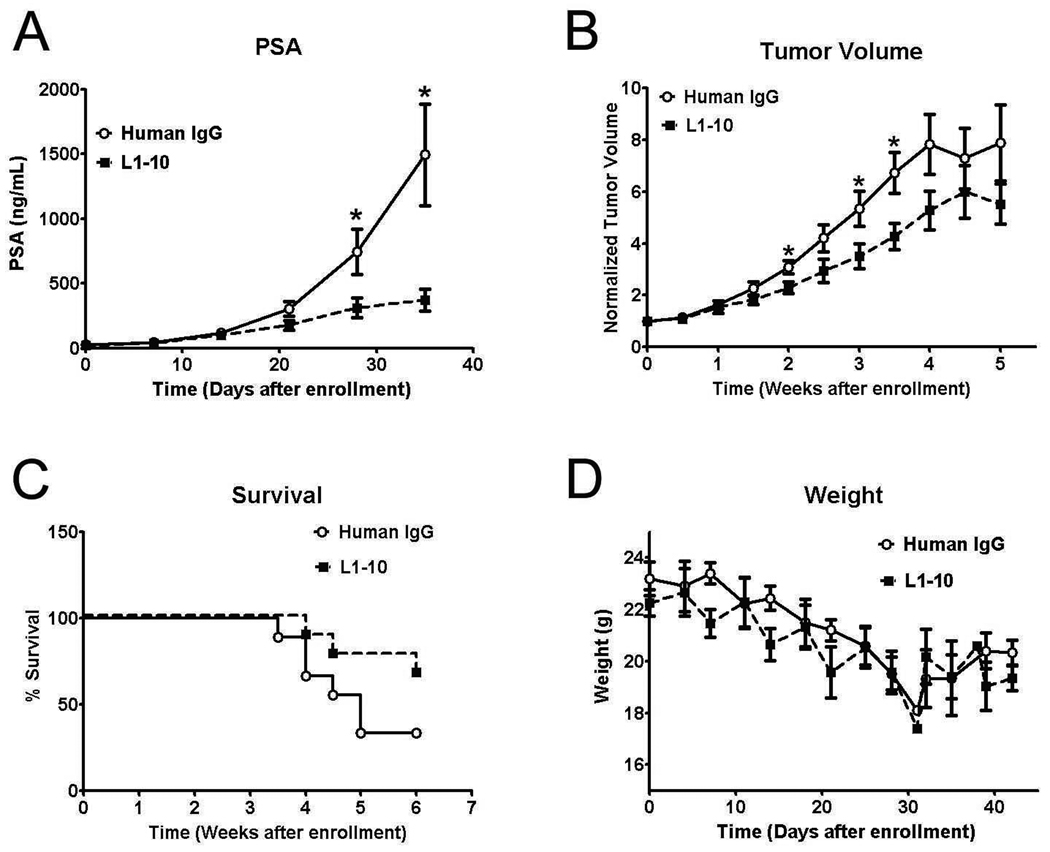
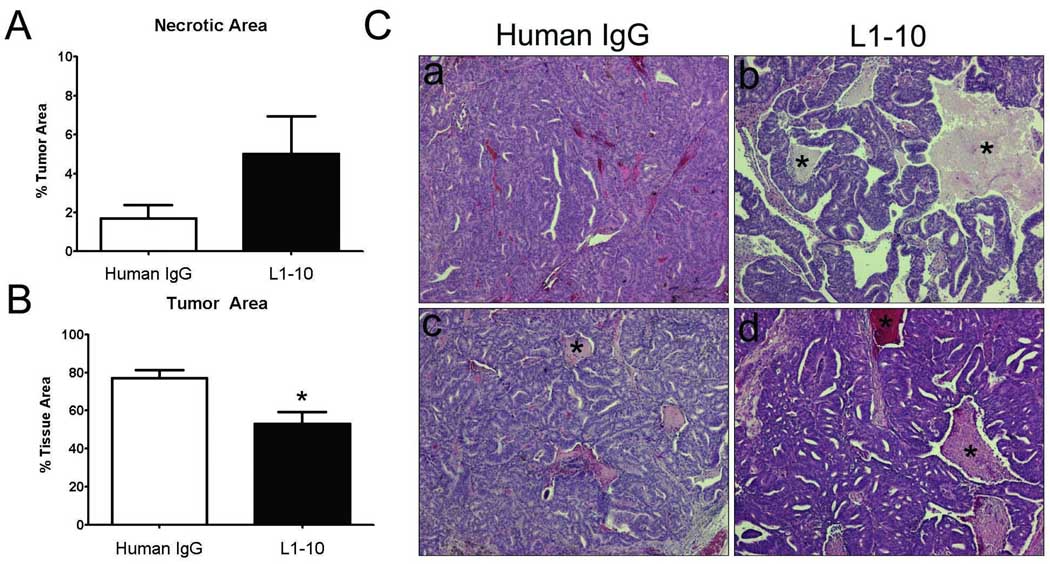
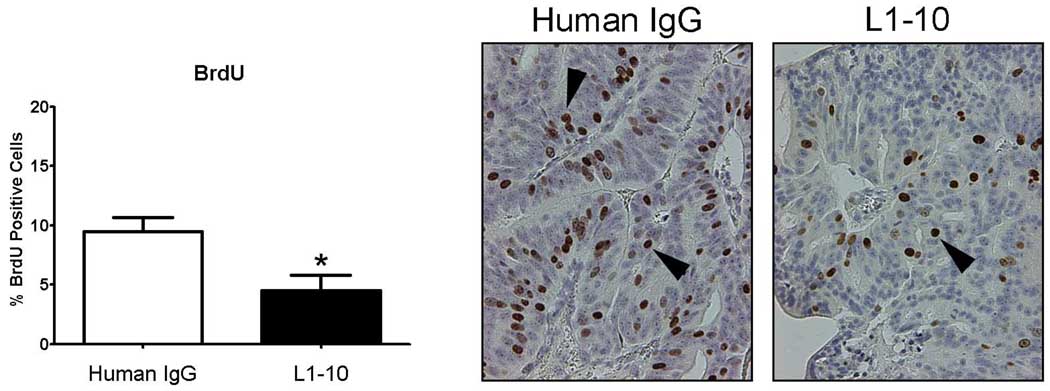
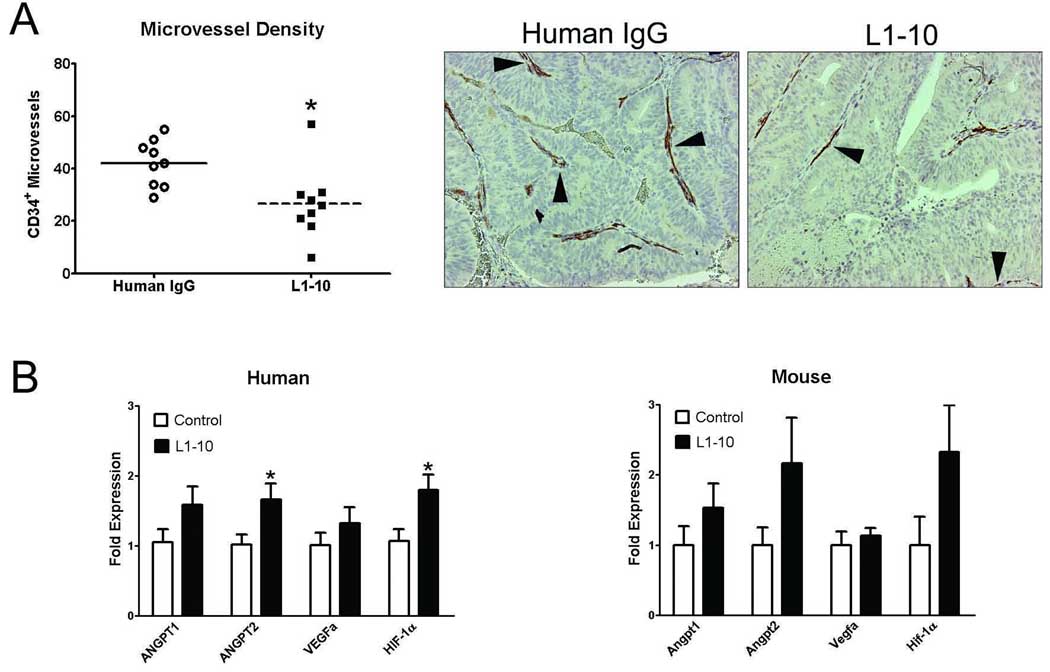
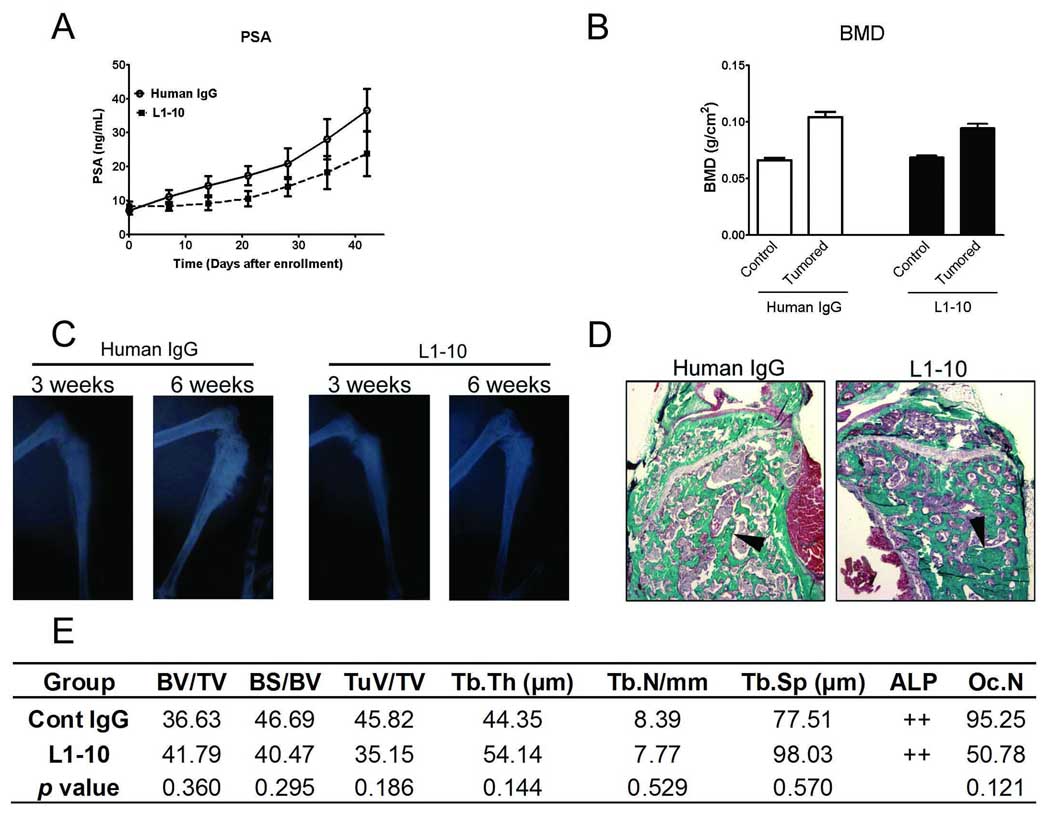
Results: The administration of L1-10 decreased tumor volume and serum PSA, and increased survival in SCID mice bearing subcutaneous LuCaP 23.1 tumors. Histomorphometric analysis, showed a further significant decrease in tumor epithelial area within the L1-10 treated LuCaP 23.1 subcutaneous tumors (P=0.0063). There was also a significant decrease in cell proliferation (P=0.012), microvessel density (P=0.012), and a significant increase in ANGPT-2 and HIF-1α mRNA expression (P≤0.05) associated with L1-10 treatment. Alternatively, in LuCaP 23.1 intra-tibial tumors L1-10 treatment did not significantly change serum PSA, tumor area or bone response.
Conclusions: Our results demonstrate that inhibiting angiopoietin-2 activity impedes angiogenesis and growth of LuCaP 23.1 PCa xenografts. Based on these data, we hypothesize that angiopoietin-2 inhibition in combination with other therapies may represent a potential therapy for patients with metastatic disease.
© 2010 Wiley-Liss, Inc.
Figures
References
-
- Folkman J, Greenspan HP. Influence of geometry on control of cell growth. Biochim Biophys Acta. 1975;417:211–236. - PubMed
-
- Folkman J. Tumor angiogenesis: a possible control point in tumor growth. Ann Intern Med. 1975;82:96–100. - PubMed
-
- Yancopoulos GD, Davis S, Gale NW, Rudge JS, Wiegand SJ, Holash J. Vascular-specific growth factors and blood vessel formation. Nature. 2000;407:242–248. - PubMed
-
- Ferrer FA, Miller LJ, Andrawis RI, Kurtzman SH, Albertsen PC, Laudone VP, Kreutzer DL. Angiogenesis and prostate cancer: in vivo and in vitro expression of angiogenesis factors by prostate cancer cells. Urology. 1998;51:161–167. - PubMed
Publication types
MeSH terms
Substances
Grants and funding
LinkOut - more resources
Full Text Sources
Other Literature Sources
Medical
Research Materials
Miscellaneous
