


Rubber-toughening of dimethacrylate dental composite resin
- PMID: 20583305
- PMCID: PMC2900935
- DOI: 10.1002/jbm.b.31674
Rubber-toughening of dimethacrylate dental composite resin
Abstract
Dimethacrylate dental composite resins exhibit inherently low toughness. Toughening of these materials may reduce the incidence of marginal and bulk fracture of composite restorations.
Objective: To determine if dimethacrylate dental restorative materials can be rubber-toughened, and if so, to identify a possible mechanism.
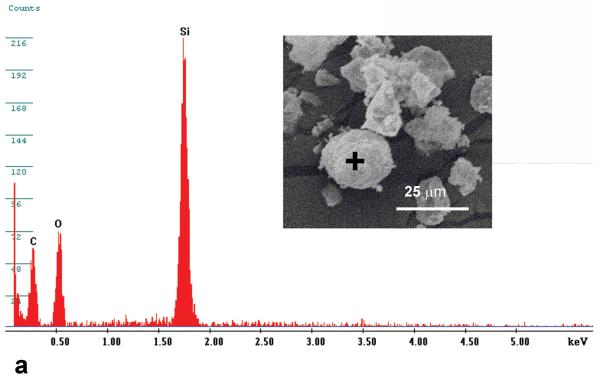
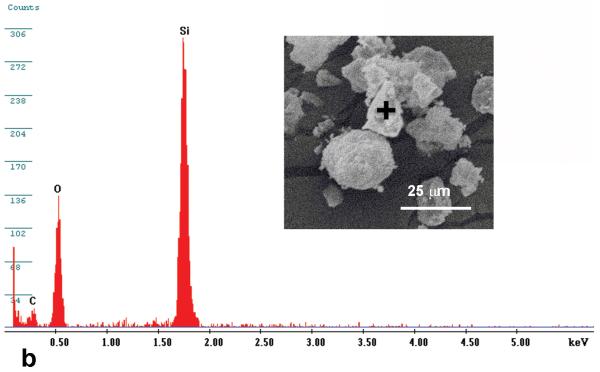
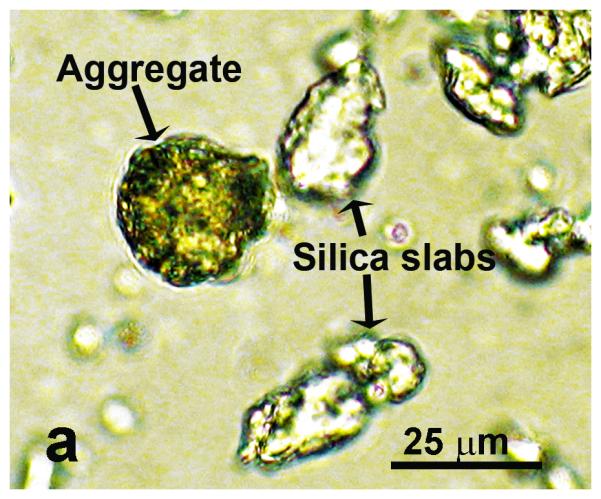
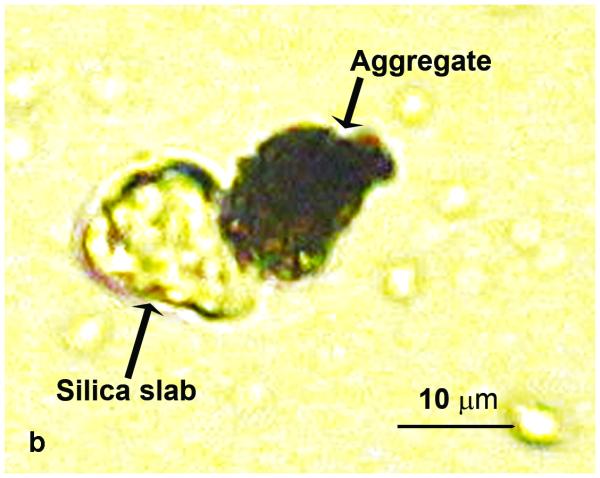
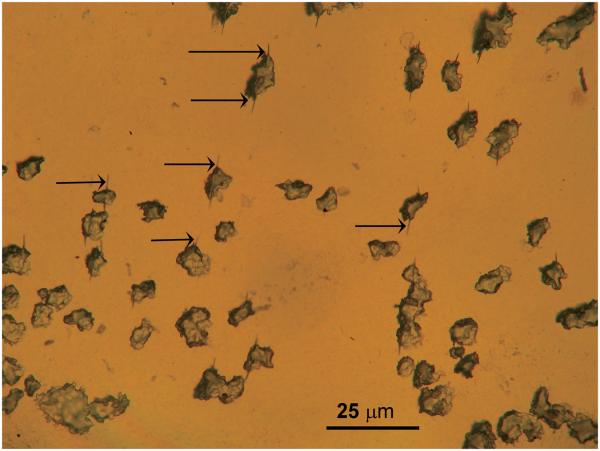
Methods: A filler composed of aggregates of polybutadiene/silica as well as irregularly-shaped silica slabs was produced by mixing silica with polybutadiene in dichloromethane. The dried filler was subsequently ground and sieved to < 25 microm. Polybutadiene/silica ratios were varied from 0:1 (control) to 0.5:1. EDAX analysis verified the composition of the complex filler. Filler was added to a bis-GMA/bis-EMA/TEGDMA resin system and fractured in three-point bend test mode at a crosshead speed of 1 mm/min. In addition, 1 bar was fractured at a crosshead speed of 0.001 mm/min to identify a possible mechanism for toughening.
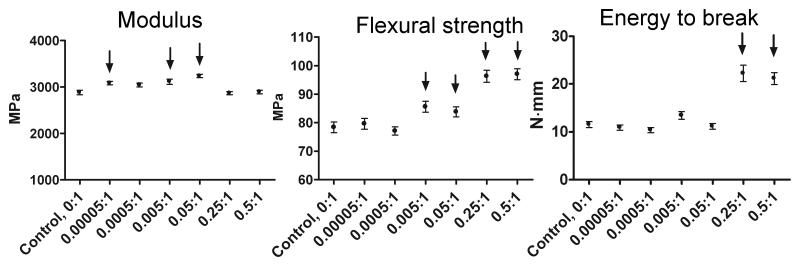
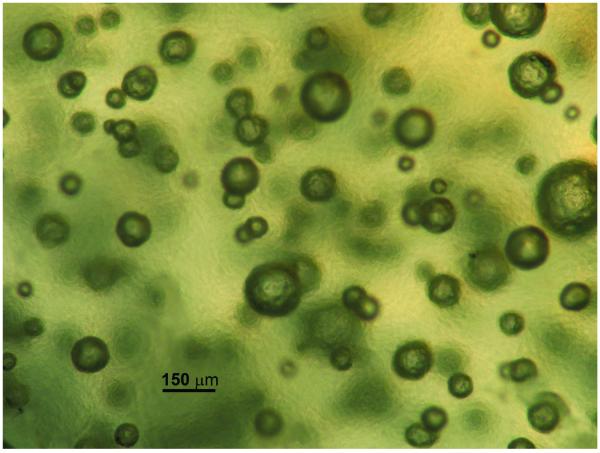
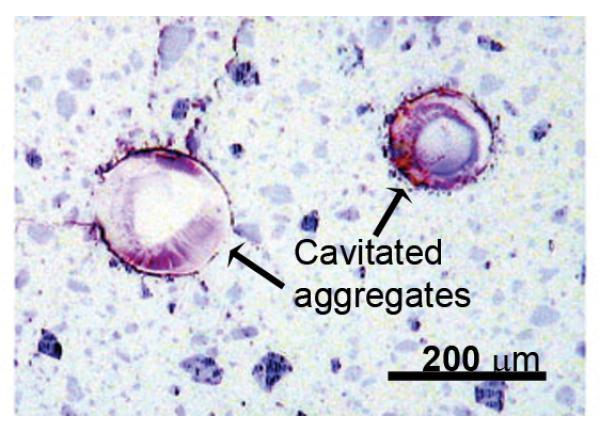
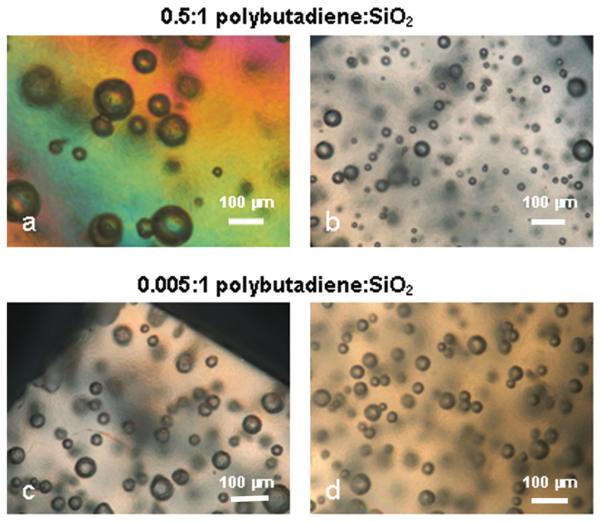
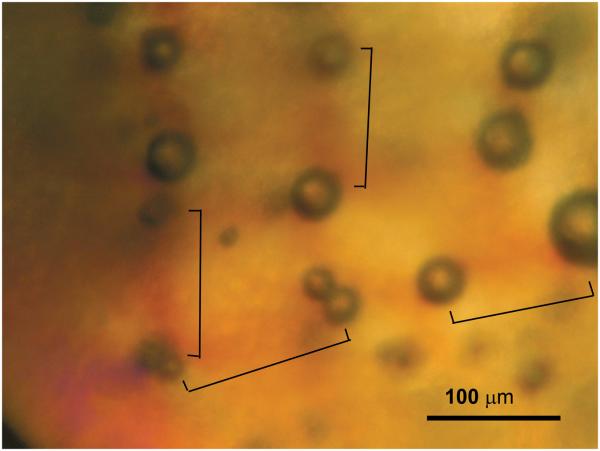
Results: In specimens fractured at 1 mm/min, flexural modulus is increased or maintained and flexural strength and energy to break increase as the amount of polybutadiene in the aggregates increases. Cavitation of high-rubber-containing aggregates is demonstrated. In the one specimen fractured at 0.001 mm/min, a marked increase in size of high-rubber-containing aggregates along with severe shear damage in the surrounding matrix is shown, suggesting that cavitation with subsequent absorption of energy during shear yielding is the likely mechanism behind the increase in energy to break in bars fractured at 1 mm/min.
Significance: These results indicate that dimethacrylate dental composite materials can be rubber toughened, which may potentially reduce marginal and bulk fractures of composite restorations, and consequently extend their service lifetime.
Figures
References
-
- Anusavice KJ, editor. Phillips' Science of Dental Materials. 11 ed. Elsevier Science; St. Louis: 2003.
-
- Hickel R, et al. Longevity of occlusally-stressed restorations in posterior primary teeth. American Journal of Dentistry. 2005;18(3):198–211. - PubMed
-
- Manhart J, Garcia-Godoy F, Hickel R. Direct posterior restorations: clinical results and new developments. Dental Clinics of North America. 2002;46(2):303–39. - PubMed
-
- Cook WD, Beech DR, Tyas MJ. Structure and properties of methacrylate based dental restorative materials. Biomaterials. 1985;6(6):362–368. - PubMed
-
- Kinloch AJ, Young RJ. Fracture Behavior of Polymers. Applied Science; London: 1983.
Publication types
MeSH terms
Substances
Grants and funding
LinkOut - more resources
Full Text Sources
Research Materials
Miscellaneous
