


The cell-specific induction of CXC chemokine ligand 9 mediated by IFN-gamma in microglia of the central nervous system is determined by the myeloid transcription factor PU.1
- PMID: 20585034
- PMCID: PMC2925661
- DOI: 10.4049/jimmunol.1000900
The cell-specific induction of CXC chemokine ligand 9 mediated by IFN-gamma in microglia of the central nervous system is determined by the myeloid transcription factor PU.1
Abstract
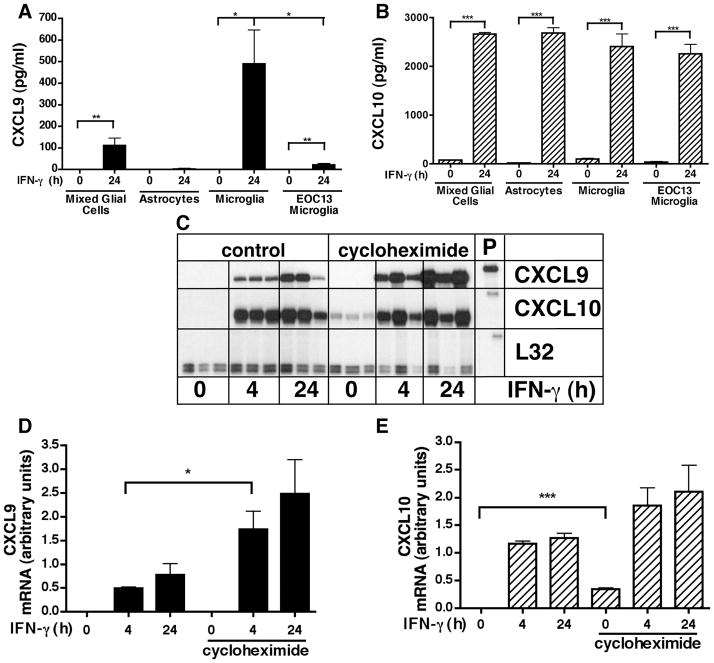
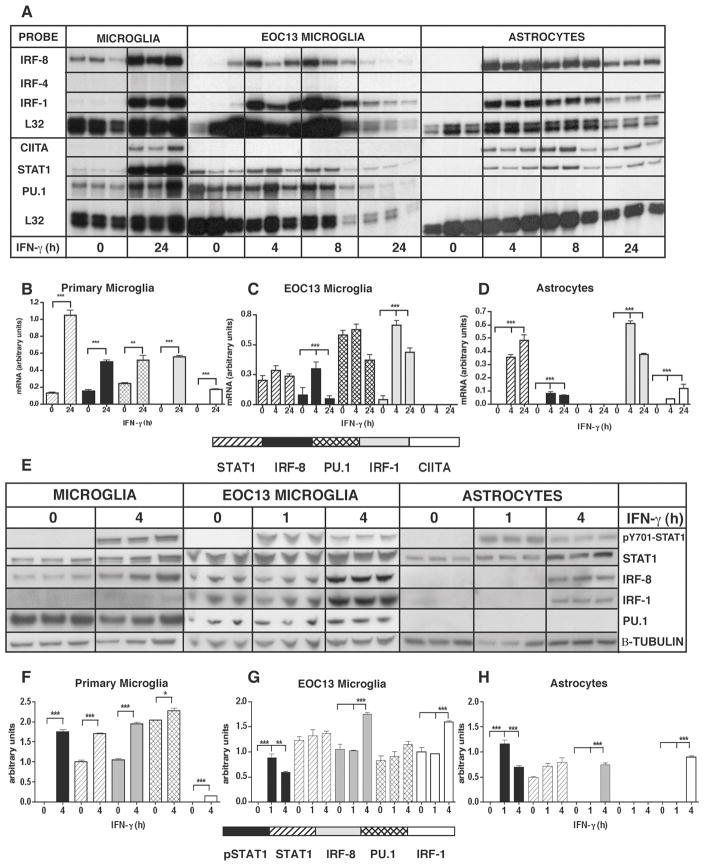
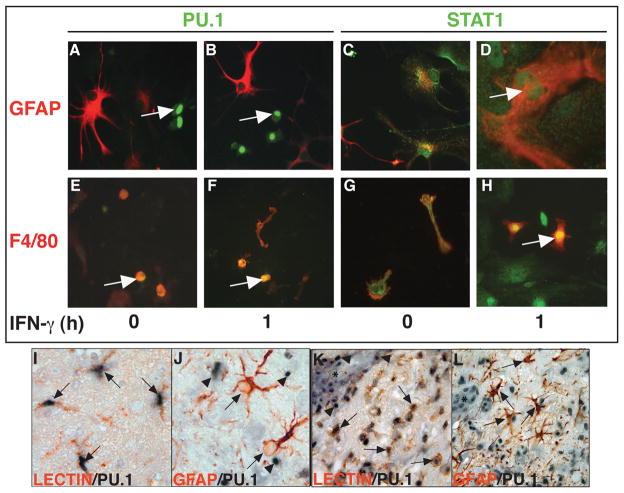
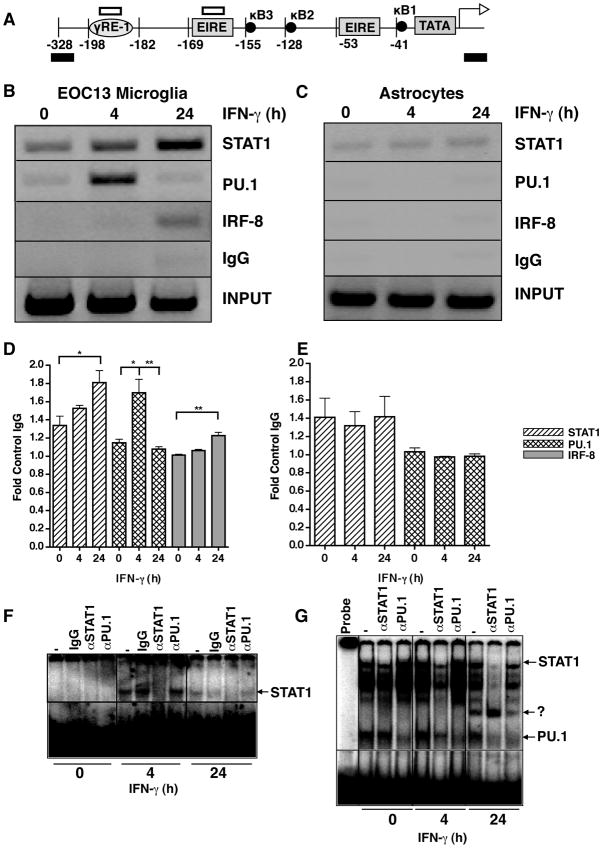
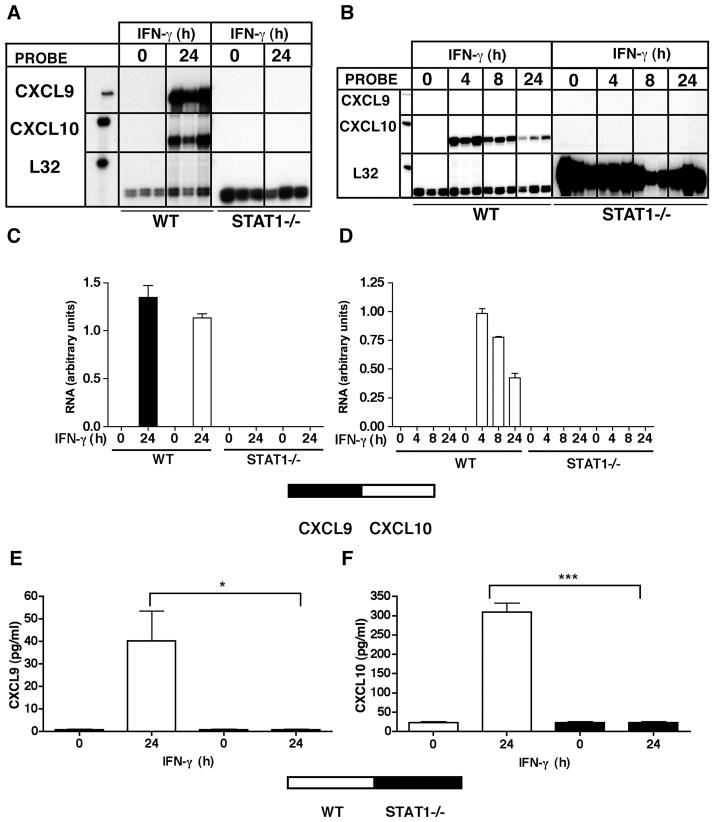
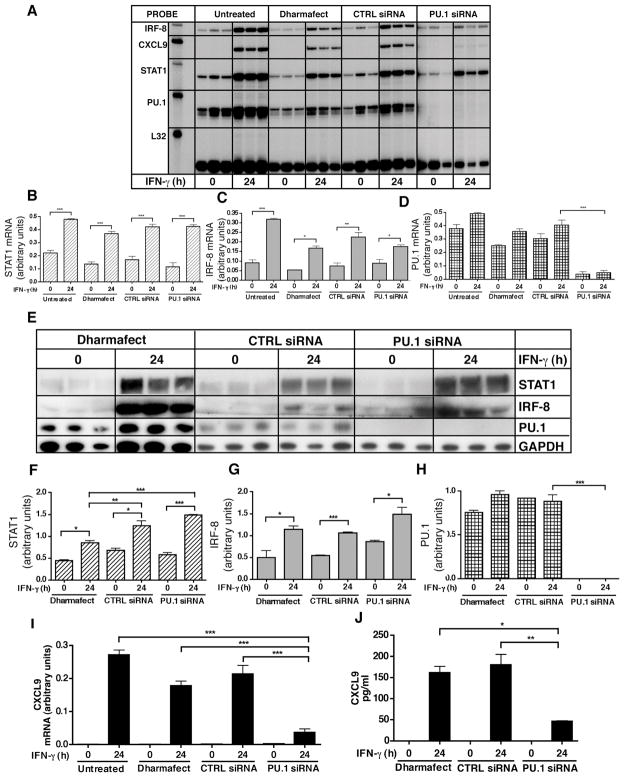
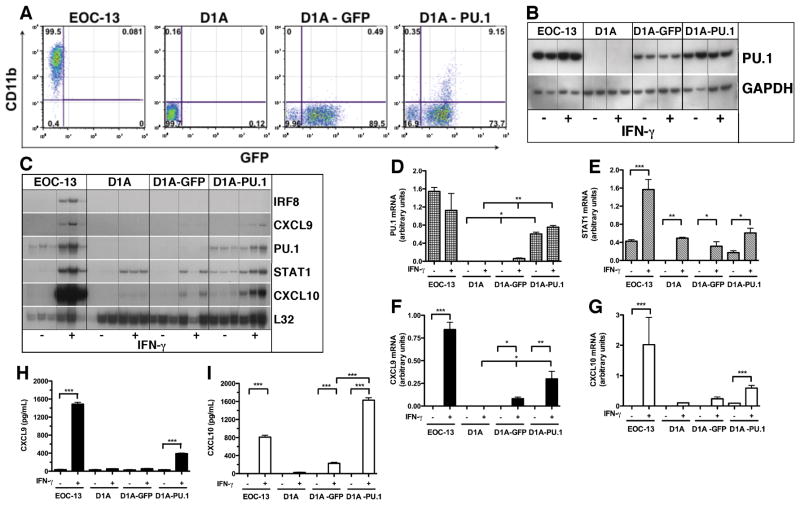
The IFN-gamma-inducible chemokines CXCL9 and CXCL10 are implicated in the pathogenesis of T cell-mediated immunity in the CNS. However, in various CNS immune pathologies the cellular localization of these chemokines differs, with CXCL9 produced by macrophage/microglia whereas CXCL10 is produced by both macrophage/microglia and astrocytes. In this study, we determined the mechanism for the microglial cell-restricted expression of the Cxcl9 gene induced by IFN-gamma. In cultured glial cells, the induction of the CXCL9 (in microglia) and CXCL10 (in microglia and astrocytes) mRNAs by IFN-gamma was not inhibited by cycloheximide. Of various transcription factors involved with IFN-gamma-mediated gene regulation, PU.1 was identified as a constitutively expressed NF in microglia but not in astrocytes. STAT1 and PU.1 bound constitutively to the Cxcl9 gene promoter in microglia, and this increased significantly following IFN-gamma treatment with IFN regulatory factor-8 identified as an additional late binding factor. However, in astrocytes, STAT1 alone bound to the Cxcl9 gene promoter. STAT1 was critical for IFN-gamma induction of both the Cxcl9 and Cxcl10 genes in microglia and in microglia and astrocytes, respectively. The small interfering RNA-mediated knockdown of PU.1 in microglia markedly impaired IFN-gamma-induced CXCL9 but not STAT1 or IFN regulatory factor-8. Cells of the D1A astrocyte line showed partial reprogramming to a myeloid-like phenotype posttransduction with PU.1 and, in addition to the expression of CD11b, acquired the ability to produce CXCL9 in response to IFN-gamma. Thus, PU.1 not only is crucial for the induction of CXCL9 by IFN-gamma in microglia but also is a key determinant factor for the cell-specific expression of this chemokine by these myeloid cells.
Figures
References
-
- Luster AD, Unkeless JC, Ravetch JV. γ-interferon transcriptionally regulates an early-response gene containing homology to platelet proteins. Nature. 1985;315:672–676. - PubMed
-
- Vanguri P, Farber JM. Identification of CRG-2. An interferon-inducible mRNA predicted to encode a murine monokine. J Biol Chem. 1990;265:15049–15057. - PubMed
-
- Cole KE, Strick CA, Paradis TJ, Ogborne KT, Loetscher M, Gladue RP, Lin W, Boyd JG, Moser B, Wood DE, Sahagan BG, Neote K. Interferon-inducible T cell alpha chemoattractant (I-TAC): a novel non-ELR CXC chemokine with potent activity on activated T cells through selective high affinity binding to CXCR3. J Exp Med. 1998;187:2009–2021. - PMC - PubMed
-
- Rani MRS, Foster GR, Leung S, Leaman D, Stark GR, Ransohoff RM. Characterization of β-R1, a gene that is selectively induced by interferon β (IFN-β) compared with IFN-α. J Biol Chem. 1996;271:22878–22884. - PubMed
Publication types
MeSH terms
Substances
Grants and funding
LinkOut - more resources
Full Text Sources
Other Literature Sources
Molecular Biology Databases
Research Materials
Miscellaneous
