


Targeted genome-wide enrichment of functional regions
- PMID: 20585402
- PMCID: PMC2886846
- DOI: 10.1371/journal.pone.0011138
Targeted genome-wide enrichment of functional regions
Abstract
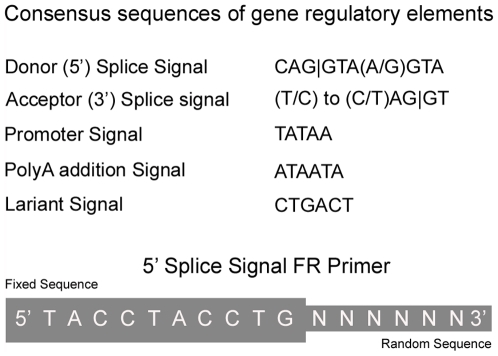
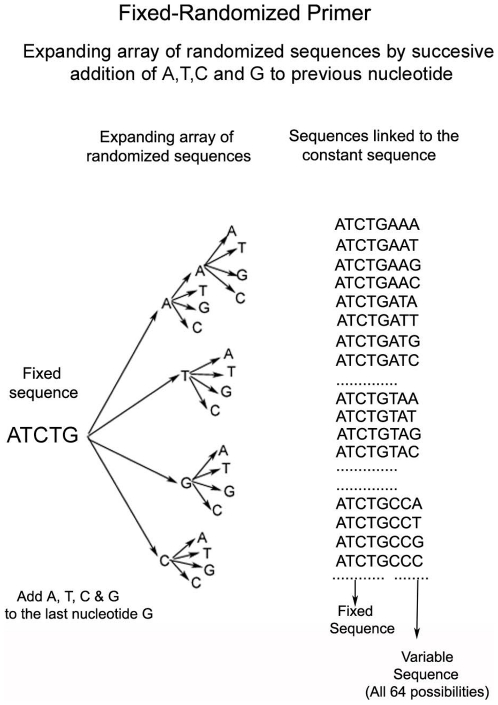
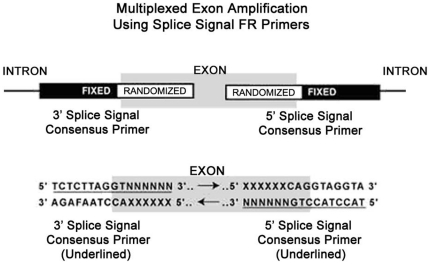
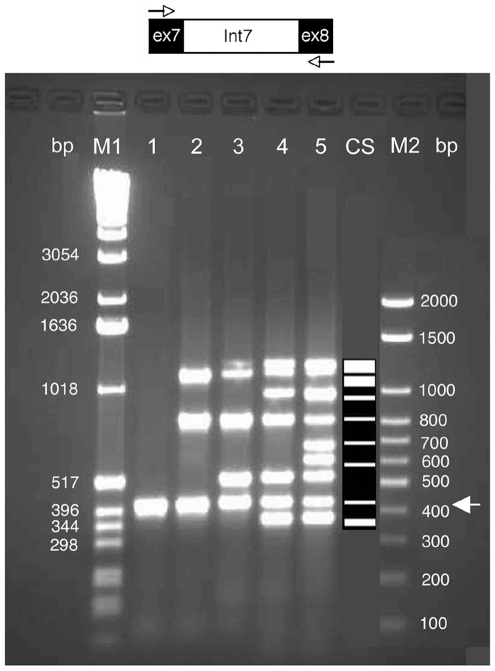
Only a small fraction of large genomes such as that of the human contains the functional regions such as the exons, promoters, and polyA sites. A platform technique for selective enrichment of functional genomic regions will enable several next-generation sequencing applications that include the discovery of causal mutations for disease and drug response. Here, we describe a powerful platform technique, termed "functional genomic fingerprinting" (FGF), for the multiplexed genomewide isolation and analysis of targeted regions such as the exome, promoterome, or exon splice enhancers. The technique employs a fixed part of a uniquely designed Fixed-Randomized primer, while the randomized part contains all the possible sequence permutations. The Fixed-Randomized primers bind with full sequence complementarity at multiple sites where the fixed sequence (such as the splice signals) occurs within the genome, and multiplex amplify many regions bounded by the fixed sequences (e.g., exons). Notably, validation of this technique using cardiac myosin binding protein-C (MYBPC3) gene as an example strongly supports the application and efficacy of this method. Further, assisted by genomewide computational analyses of such sequences, the FGF technique may provide a unique platform for high-throughput sample production and analysis of targeted genomic regions by the next-generation sequencing techniques, with powerful applications in discovering disease and drug response genes.
Conflict of interest statement
Figures
References
-
- Metzker ML. Sequencing technologies - the next generation. Nat Rev Genet. 2010;11:31–46. - PubMed
-
- Mardis ER. Next-generation DNA sequencing methods. Annu Rev Genomics Hum Genet. 2008;9:387–402. - PubMed
-
- Aparicio AJRS, Huntsman DG. Does massively parallel DNA resequencing signify the end of histopathology as we know it? J Pathol 2010. 2010;220:307–315. - PubMed
-
- Forrest AR, Carninci P. Whole genome transcriptome analysis. RNA Biol. 2009;6:107–12. - PubMed
Publication types
MeSH terms
Substances
LinkOut - more resources
Full Text Sources
