


The involvement of IL-17A in the murine response to sub-lethal inhalational infection with Francisella tularensis
- PMID: 20585449
- PMCID: PMC2887844
- DOI: 10.1371/journal.pone.0011176
The involvement of IL-17A in the murine response to sub-lethal inhalational infection with Francisella tularensis
Abstract
Background: Francisella tularensis is an intercellular bacterium often causing fatal disease when inhaled. Previous reports have underlined the role of cell-mediated immunity and IFNgamma in the host response to Francisella tularensis infection.
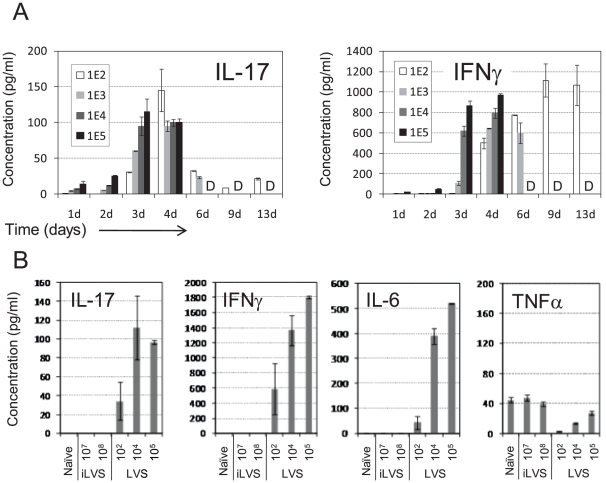
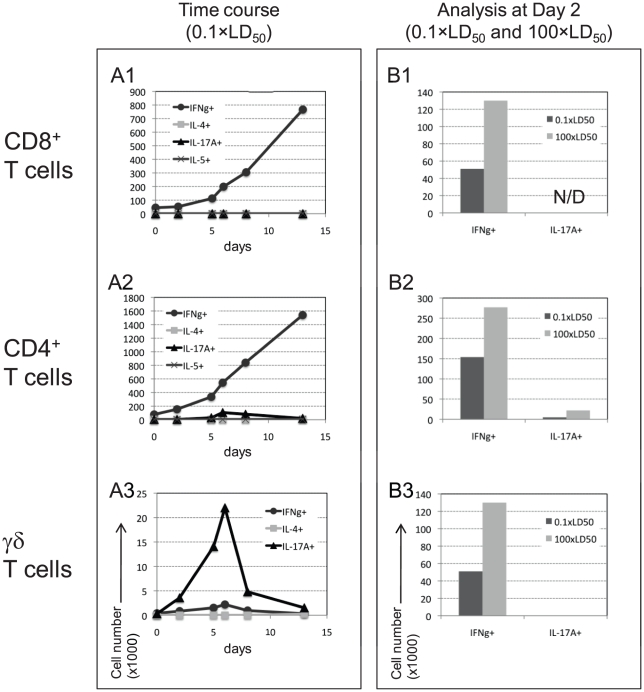
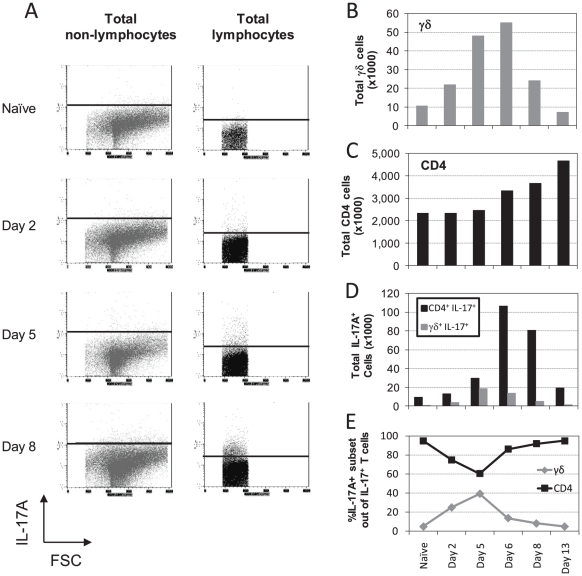
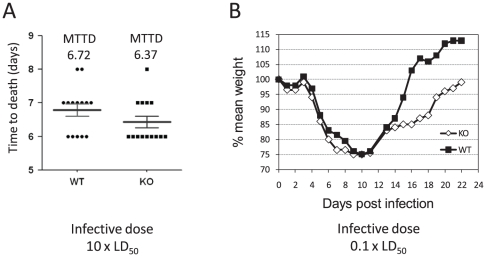
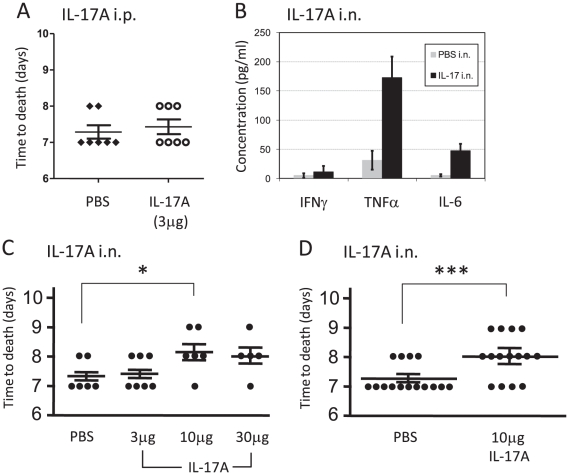
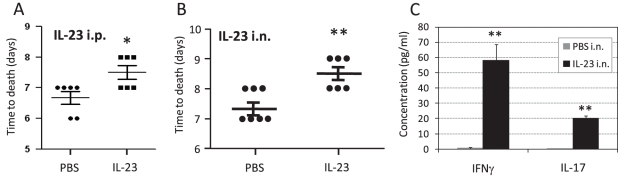
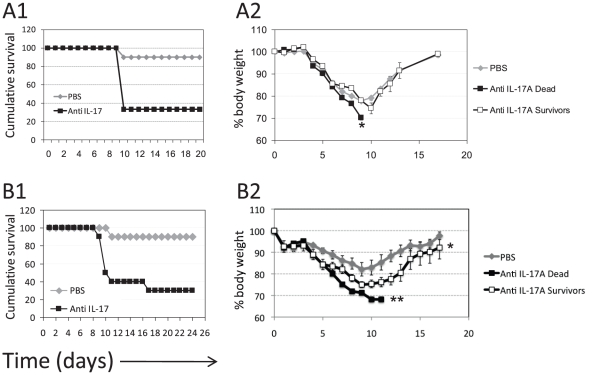
Methodology/principal findings: Here we provide evidence for the involvement of IL-17A in host defense to inhalational tularemia, using a mouse model of intranasal infection with the Live Vaccine Strain (LVS). We demonstrate the kinetics of IL-17A production in lavage fluids of infected lungs and identify the IL-17A-producing lymphocytes as pulmonary gammadelta and Th17 cells. The peak of IL-17A production appears early during sub-lethal infection, it precedes the peak of immune activation and the nadir of the disease, and then subsides subsequently. Exogenous airway administration of IL-17A or of IL-23 had a limited yet consistent effect of delaying the onset of death from a lethal dose of LVS, implying that IL-17A may be involved in restraining the infection. The protective role for IL-17A was directly demonstrated by in vivo neutralization of IL-17A. Administration of anti IL-17A antibodies concomitantly to a sub-lethal airway infection with 0.1xLD(50) resulted in a fatal disease.
Conclusion: In summary, these data characterize the involvement and underline the protective key role of the IL-17A axis in the lungs from inhalational tularemia.
Conflict of interest statement
Figures
References
-
- Sjostedt A. Tularemia: history, epidemiology, pathogen physiology and clinical manifestations. Ann NY Acad Sci. 2007;1005:1–29. - PubMed
-
- Tarvnik A. Nature of protective immunity to Francisella tularensis. Rev Infect Dis. 1989;11:440–451. - PubMed
-
- Dennis DT, Inglesby TV, Henderson DA, Bartlett JG, Ascher MS, et al. Tularemia as a biological weapon: medical and public health management. JAMA. 2001;285:2763–2773. - PubMed
-
- Oyston PC, Sjostedt A, Titball RW. Tularaemia: bioterrorism defense renews interest in Francisella tularensis. Nat Rev Microbiol. 2004;2:967–978. - PubMed
Publication types
MeSH terms
Substances
LinkOut - more resources
Full Text Sources
