


Eradication of Helicobacter spp. by using medicated diet in mice deficient in functional natural killer cells and complement factor D
- PMID: 20587159
- PMCID: PMC2877300
Eradication of Helicobacter spp. by using medicated diet in mice deficient in functional natural killer cells and complement factor D
Abstract
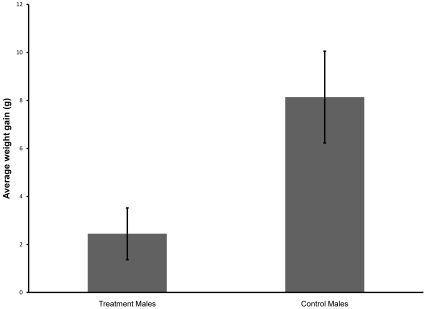
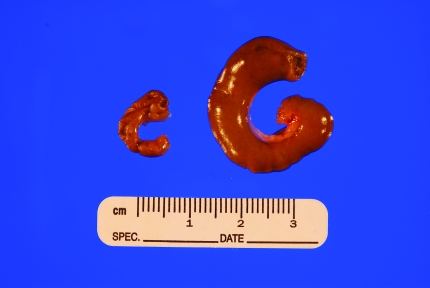
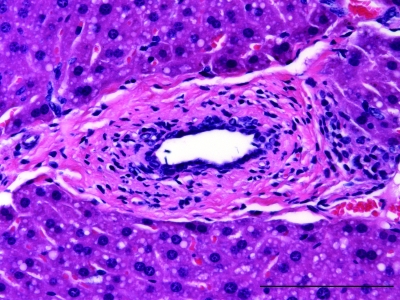
A commercial 4-drug diet has shown promise in eradicating Helicobacter spp. from rodents; however, its effectiveness in immunocompromised mice is unknown. This study evaluated the efficacy of this treatment in eradicating Helicobacter spp. from mice deficient in functional natural killer cells (Cd1(-/-)) or complement factor D (Df(-/-)). Cd1(-/-) mice naturally infected with H. hepaticus with or without H. rodentium were fed either control or medicated diet for 8 wk followed by 4 wk on control diet. Fecal samples were PCR-evaluated for Helicobacter spp. before mice began treatment and then every 2 wk thereafter for 12 wk. The same experimental design was repeated for eighteen 9- to 21-wk-old Df(-/-) mice naturally infected with H. bilis with or without H. rodentium. All Df(-/-) mice and 8- to 21-wk-old Cd1(-/-) mice ceased shedding Helicobacter spp. after 2 wk of treatment and remained negative throughout the study. In contrast, the Cd1(-/-) mice that were 24 wk or older shed Helicobacter spp. for the first 8 wk but tested negative at 10 and 12 wk. All treated animals had enlarged ceca and gained less weight than control untreated mice, and 6 of 7 treated Cd1(-/-) male mice developed mild portal fibrosis. These findings show that within 2 wk of treatment, the 4-drug diet eradicated H. hepaticus and H. rodentium from young Cd1(-/-) mice and H. bilis and H. rodentium from Df(-/-) mice, but eradication of established infections in Cd1(-/-) mice required 8 wk of treatment.
Figures
References
-
- Artwohl JE, Flynn JC, Bunte RM, Angen O, Herold KC. 2000. Outbreak of Pasteurella pneumotropica in a closed colony of STOCK-Cd28tm1Mak mice. Contemp Top Lab Anim Sci 39:39–41 - PubMed
-
- Clifford CB, Walton BJ, Reed TH, Coyle MB, White WJ, Amyx HL. 1995. Hyperkeratosis in athymic nude mice caused by a coryneform bacterium: microbiology, transmission, clinical signs, and pathology. Lab Anim Sci 45:131–139 - PubMed
-
- Crisler-Roberts R, Ge Z, Kearney MT, Singletary KB, Fox JG, Roberts CS, Baker DG. 2005. Evaluation of Helicobacter hepaticus bacterial shedding in fostered and sex-segregated C57BL mice. Comp Med 55:515–522 - PubMed
Publication types
MeSH terms
Substances
Grants and funding
LinkOut - more resources
Full Text Sources
Medical
Miscellaneous