


Ebola hemorrhagic fever associated with novel virus strain, Uganda, 2007-2008
- PMID: 20587179
- PMCID: PMC3321896
- DOI: 10.3201/eid1607.091525
Ebola hemorrhagic fever associated with novel virus strain, Uganda, 2007-2008
Abstract
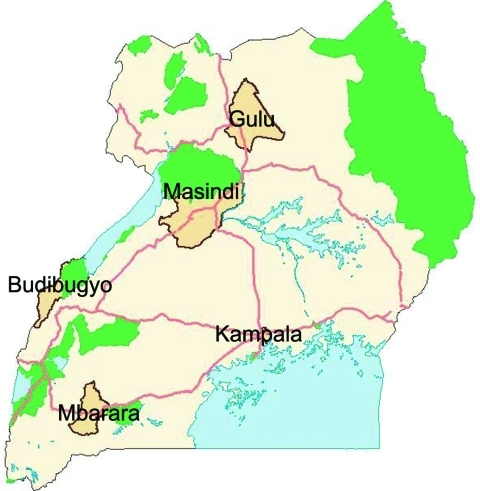
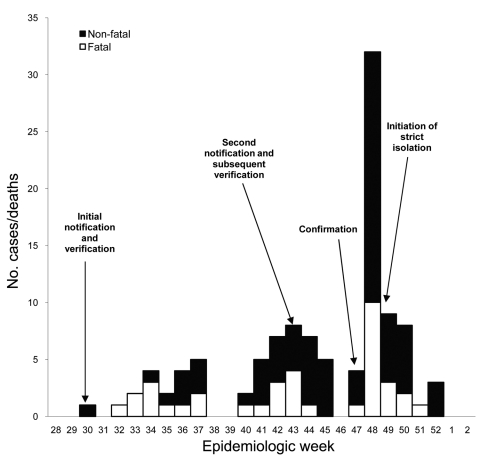
During August 2007-February 2008, the novel Bundibugyo ebolavirus species was identified during an outbreak of Ebola viral hemorrhagic fever in Bundibugyo district, western Uganda. To characterize the outbreak as a requisite for determining response, we instituted a case-series investigation. We identified 192 suspected cases, of which 42 (22%) were laboratory positive for the novel species; 74 (38%) were probable, and 77 (40%) were negative. Laboratory confirmation lagged behind outbreak verification by 3 months. Bundibugyo ebolavirus was less fatal (case-fatality rate 34%) than Ebola viruses that had caused previous outbreaks in the region, and most transmission was associated with handling of dead persons without appropriate protection (adjusted odds ratio 3.83, 95% confidence interval 1.78-8.23). Our study highlights the need for maintaining a high index of suspicion for viral hemorrhagic fevers among healthcare workers, building local capacity for laboratory confirmation of viral hemorrhagic fevers, and institutionalizing standard precautions.
Figures
References
-
- Pourrut X, Souris M, Towner JS, Rollin PE, Nichol ST, Gonzalez JP, et al. Large serological survey showing co-circulation of Ebola and Marburg viruses in Gabonese bat populations, and a high seroprevalence of both viruses in Rousettus aegyptiacus. BMC Infect Dis. 2009;9:159. 10.1186/1471-2334-9-159 - DOI - PMC - PubMed
Publication types
MeSH terms
LinkOut - more resources
Full Text Sources
Medical