


doi: 10.1177/159101990401000110.
Epub 2004 Oct 22.
Endovascular coiling of multiple (more than four) intracranial aneurysms. Case report
Affiliations
- PMID: 20587268
- PMCID: PMC3463384
- DOI: 10.1177/159101990401000110
Item in Clipboard
Endovascular coiling of multiple (more than four) intracranial aneurysms. Case report
Interv Neuroradiol.
.
Abstract
The incidence of multiple intracranial aneurysms has been reported from 5% to 35%. But over four multiple aneurysms are extremely rare. Sometimes it is very difficult to draw a clear line between ruptured ones and unruptured others especially in multiple aneurysm cases with even distribution of subarachnoid haemorrhage on basal cistern. We present two cases of multiple aneurysms, more than four, which were successfully treated by endovascular coiling at the same time. Our experience suggests an endovascular procedure would be the gold standard of treatment for ruptured multiple intracranial aneurysms.
Figures
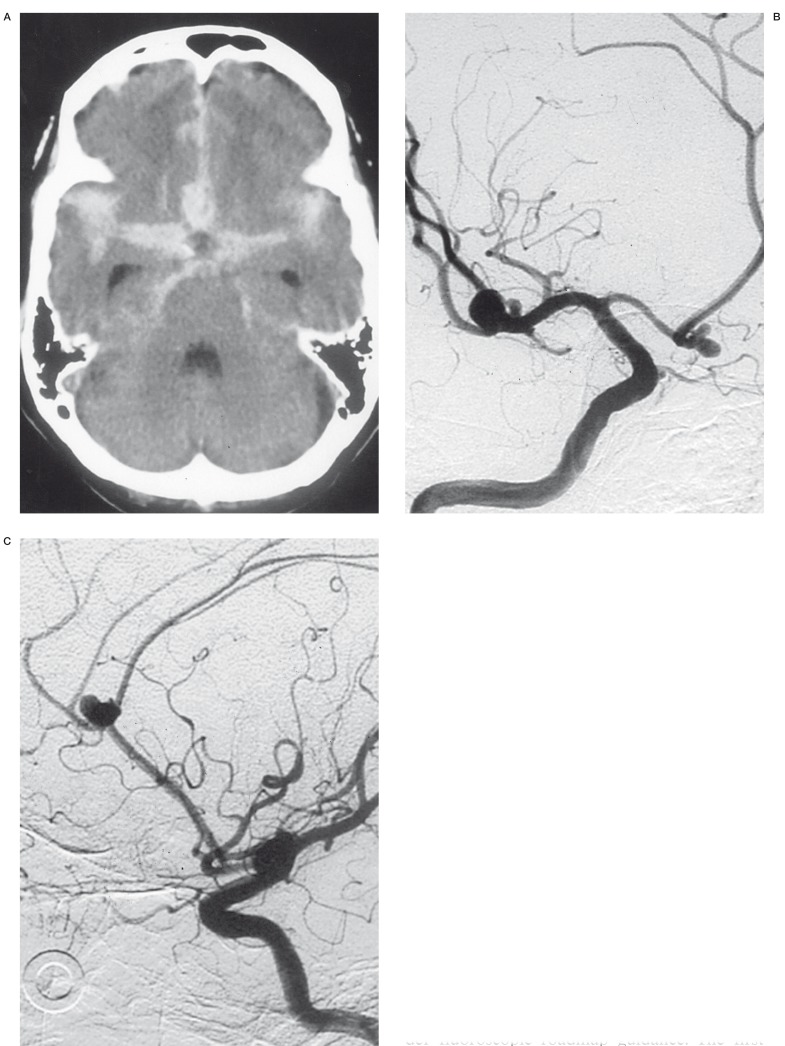
Preoperative radiological findings. A) Brain computed tomography showing subarachnoid haemorrhage with intracerebral haemorrhage in right sylvian portion. B) Right internal carotid oblique angiography showing two right middle cerebral artery aneurysms and a bilobed anterior communicating artery aneurysm. C) Left internal carotid lateral angiography showing a A2 aneurysm.
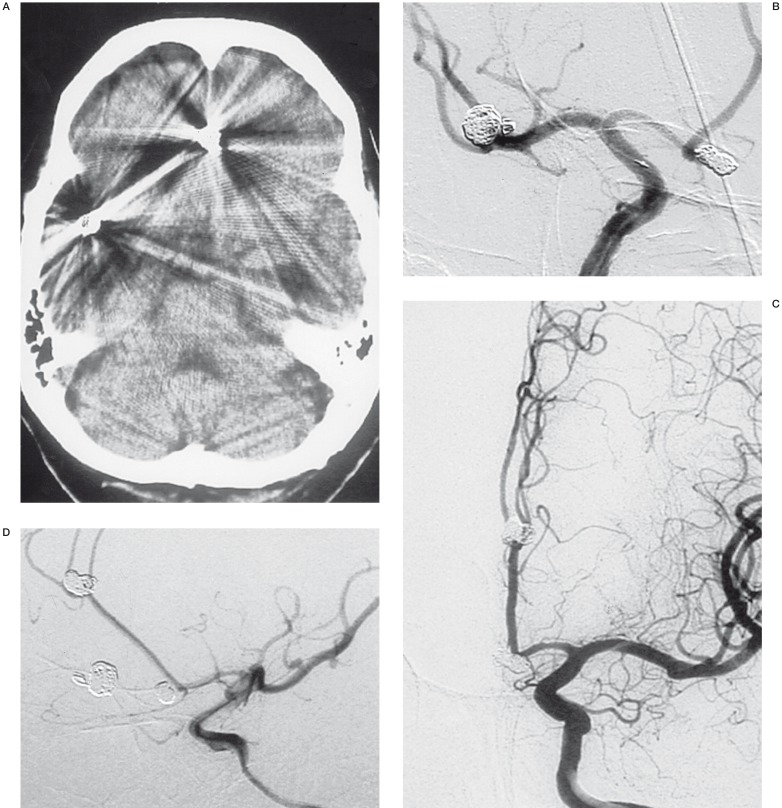
Postoperative radiological findings. A) Brain computed tomography showing coil artifact. B) Right internal carotid oblique angiography showing occlusion of two middle cerebral artery aneurysms and an anterior communicating artery aneurysm. C) Left anteroposterior internal carotid angiography showing occlusion of a left A2 aneurysm. D) Left lateral internal carotid angiography showing occlusion of two right middle cerebral artery aneurysms, anterior communicating artery aneurysm and left A2 aneurysm.
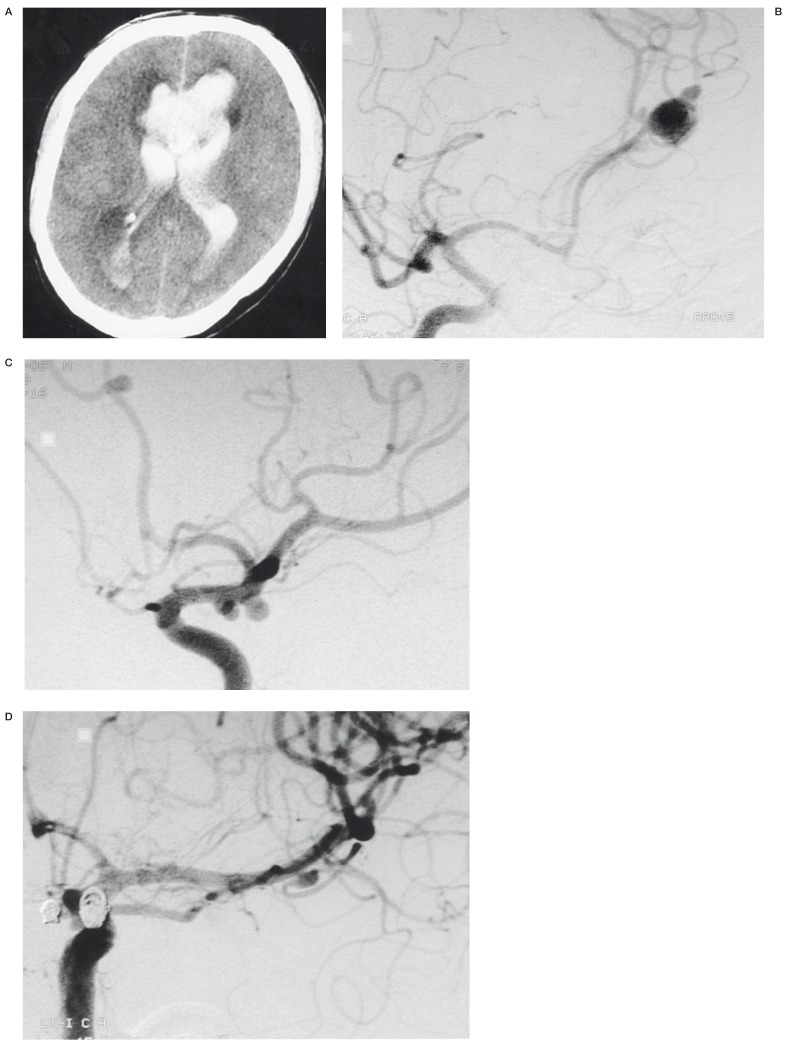
Preoperative radiological findings. A) Brain computed tomography showing Fisher grade IV subarachnoid and intraventricular haemorrhage. B) Right internal carotid oblique angiography showing a right A2 aneurysm with daughter sac. C) Left internal carotid oblique angiography showing three intracranial aneurysms including left ophthalmic artery, left posterior communicating artery and left A2 aneurysms. D) Left internal carotid anteroposterior angiography showing a left middle cerebral artery aneurysm.
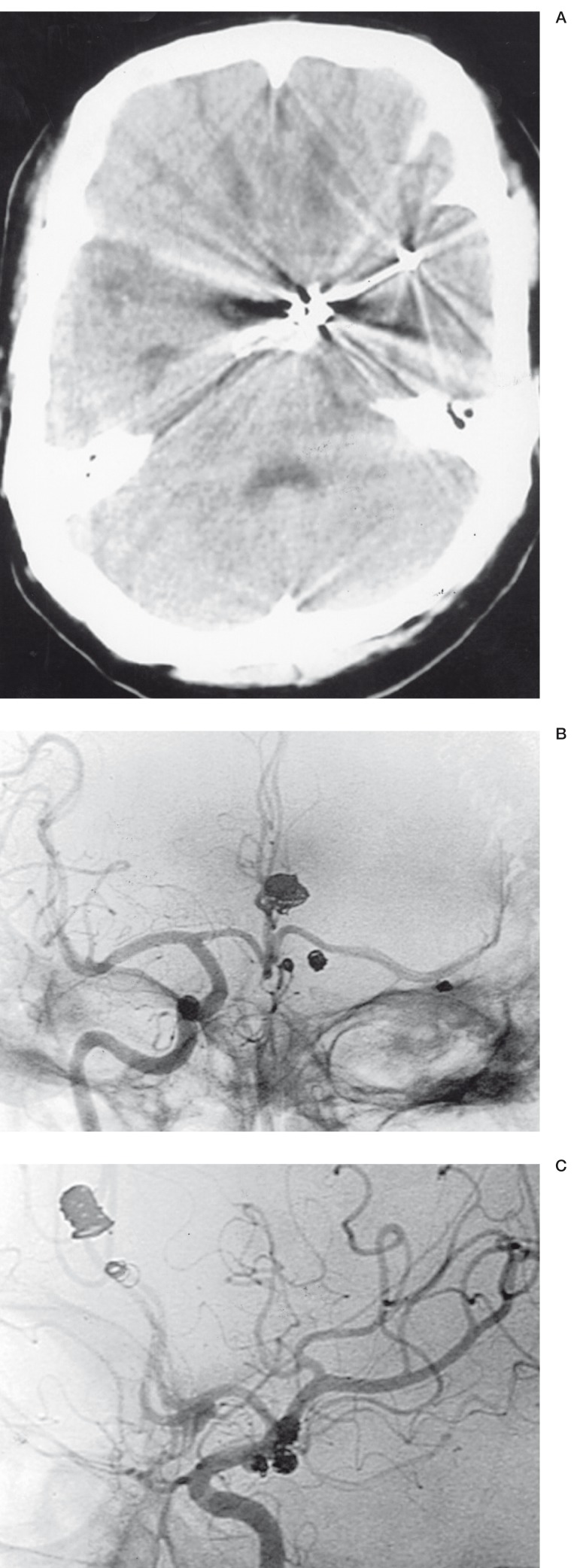
Postoperative radiological findings. A) Brain computed tomography showing multiple coil artifact. B) Right internal carotid anteroposterior angiography during the compression of left internal carotid artery, showing occlusion of right A2, left ophthalmic artery, left posterior communicating artery and left middle cerebral artery aneurysms. C) Left lateral internal carotid angiography showing occlusion of five intracranial aneurysms, including right A2, left A2, left ophthalmic artery, left posterior communicating artery and left middle cerebral artery aneurysms.
References
-
- Ellamushi HE, Grieve JP, et al. Risk factors for formation of multiple intracranial aneurysms. J Neurosurg. 2001;94:728–732. - PubMed
-
- Inagawa T. Surgical treatment of multiple intracranial aneurysms. Acta Neurochir (Wien) 1991;108:22–29. - PubMed
-
- Juvela S. Risk factors for multiple intracranial aneurysms. Stroke. 2000;31:392–397. - PubMed
-
- Kaminogo M, Yonekura M, Shibata S. Incidence and outcome of multiple intracranial aneurysms in a defined population. Stroke. 2003;34:16–21. - PubMed
-
- Kong CB, Huh JT, Jo CM. Risk factors for formation of multiple intracranial aneurysms. J Korean Neurosurg Soc. 2002;32:23–28.
LinkOut - more resources
Full Text Sources
