


Voice and speech outcomes of chemoradiation for advanced head and neck cancer: a systematic review
- PMID: 20589505
- PMCID: PMC2924496
- DOI: 10.1007/s00405-010-1316-x
Voice and speech outcomes of chemoradiation for advanced head and neck cancer: a systematic review
Abstract
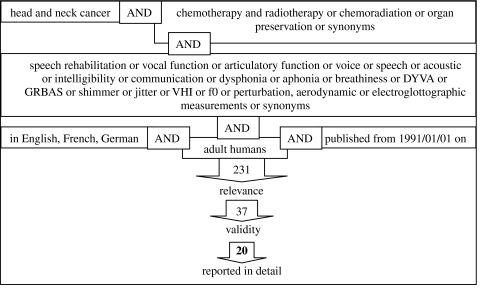
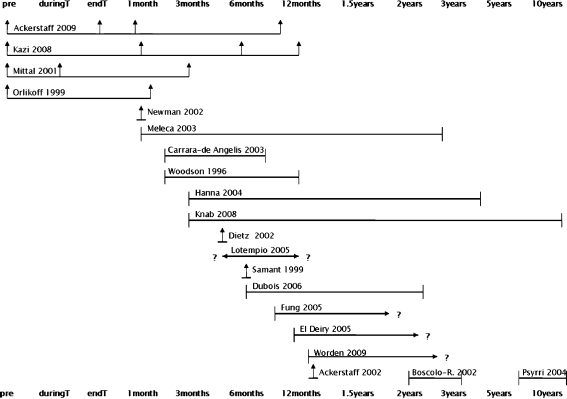
Purpose of this review is to systematically assess the effects on voice and speech of advanced head and neck cancer and its treatment by means of chemoradiotherapy (CRT). The databases Medline, Embase and Cochrane were searched (1991-2009) for terms head and neck cancer, chemoradiation, voice and speech rehabilitation. Twenty articles met the inclusion criteria, whereof 14 reported on voice outcomes and 10 on speech. Within the selected 20 studies, 18 different tools were used for speech or voice evaluation. Most studies assessed their data by means of patient questionnaires. Four studies presented outcome measures in more than one dimension. Most studies summarised the outcomes of posttreatment data that were assessed at various points in time after treatment. Except for four studies, pre-treatment measurements were lacking. This and the fact that most studies combined the outcomes of patients with radiated laryngeal cancers with outcome data of non-laryngeal cancer patients impedes an interpretation in terms of the effects of radiation versus the effects of the disease itself on voice or speech. Overall, the studies indicated that voice and speech degenerated during CRT, improved again 1-2 months after treatment and exceeded pre-treatment levels after 1 year or longer. However, voice and speech measures do not show normal values before or after treatment. Given the large-ranged posttreatment data, missing baseline assessment and the lacking separation of tumour/radiation sites, there is an urgent need for structured standardised multi-dimensional speech and voice assessment protocols in patients with advanced head and neck cancer treated with CRT.
Figures
References
-
- van der Molen L, van Rossum MA, Burkhead LM, Smeele LE, Hilgers FJ. Functional outcomes and rehabilitation strategies in patients treated with chemoradiotherapy for advanced head and neck cancer: a systematic review. Eur Arch Otorhinolaryngol. 2009;266:901–902. doi: 10.1007/s00405-008-0845-z. - DOI - PubMed
-
- Rosen DC, Sataloff RT. Voice disorders; psychological aspects; patients; rehabilitation; psychology. San Diego: Singular Publication Group; 1997.
Publication types
MeSH terms
LinkOut - more resources
Full Text Sources
Medical
Research Materials
Miscellaneous
