Descriptive epidemiology of cholangiocarcinoma and clonorchiasis in Korea
- PMID: 20592891
- PMCID: PMC2890876
- DOI: 10.3346/jkms.2010.25.7.1011
Descriptive epidemiology of cholangiocarcinoma and clonorchiasis in Korea
Abstract
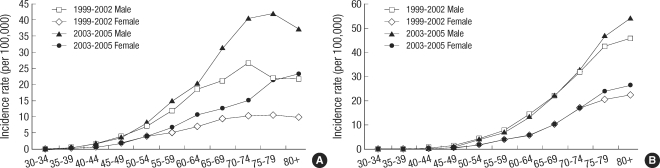
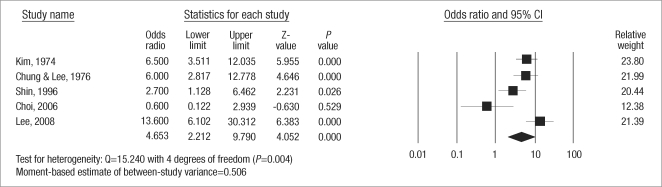
In 2009, infection with the liver fluke Clonorchis sinensis (C. sinensis) was classified as "carcinogenic to humans" (Group 1) based on its involvement in the etiology of cholangiocarcinoma by the International Agency for Research on Cancer. However, little is known about the descriptive epidemiology of cholangiocarcinoma in Korea. We examined incidence trends of intrahepatic and extrahepatic cholangiocarcinomas, using data from the Korea National Cancer Incidence database for 1999-2005. The prevalence of C. sinensis infection was estimated from a recent population-based survey in rural endemic areas. Cholangiocarcinoma incidence rates are currently rising, even while primary liver cancer incidence rates are decreasing. Annual percent changes in cholangiocarcinoma incidence rates were 8% for males and 11% in females. Known areas of C. sinensis endemicity showed high incidence rates of cholangiocarcinoma. The positivity of C. sinensis eggs in stool samples from endemic areas was more than 25% of adults tested during 2005-2008. From a meta-analysis, the summary odds ratio for cholangiocarcinoma due to C. sinensis infection was 4.7 (95% confidence interval: 2.2-9.8). Approximately 10% of cholangiocarcinomas in Korea were caused by chronic C. sinensis infections. More specific policies, including health education and an extensive effort for early detection in endemic areas, are needed.
Keywords: Clonorchis sinensis; Korea; cholangiocarcinoma.
Figures
References
-
- Kaewkes S. Taxonomy and biology of liver flukes. Acta Tropica. 2003;88:177–186. - PubMed
-
- Lun ZR, Gasser RB, Lai DH, Li AX, Zhu XQ, Yu XB, Fang YY. Clonorchiasis: a key foodborne zoonosis in China. Lancet Infect Dis. 2005;5:31–41. - PubMed
-
- Bouvard V, Baan R, Straif K, Grosse Y, Secretan B, El Ghissassi F, Benbrahim-Tallaa L, Guha N, Freeman C, Galichet L, Cogliano V. A review of human carcinogens-Part B: biological agents. Lancet Oncol. 2009;10:321–322. - PubMed
-
- Lim MK, Ju YH, Franceschi S, Oh JK, Kong HJ, Hwang SS, Park SK, Cho SI, Sohn WM, Kim DI, Yoo KY, Hong ST, Shin HR. Clonorchis sinensis infection and increasing risk of cholangiocarcinoma in the Republic of Korea. Am J Trop Med Hyg. 2006;75:93–96. - PubMed
Publication types
MeSH terms
LinkOut - more resources
Full Text Sources
Medical