


Exercise increases interleukin-10 levels both intraarticularly and peri-synovially in patients with knee osteoarthritis: a randomized controlled trial
- PMID: 20594330
- PMCID: PMC2945016
- DOI: 10.1186/ar3064
Exercise increases interleukin-10 levels both intraarticularly and peri-synovially in patients with knee osteoarthritis: a randomized controlled trial
Abstract
Introduction: The microdialysis method was applied to the human knee joint with osteoarthritis (OA) in order to reveal changes in biochemical markers of cartilage and inflammation, intraarticularly and in the synovium, in response to a single bout of mechanical joint loading.
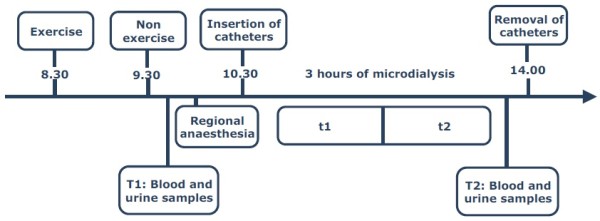
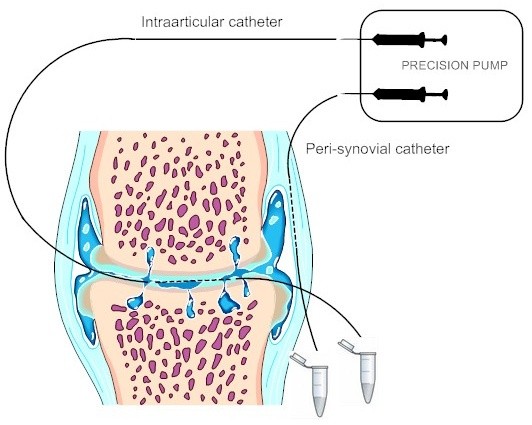
Methods: Thirty-one female subjects with OA of the knee were randomized to non-exercise (NEx) or exercise (Ex) groups. Following acute resistance exercise (25 sets of 10 repetitions at 60% of 1 Repetition Maximum) or none (NEx), peripheral nerve blocks just below the inguinal ligament were applied and two microdialysis catheters were positioned in two different compartments, intraarticularly and peri-synovially. The microdialysis catheters were perfused at a slow rate (2 μl/minute) with a solution of Ringer-acetate and radioactively labelled glucose allowing for determination of relative recovery (RR) and calculation of interstitial concentrations of inflammatory and cartilage biomarkers over a three-hour period.
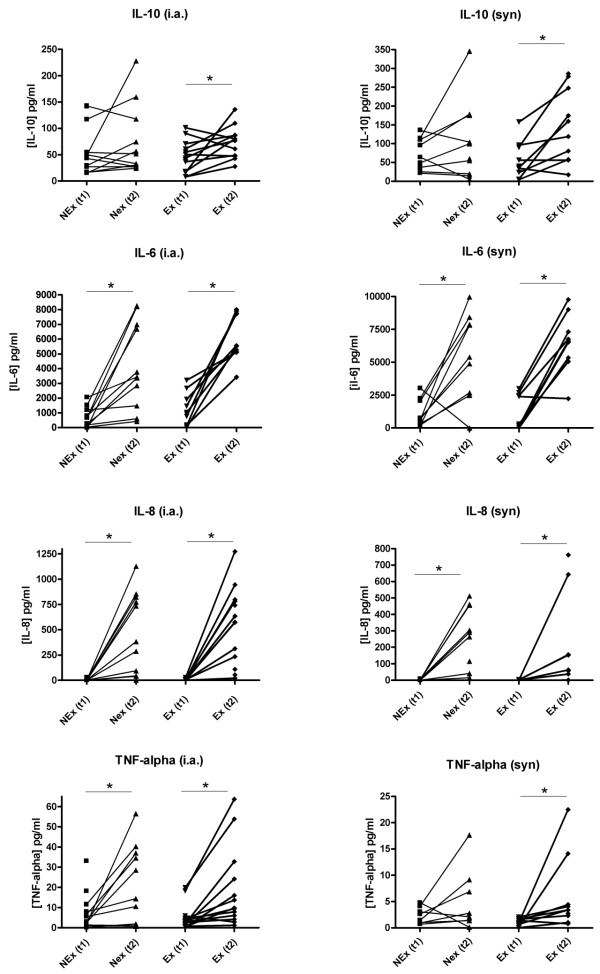
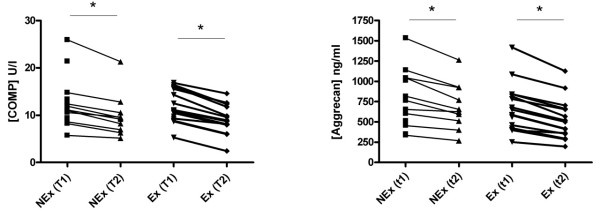
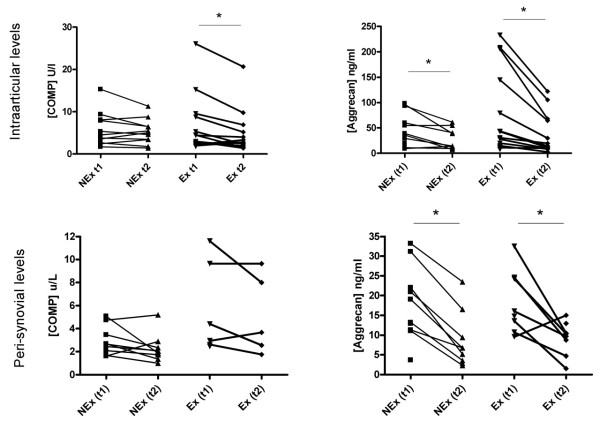
Results: A significant increase of Interleukin (IL) -10 was discovered in both positions of the knee in the Ex group over the three hours post exercise, whereas IL-10 remained stationary over time in the NEx group. IL-6 and IL-8 displayed significant increases over time regardless of group and position of the catheter. Cartilage oligomeric matrix protein (COMP) decreased intraarticularly in the post exercise period in the Ex group compared to the NEx group.
Conclusions: Exercise caused an increase in both intraarticular and peri-synovial concentrations of IL-10 in a group of human females with knee OA. This suggests a positive effect of exercise on a chondroprotective anti-inflammatory cytokine response in patients with knee OA and might contribute to explaining the beneficial effect that exercise has on OA.
Trial registration: NCT01090375.
Figures
Comment in
-
Exercise-induced changes in interleukin-10 in patients with knee osteoarthritis: new perspectives?Arthritis Res Ther. 2010;12(4):131. doi: 10.1186/ar3084. Epub 2010 Jul 29. Arthritis Res Ther. 2010. PMID: 20687899 Free PMC article.
References
-
- van Baar ME, Dekker J, Oostendorp RA, Bijl D, Voorn TB, Lemmens JA, Bijlsma JW. The effectiveness of exercise therapy in patients with osteoarthritis of the hip or knee: a randomized clinical trial. J Rheumatol. 1998;25:2432–2439. - PubMed
-
- Ettinger WH Jr, Burns R, Messier SP, Applegate W, Rejeski WJ, Morgan T, Shumaker S, Berry MJ, O'Toole M, Monu J, Craven T. A randomized trial comparing aerobic exercise and resistance exercise with a health education program in older adults with knee osteoarthritis. The Fitness Arthritis and Seniors Trial (FAST) JAMA. 1997;277:25–31. doi: 10.1001/jama.277.1.25. - DOI - PubMed
-
- Fransen M, Crosbie J, Edmonds J. Physical therapy is effective for patients with osteoarthritis of the knee: a randomized controlled clinical trial. J Rheumatol. 2001;28:156–164. - PubMed
Publication types
MeSH terms
Substances
Associated data
LinkOut - more resources
Full Text Sources
Medical
Miscellaneous
