


Molecular simulations of carbohydrates and protein-carbohydrate interactions: motivation, issues and prospects
- PMID: 20594934
- PMCID: PMC3936463
- DOI: 10.1016/j.drudis.2010.06.001
Molecular simulations of carbohydrates and protein-carbohydrate interactions: motivation, issues and prospects
Abstract
The characterization of the 3D structure of oligosaccharides, their conjugates and analogs is particularly challenging for traditional experimental methods. Molecular simulation methods provide a basis for interpreting sparse experimental data and for independently predicting conformational and dynamic properties of glycans. Here, we summarize and analyze the issues associated with modeling carbohydrates, with a detailed discussion of four of the most recently developed carbohydrate force fields, reviewed in terms of applicability to natural glycans, carbohydrate-protein complexes and the emerging area of glycomimetic drugs. In addition, we discuss prospectives and new applications of carbohydrate modeling in drug discovery.
Figures
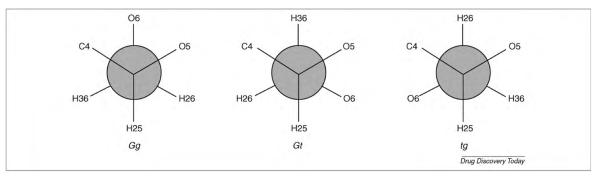
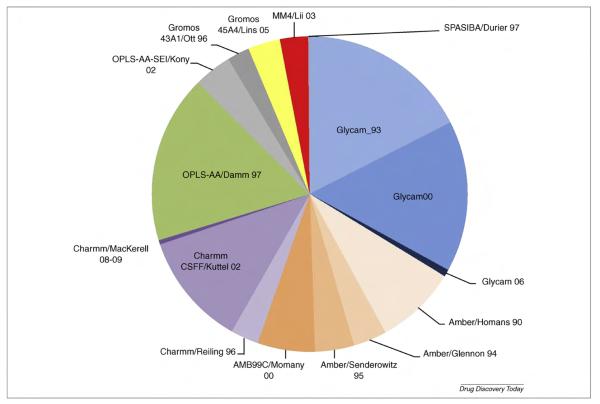
References
-
- Karlsson KA. Bacterium–host protein–carbohydrate interactions and pathogenicity. Biochem. Soc. Trans. 1999;27:471–474. - PubMed
-
- Rogers GN, Paulson J. Receptor determinants of human and animal influenza virus isolates: differences in receptor specificity of the H3 hemagglutinin based on species of origin. Virology. 1983;127:361–373. - PubMed
-
- Sharon N. Carbohydrates as future anti-adhesion drugs for infectious diseases. Biochim. Biophys. Acta. 2006;1760:527–537. - PubMed
-
- Freeze HH. Update and perspectives on congenital disorders of glycosylation. Glycobiology. 2001;11:129r–143r. - PubMed
-
- Arnold JN, et al. The impact of glycosylation on the biological function and structure of human immunoglobulins. Annu. Rev. Immunol. 2007;25:21–50. - PubMed
Publication types
MeSH terms
Substances
Grants and funding
LinkOut - more resources
Full Text Sources
Other Literature Sources
