


Effects of a computer-supported interactive tailored patient assessment tool on patient care, symptom distress, and patients' need for symptom management support: a randomized clinical trial
- PMID: 20595307
- PMCID: PMC2995659
- DOI: 10.1136/jamia.2010.005660
Effects of a computer-supported interactive tailored patient assessment tool on patient care, symptom distress, and patients' need for symptom management support: a randomized clinical trial
Abstract
Objective: To examine the effects of a computer-assisted, interactive tailored patient assessment (ITPA) tool in oncology practice on: documented patient care, symptom distress, and patients' need for symptom management support during treatment and rehabilitation.
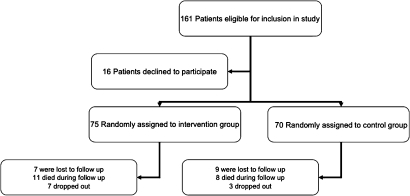
Design and methods: For this repeated measures clinical trial at a university hospital in Norway, 145 patients starting treatment for leukemia or lymphoma were randomly assigned to either an intervention (n=75) or control group (n=70). Both groups used the ITPA for symptom assessments prior to inpatient and outpatient visits for up to one year. The assessment summary, which displayed patients' self-reported symptoms, problems, and distress in rank-order of the patient's need for support, was provided to physicians and nurses in the intervention group only but not in the control group.
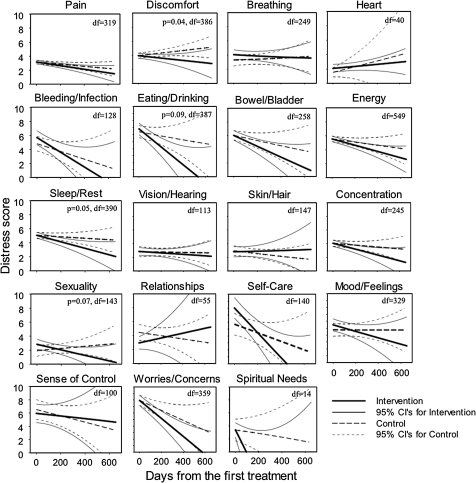
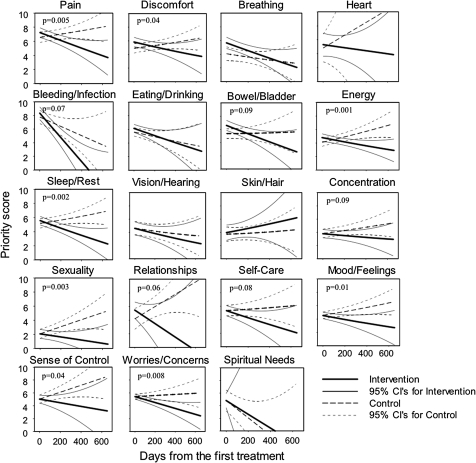
Results: Significantly more symptoms were addressed in the intervention group patient charts versus those of the control group. Symptom distress in the intervention group decreased significantly over time in 11 (58%) of 19 symptom/problem categories versus 2 (10%) for the control group. Need for symptom management support over time also decreased significantly more for the intervention group than the control group in 13 (68%) symptom categories.
Conclusion: This is the first study to show that an ITPA used in an interdisciplinary oncology practice can significantly improve patient-centered care and patient outcomes, including reduced symptom distress and reduced need for symptom management support.
Conflict of interest statement
Figures
References
-
- Newell S, Sanson-Fisher RW, Girgis A, et al. How well do medical oncologists' perceptions reflect their patients' reported physical and psychosocial problems? Data from a survey of five oncologists. Cancer 1998;83:1640–51 - PubMed
-
- Bruera E, Sweeney C, Calder K, et al. Patient preferences versus physician perceptions of treatment decisions in cancer care. J Clin Oncol 2001;19:2883–5 - PubMed
-
- Wenrich MD. Dying patients' need for emotional support and personalized care from physicians: perspectives of patients with terminal illness, families, and health care providers. J Pain Symptom Manage 2003;25:236–46 - PubMed
-
- Chang VT, Hwang SS, Feuerman M, et al. Symptom and quality of life survey of medical oncology patients at a veterans affairs medical center: a role for symptom assessment. Cancer 2000;88:1175–83 - PubMed
-
- Butow PN, Brown RF, Cogar S, et al. Oncologists' reactions to cancer patients' verbal cues. Psychooncology 2002;11:47–58 - PubMed
Publication types
MeSH terms
LinkOut - more resources
Full Text Sources
Other Literature Sources
Medical
Miscellaneous
