. 2010 Nov;17(11):761-70.
doi: 10.1038/cgt.2010.33. Epub 2010 Jul 2.

A fully replication-competent adenovirus vector with enhanced oncolytic properties

Affiliations

A fully replication-competent adenovirus vector with enhanced oncolytic properties

K Toth et al. Cancer Gene Ther. 2010 Nov.

Abstract

We have studied the oncolytic efficacy of two adenovirus vectors named KD3 and INGN 007, which differ from each other only in that whereas KD3 has two small deletions in its e1a gene that restrict its replication to rapidly cycling cells, INGN 007 has wild-type e1a gene. Both vectors overexpress the adenovirus death protein (ADP). Both KD3 and INGN 007 effectively suppressed the growth of subcutaneous human A549 and Hep3B tumors in nude mice upon intratumoral injection, and contained the growth of subcutaneous LNCaP tumors after intravenous injection, making some tumors shrink or disappear. However, in a more demanding model, intravenous injections of neither KD3 nor wild-type Ad5 were effective against subcutaneous A549 tumors, whereas INGN 007 increased the mean survival time by 35%. INGN 007 was also effective in suppressing tumor growth in a challenging A549 orthotopic lung cancer model. INGN 007 was superior to dl1520 (ONYX-015) in repressing subcutaneous A549 tumors. Our results suggest that vectors such as INGN 007 might provide better antitumor efficacy in the clinic as well.


Conflict of interest statement

Conflict of interest

Some of the funding for the research was provided by VirRx Inc. WSMW and KT own stock in VirRx Inc.

Figures
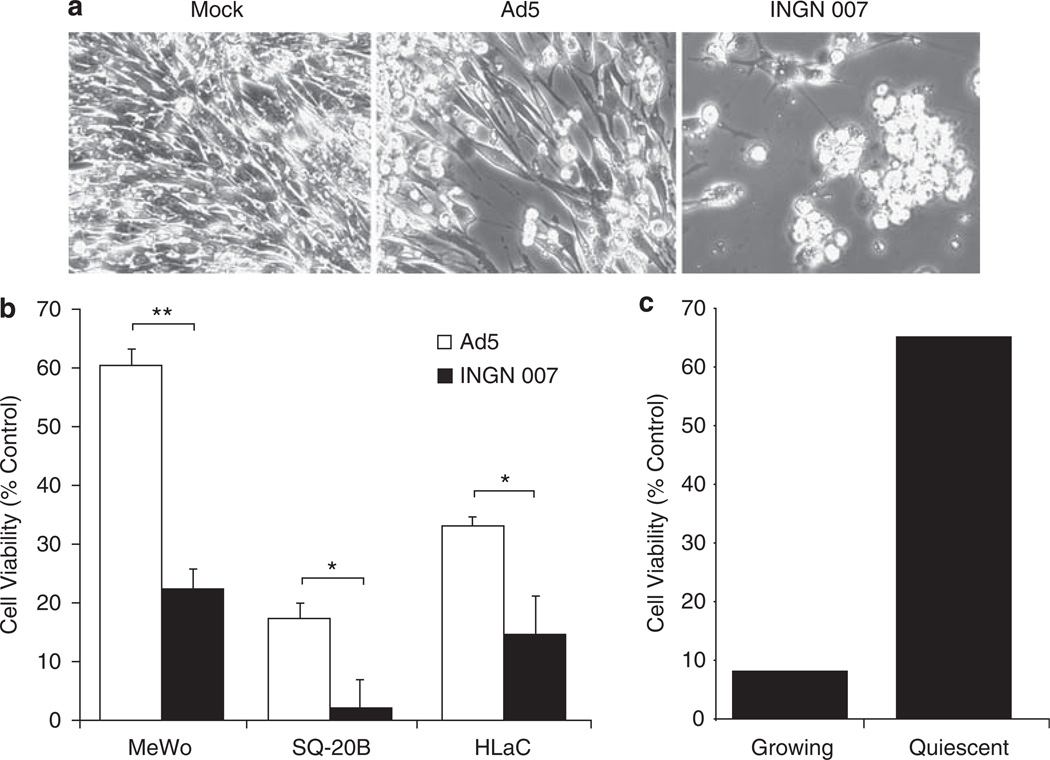
Figure 1
Figure 1
INGN 007 lyses cancer cells more effectively than Ad5. (a) MeWo human melanoma cells were mock infected or infected with Ad5 or INGN 007 at 1PFU per cell. The cells were photographed at day 8 p.i. (b) The indicated cell lines were infected with 1PFU per cell of INGN 007 or Ad5. At day 8 p.i., the cell lysis was quantified by measuring lactate dehydrogenase (LDH) levels in the medium. Data are presented as percent of total lysis of mock-infected cells. (c) INGN 007 replicates less well in normal cells than in cancer cells and less well in quiescent cells than in proliferating cells. Growing and quiescent human mammary epithelial cells were mock infected or infected with 1PFU per cell of INGN 007. At day 7 p.i., cell lysis was quantified by measuring LDH levels in the medium. Cell viability as percent of corresponding mock-infected cells is presented. Error bars represent standard error of the mean. Statistically significant differences were determined by unpaired Student’s t-test; *P ≤ 0.05, **P ≤ 0.001.
Figure 2
Figure 2
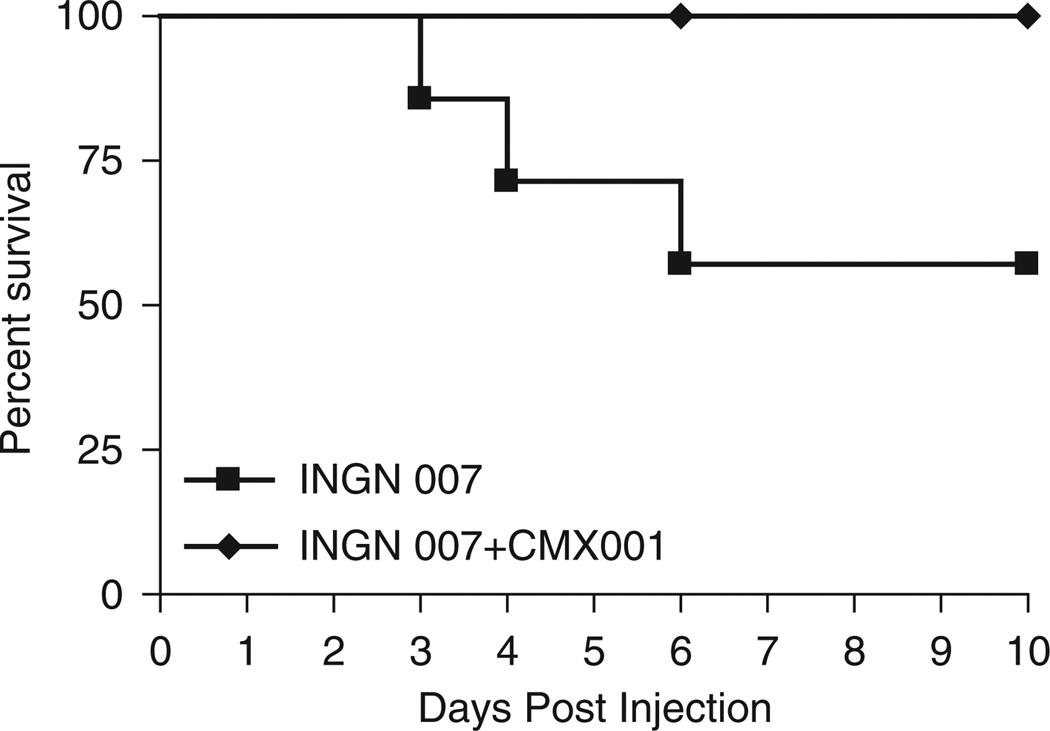
CMX001 protects Syrian hamsters from lethal challenge with INGN 007. The lethal dose 50% (LD50) of INGN 007 was injected intravenously into animals treated or not treated with CMX001. Hamsters were killed when they became moribund. Vehicle n = 7; CMX001 n = 8.
Figure 3
Figure 3
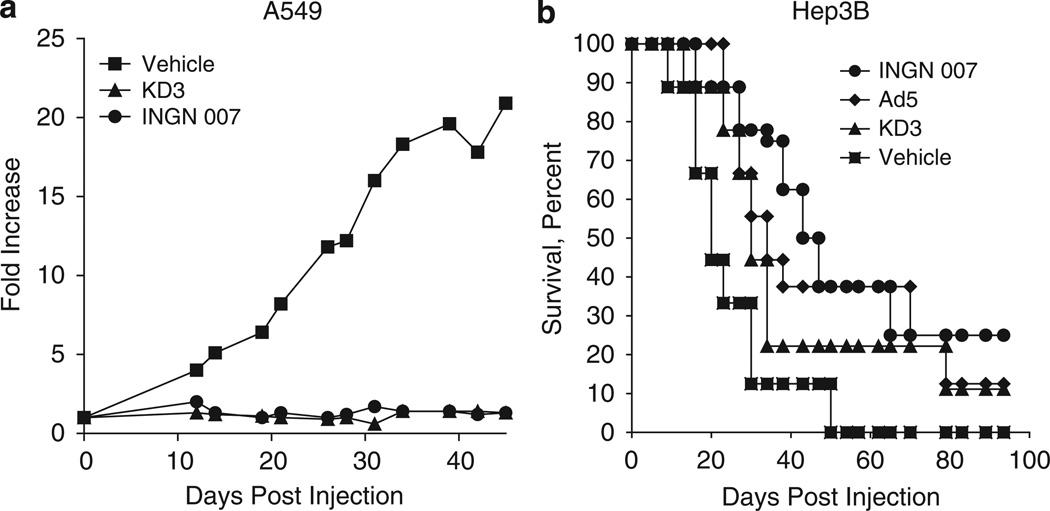
Intratumoral injection of KD3 or INGN 007 suppresses the growth of subcutaneous A549 lung cancer and Hep3B liver tumor xenografts in nude mice. (a) Pre-established subcutaneous A549 tumors were injected intratumorally with three daily doses of vehicle (n = 16) or 3 × 10⁸ PFU of KD3 (n = 17) or INGN 007 (n = 16). Fold increase in tumor size compared with the size at the time of injection is shown. Vehicle versus INGN 007, P = 0.026; vehicle versus KD3, P < 0.001; INGN 007 versus KD3, P = 0.24 (Student’s t-test). (b) Nude mice bearing pre-established subcutaneous Hep3B tumors were injected intratumorally with three daily doses of vehicle (n = 8) or 3 × 10⁸ PFU of INGN 007 (n = 8), KD3 (n = 9) or Ad5 (n = 7). Animals were killed when the tumors reached 1 ml of size. Vehicle versus INGN 007, P = 0.01; vehicle versus KD3, P < 0.06; vehicle versus Ad5, P < 0.04; INGN 007 versus KD3, P = 0.24 (log rank). The differences between the virus-injected groups are not statistically significant.
Figure 4
Figure 4
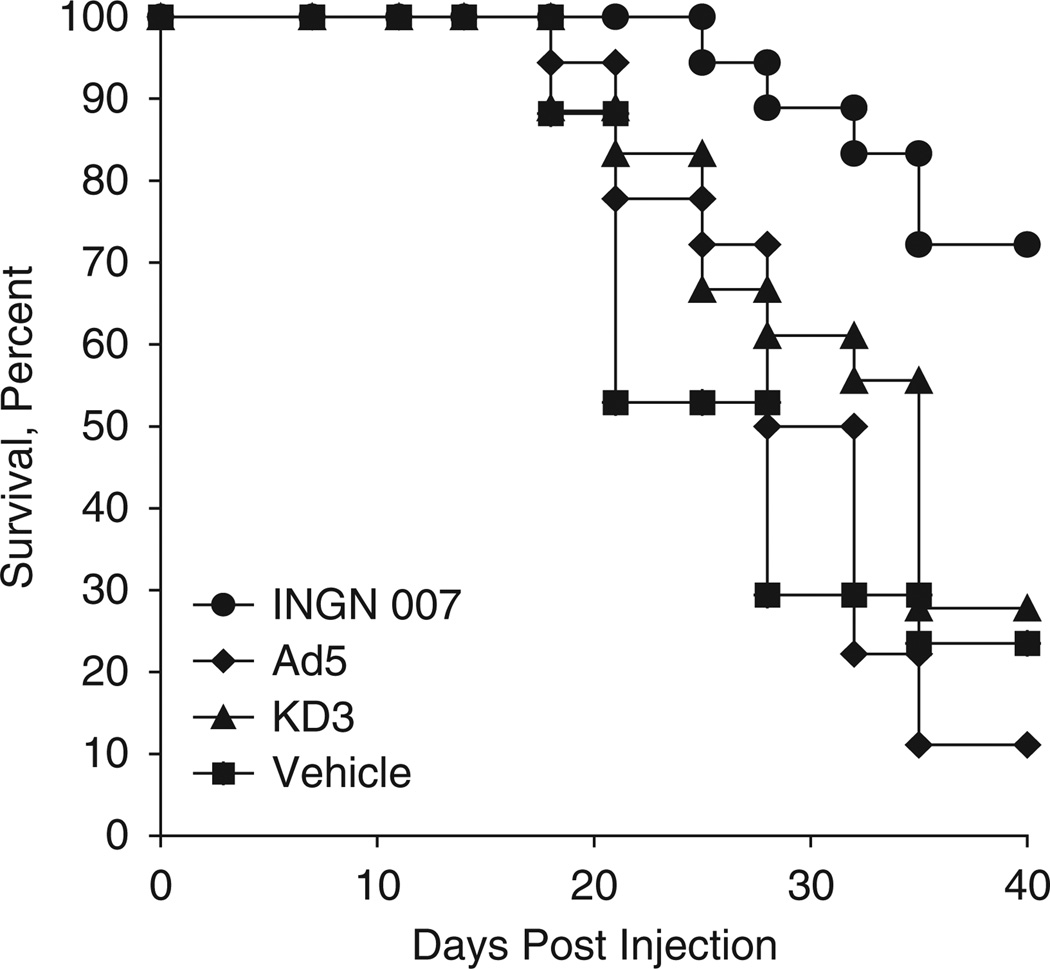
Intravenous injection of INGN 007 is more efficacious in extending the lifespan of A549 lung cancer tumor xenograft-bearing mice than intravenous injections of KD3 or Ad5. Mice bearing subcutaneous A549 tumors (n = 18/group) were injected intravenously with vehicle or 3 × 10⁸ PFU of the indicated viruses for three consecutive days. Animals were killed when tumors reached 1 ml size. Vehicle versus INGN 007, P = 0.002; vehicle versus Ad5, P = 0.98; vehicle versus KD3, P = 0.65; INGN 007 versus Ad5, P < 0.001; INGN 007 versus KD3, P = 0.002; Ad5 versus KD3, P = 0.36 (log rank).
Figure 5
Figure 5
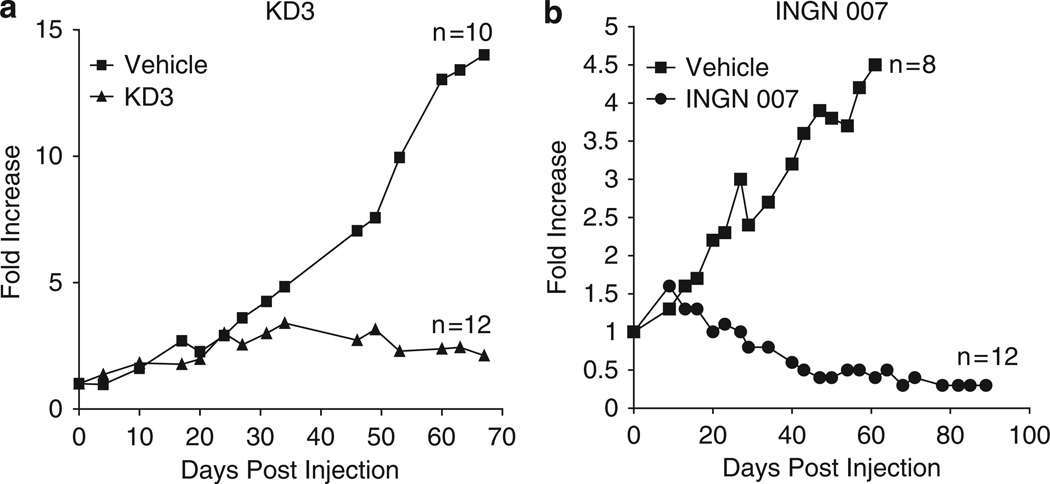
Intravenous injection of either KD3 or INGN 007 efficiently suppresses the growth of subcutaneous LNCaP prostate cancer xenografts in nude mice. Nude mice bearing pre-established LNCaP tumors received a single injection of vehicle (n = 10) or 2 × 10⁸ PFU of KD3 (n = 12) (a), or three daily doses of vehicle (n = 8) or 3 × 10⁸ PFU (total dose of 9 × 10⁸ PFU) of INGN 007 (n = 12) (b). The mean tumor growth compared with size at the time of injection is shown. Vehicle versus KD3, P = 0.005; vehicle versus INGN 007, P = 0.007 (Student’s t-test).
Figure 6
Figure 6
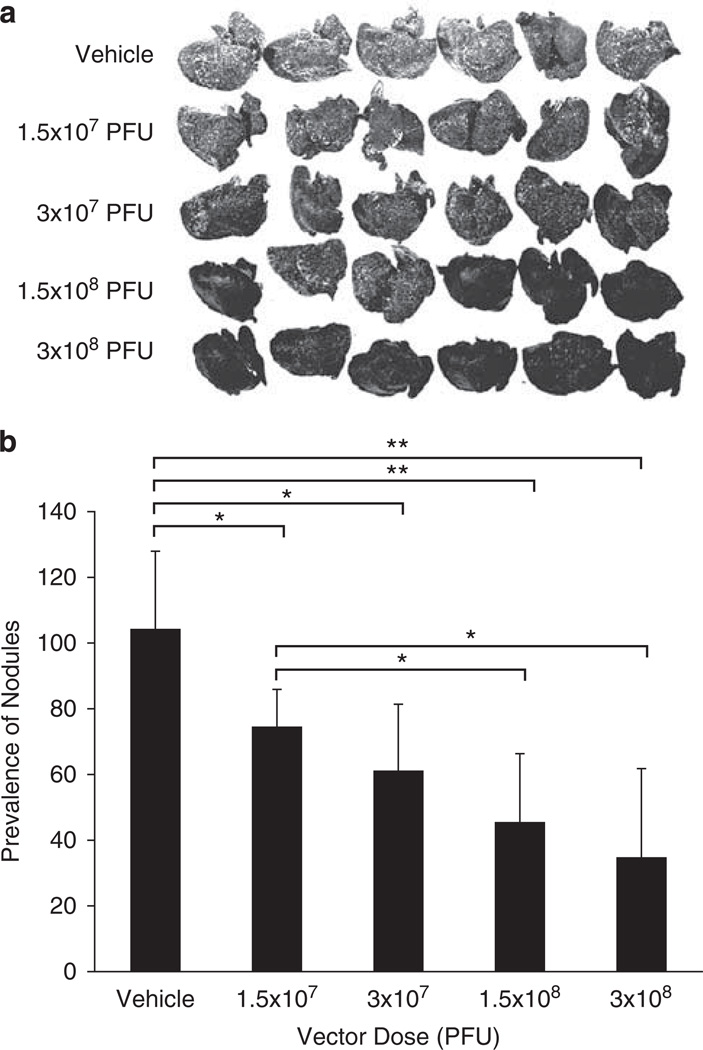
Intravenous injection of INGN 007 decreases the prevalence of orthotopic A549 lung tumors in nude mice. Athymic nude mice were injected intravenously with 2 × 10⁶ A549 lung cancer cells into the tail vein (day 0). At 10, 11 and 12 days after injection of the cells, the mice were injected via the jugular vein with vehicle (mock) or with the indicated doses of INGN 007. On day 21, the animals were killed and the lungs were stained with India ink. (a) Photographs of the stained lungs show that the tumor nodules appear as white spots on a black background. (b) The photographs for each group were scanned and then analyzed with Adobe Photoshop software. The mean luminosity of all the pixels in the same area of each lung was measured and averaged for each group (n = 6/group). *P < 0.05; **P < 0.001 (Student’s t-test).
Figure 7
Figure 7
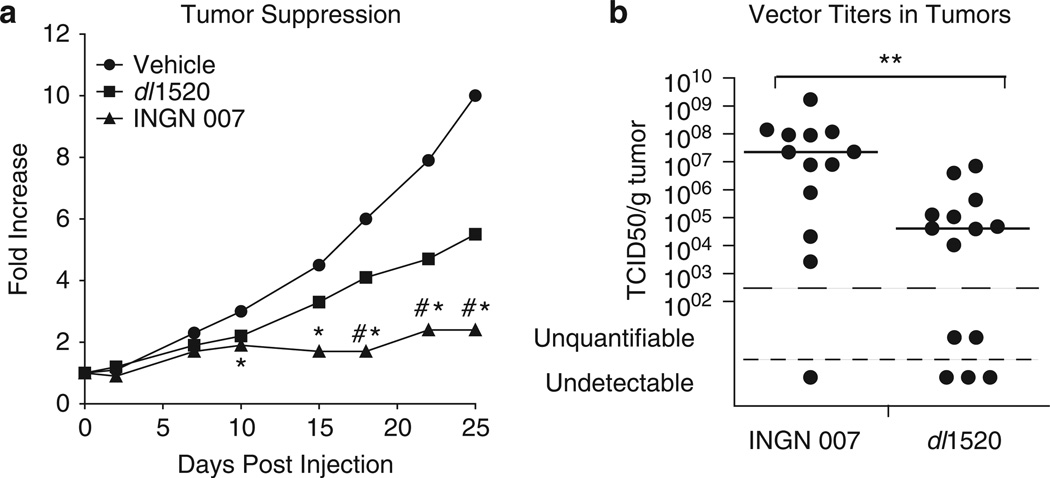
INGN 007 suppresses the growth of subcutaneous A549 human lung cancer tumors more efficiently and replicates better in tumors than dl1520 (ONYX-015). Subcutaneous A549 tumors in nude mice were injected intratumorally with vehicle or with 3 × 10⁸ 50% tissue culture infective dose (TCID50) of the viruses on three consecutive days, starting from day 2. One dl1520- and 3 INGN 007-treated tumors disappeared completely. (a) Median growth of tumors compared with their size at the start of the experiment. Mock and dl1520: n = 16; INGN 007: n = 15. *INGN 007 versus Mock, P < 0.05; #INGN 007 versus dl1520, P < 0.05. (b) Infectious virus titers in tumors at the completion of the experiment (day 25). The horizontal bar represents the median value. **INGN 007 versus dl1520, P < 0.01.

References

    1. Cattaneo R, Miest T, Shashkova EV, Barry MA. Reprogrammed viruses as cancer therapeutics: targeted, armed and shielded. Nat Rev Microbiol. 2008;6:529–540. - PMC - PubMed
    1. Bischoff JR, Kirn DH, Williams A, Heise C, Horn S, Muna M, et al. An adenovirus mutant that replicates selectively in p53-deficient human tumor cells. Science. 1996;274:373–376. - PubMed
    1. Freytag SO, Rogulski KR, Paielli DL, Gilbert JD, Kim JH. A novel three-pronged approach to kill cancer cells selectively: concomitant viral, double suicide gene, and radiotherapy. Hum Gene Ther. 1998;9:1323–1333. - PubMed
    1. Rodriguez R, Schuur ER, Lim HY, Henderson GA, Simons JW, Henderson DR. Prostate attenuated replication competent adenovirus (ARCA) CN706: a selective cytotoxic for prostate-specific antigen-positive prostate cancer cells. Cancer Res. 1997;57:2559–2563. - PubMed
    1. Yu DC, Chen Y, Seng M, Dilley J, Henderson DR. The addition of adenovirus type 5 region E3 enables calydon virus 787 to eliminate distant prostate tumor xenografts. Cancer Res. 1999;59:4200–4203. - PubMed

Publication types