


Organogenesis relies on SoxC transcription factors for the survival of neural and mesenchymal progenitors
- PMID: 20596238
- PMCID: PMC2892298
- DOI: 10.1038/ncomms1008
Organogenesis relies on SoxC transcription factors for the survival of neural and mesenchymal progenitors
Abstract
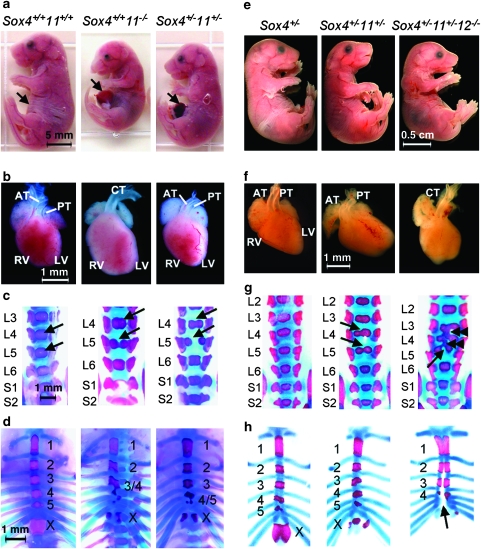
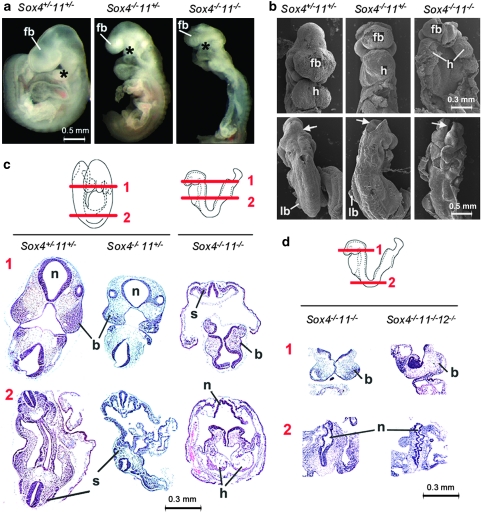
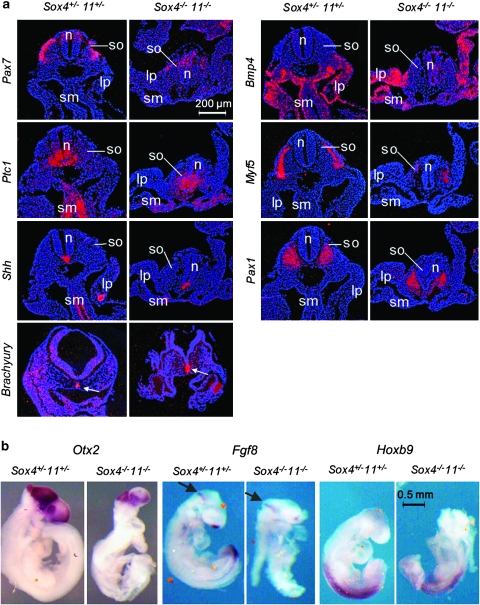
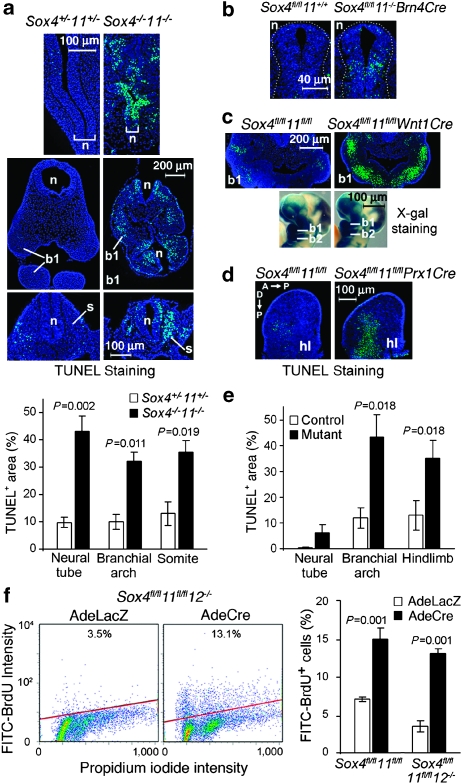
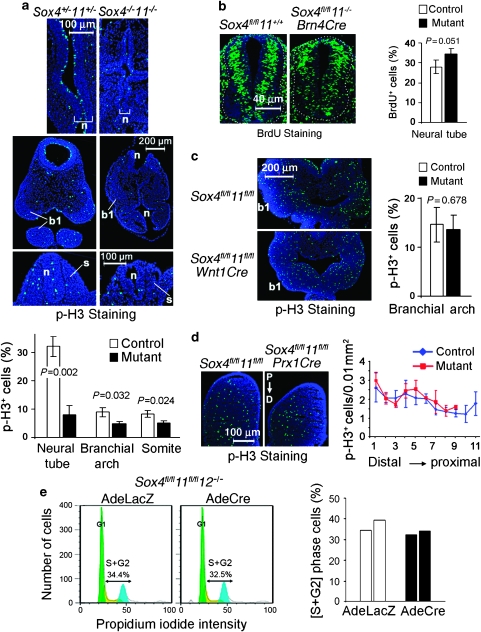
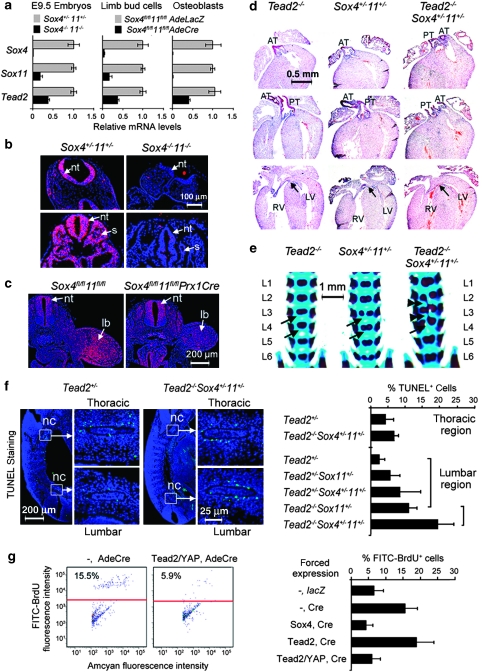
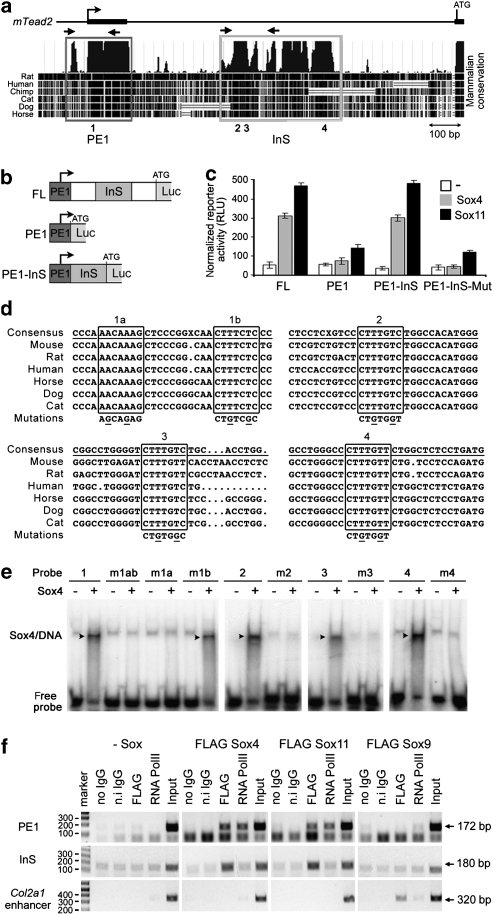
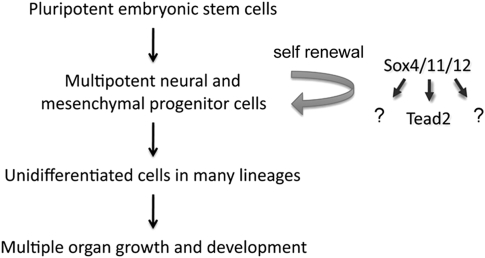
During organogenesis, neural and mesenchymal progenitor cells give rise to many cell lineages, but their molecular requirements for self-renewal and lineage decisions are incompletely understood. In this study, we show that their survival critically relies on the redundantly acting SoxC transcription factors Sox4, Sox11 and Sox12. The more SoxC alleles that are deleted in mouse embryos, the more severe and widespread organ hypoplasia is. SoxC triple-null embryos die at midgestation unturned and tiny, with normal patterning and lineage specification, but with massively dying neural and mesenchymal progenitor cells. Specific inactivation of SoxC genes in neural and mesenchymal cells leads to selective apoptosis of these cells, suggesting SoxC cell-autonomous roles. Tead2 functionally interacts with SoxC genes in embryonic development, and is a direct target of SoxC proteins. SoxC genes therefore ensure neural and mesenchymal progenitor cell survival, and function in part by activating this transcriptional mediator of the Hippo signalling pathway.
Figures
References
-
- Bernardo M. E., Locatelli F. & Fibbe W. E. Mesenchymal stromal cells. Ann. NY Acad. Sci. 1176, 101–117 (2009). - PubMed
-
- Kuhn N. Z. & Tuan R. S. Regulation of stemness and stem cell niche of mesenchymal stem cells: implications in tumorigenesis and metastasis. J. Cell. Physiol. 222, 268–277 (2010). - PubMed
Publication types
MeSH terms
Substances
Grants and funding
LinkOut - more resources
Full Text Sources
Molecular Biology Databases
Research Materials
