


Troponin release following endurance exercise: is inflammation the cause? a cardiovascular magnetic resonance study
- PMID: 20598139
- PMCID: PMC2908607
- DOI: 10.1186/1532-429X-12-38
Troponin release following endurance exercise: is inflammation the cause? a cardiovascular magnetic resonance study
Abstract
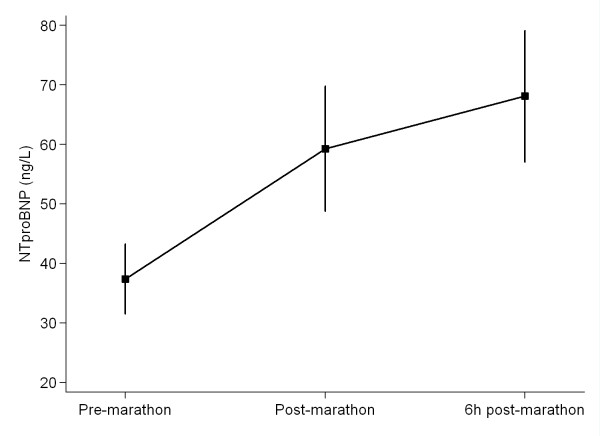
Background: The aetiology and clinical significance of troponin release following endurance exercise is unclear but may be due to transient myocardial inflammation. Cardiovascular magnetic resonance (CMR) affords us the opportunity to evaluate the presence of myocardial inflammation and focal fibrosis and is the ideal imaging modality to study this hypothesis. We sought to correlate the relationship between acute bouts of ultra endurance exercise leading to cardiac biomarkers elevation and the presence of myocardial inflammation and fibrosis using CMR.
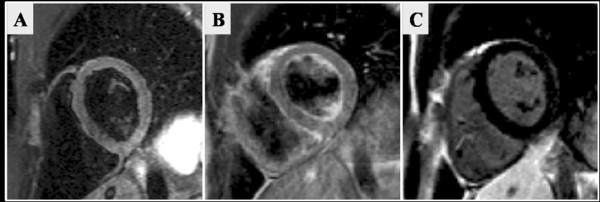
Methods: 17 recreation athletes (33.5 +/- 6.5 years) were studied before and after a marathon run with troponin, NTproBNP, and CMR. Specific imaging parameters to look for inflammation included T2 weighted images, and T1 weighted spin-echo images before and after an intravenous gadolinium-DTPA to detect myocardial hyperemia secondary to inflammation. Late gadolinium imaging was performed (LGE) to detect any focal regions of replacement fibrosis.
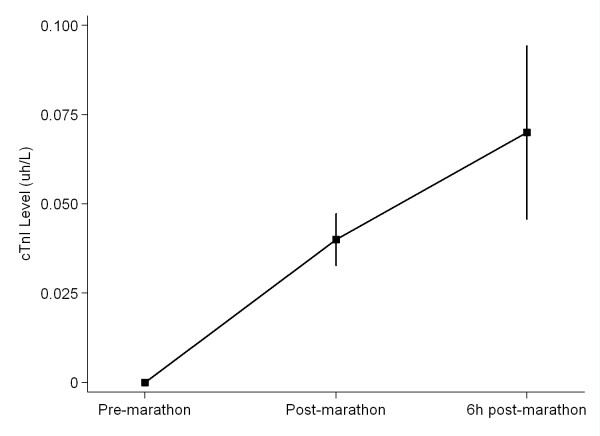
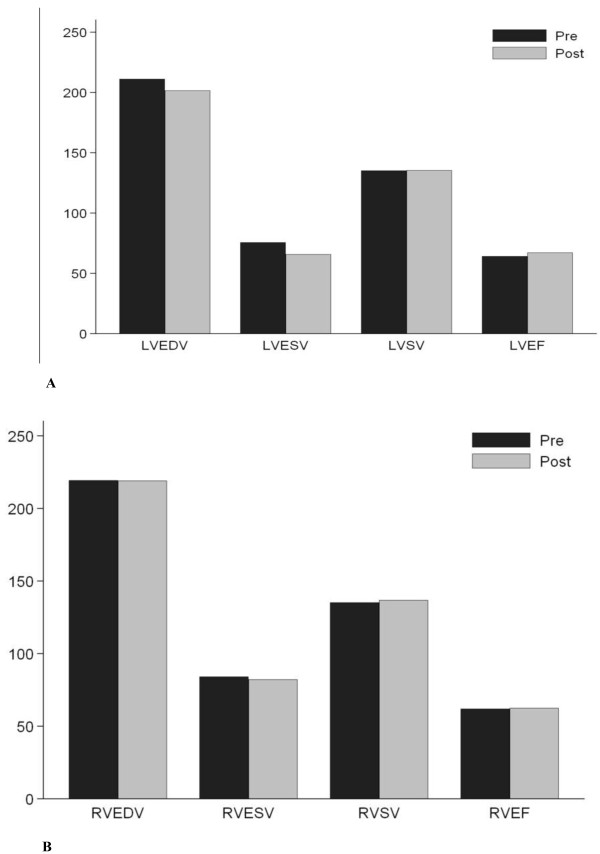
Results: Eleven of the 17 participant had elevations of TnI above levels of cut off for myocardial infarction 6 hrs after the marathon (0.075 +/- 0.02, p = 0.007). Left ventricular volumes were reduced post marathon and a small increase in ejection fraction was noted (64+/- 1% pre, 67+/- 1.2% post, P = 0.014). Right ventricular volumes, stroke volume, and ejection fraction were unchanged post marathon. No athlete fulfilled criteria for myocardial inflammation based on current criteria. No regions of focal fibrosis were seen in any of the participants.
Conclusion: Exercise induced cardiac biomarker release is not associated with any functional changes by CMR or any detectable myocardial inflammation or fibrosis.
Figures
References
-
- George K, Oxborough D, Forster J, Whyte G, Shave R, Dawson E, Stephenson C, Dugdill L, Edwards B, Gaze D. Mitral annular myocardial velocity assessment of segmental left ventricular diastolic function after prolonged exercise in humans. J Physiol. 2005;569:305–313. doi: 10.1113/jphysiol.2005.095588. - DOI - PMC - PubMed
-
- Neilan TG, Januzzi JL, Lee-Lewandrowski E, Ton-Nu TT, Yoerger DM, Jassal DS, Lewandrowski KB, Siegel AJ, Marshall JE, Douglas PS, Lawlor D, Picard MH, Wood MJ. Myocardial injury and ventricular dysfunction related to training levels among nonelite participants in the Boston marathon. Circulation. 2006;114:2325–2333. doi: 10.1161/CIRCULATIONAHA.106.647461. - DOI - PubMed
MeSH terms
Substances
LinkOut - more resources
Full Text Sources
