


Emotion brain alterations in anorexia nervosa: a candidate biological marker and implications for treatment
- PMID: 20598239
- PMCID: PMC2895157
- DOI: 10.1503/jpn.090073
Emotion brain alterations in anorexia nervosa: a candidate biological marker and implications for treatment
Abstract
Background: Identification of the biological markers of anorexia nervosa (AN) is crucial for the development of new treatments. We aimed to determine whether AN is associated with disturbances in the nonconscious neural processing of innate signals of emotion and whether these disturbances persist after weight gain.
Methods: In a retest design, 28 adolescent females with AN were tested at first ad not mission to hospital and again after they had gained weight. Matched healthy control participants were tested at the same times. We assessed emotion-elicited event-related potentials (ERPs) during overt and covert presentation of emotion expressions, scores on an emotion-identification behavioural task, and symptom measures. We performed between and within group analyses.
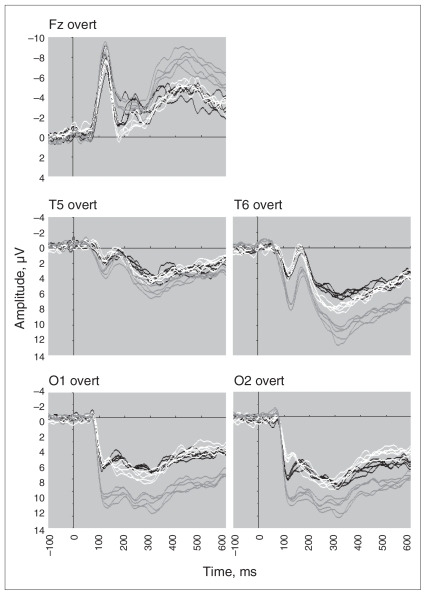
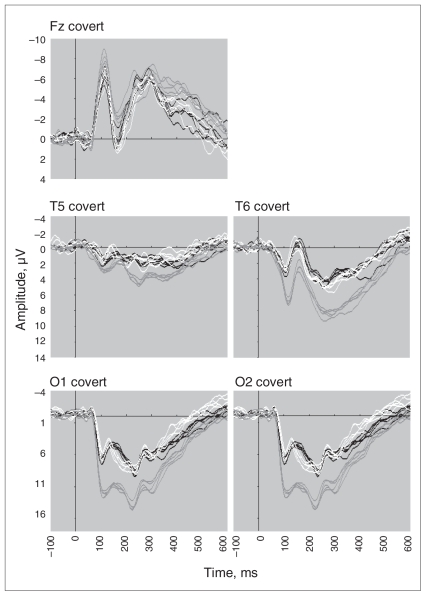
Results: Individuals with AN had a marked alteration in ERPs relative to healthy controls. Irrespective of the form of stimulus, early and late ERP componotnents were significantly reduced in AN patients at baseline (when underweight) and on retest (after weight gain), especially in the temporo-occipital regions, suggesting a persistent disruption of the early automatic appraisal of salient emotional signals.
Limitations: This study could have been improved with a longer standardized retest interval.
Conclusion: There is likely a core, generic disturbance in AN in the early "automatic" neural processing of emotion irrespective of weight or nutritional status. New innovative emotion-based psychologic or pharmacologic treatments targeting these nonconscious processes may prove beneficial.
Figures
References
-
- American Psychiatric Association. Diagnostic and statistical manual of mental disorders. 4th ed., text revised. Washington (DC): The Association; 2000.
-
- Steinhausen HC. The outcome of anorexia nervosa in the 20th century. Am J Psychiatry. 2002;159:1284–93. - PubMed
-
- Fairburn CG. Evidence-based treatment of anorexia nervosa. Int J Eat Disord. 2005;37:S26–30. - PubMed
-
- Bulik CM, Hebebrand J, Keski-Rahkonen A, et al. Genetic epidemiology, endophenotypes, and eating disorder classification. Int J Eat Disord. 2007;40:S52–60. - PubMed
Publication types
MeSH terms
Substances
LinkOut - more resources
Full Text Sources
Other Literature Sources