


Proteomic identification of early biomarkers of acute kidney injury after cardiac surgery in children
- PMID: 20599305
- PMCID: PMC2943007
- DOI: 10.1053/j.ajkd.2010.04.014
Proteomic identification of early biomarkers of acute kidney injury after cardiac surgery in children
Abstract
Background: Serum creatinine is a delayed marker of acute kidney injury (AKI). Our purpose is to discover and validate novel early urinary biomarkers of AKI after cardiac surgery.
Study design: Diagnostic test study.
Setting & participants: Children undergoing cardiopulmonary bypass surgery. The test set included 15 participants with AKI and 15 matched controls (median age, 1.5 year) of 45 participants without AKI. The validation set included 365 children (median age, 1.9 year).
Index tests: Biomarkers identified using proteomic profiling: α(1)-microglobulin, α(1)-acid glycoprotein, and albumin.
Reference test: AKI, defined as ≥50% increase in serum creatinine level from baseline within 3 days of surgery.
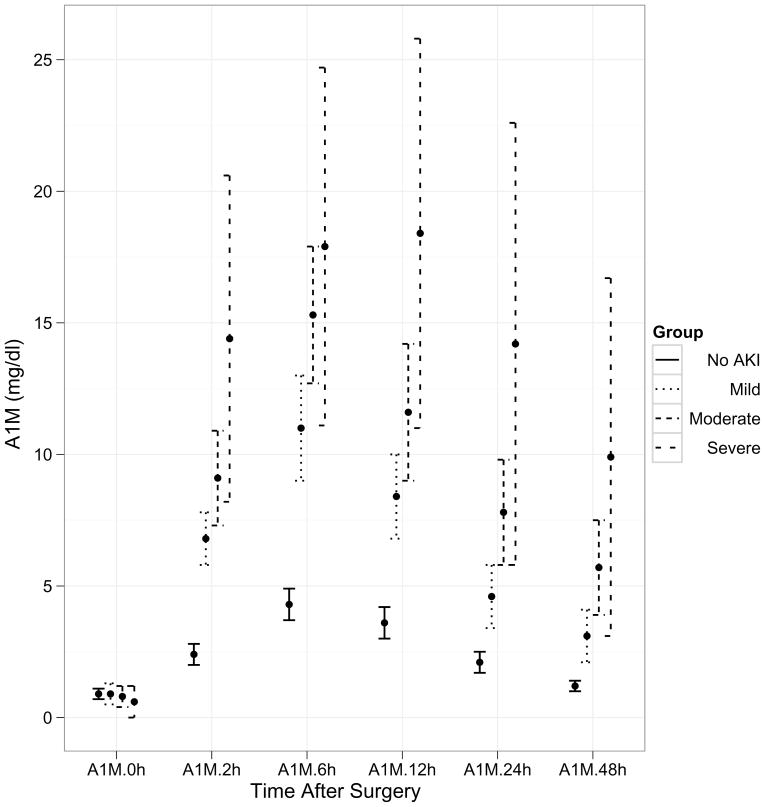
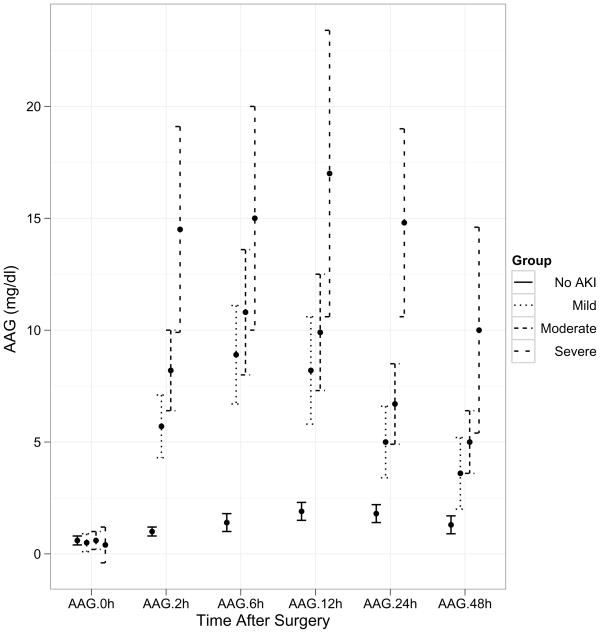
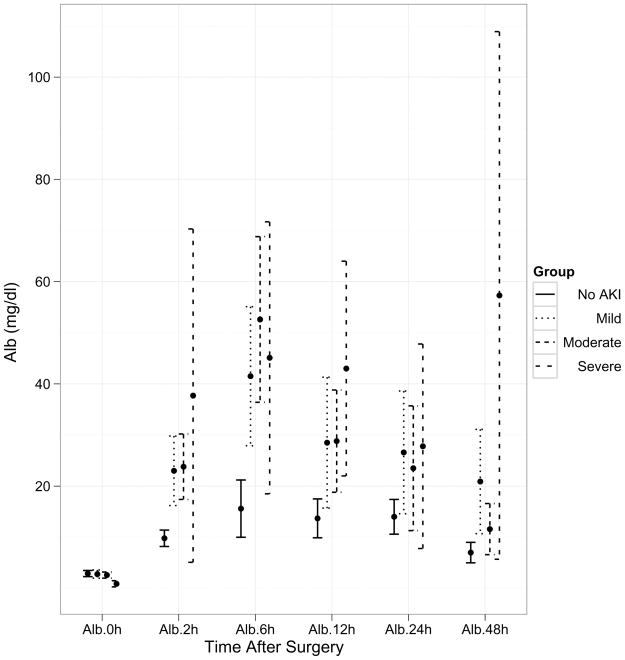
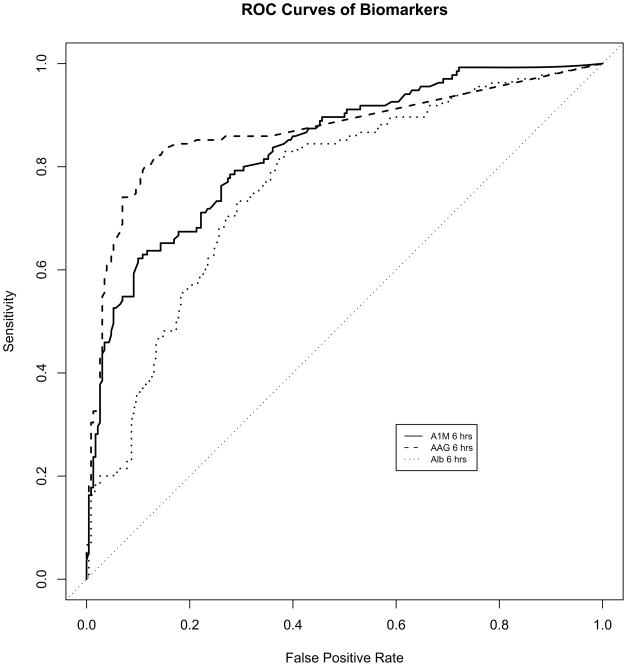
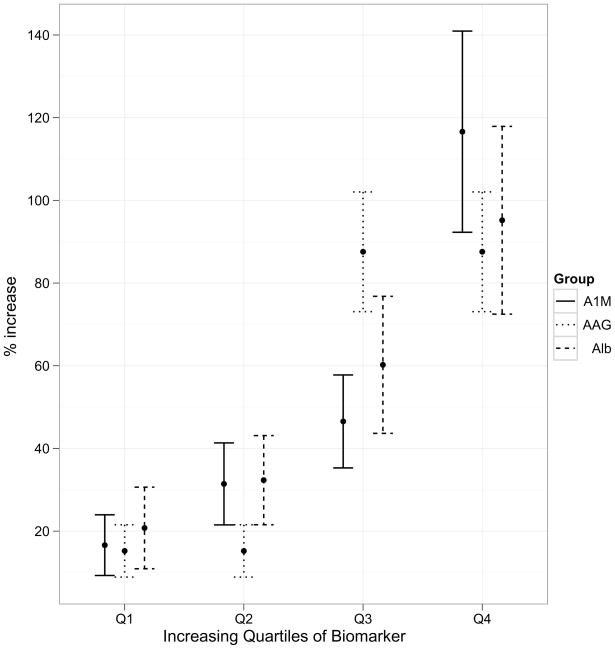
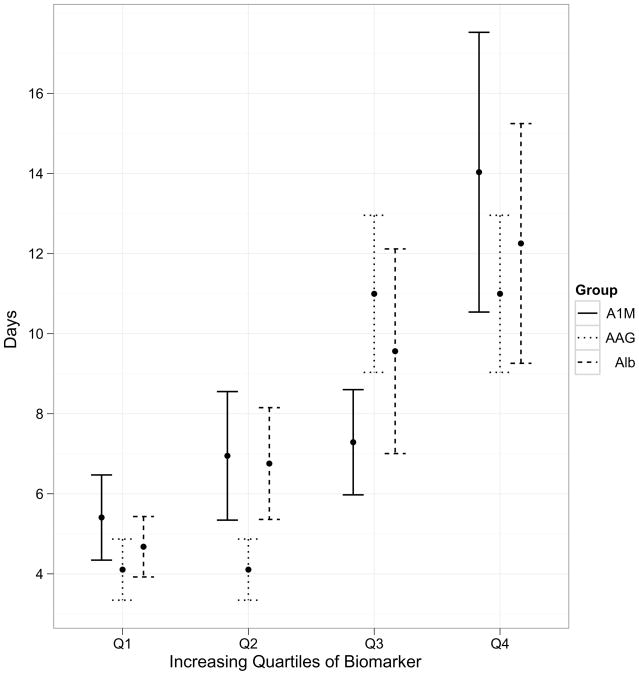
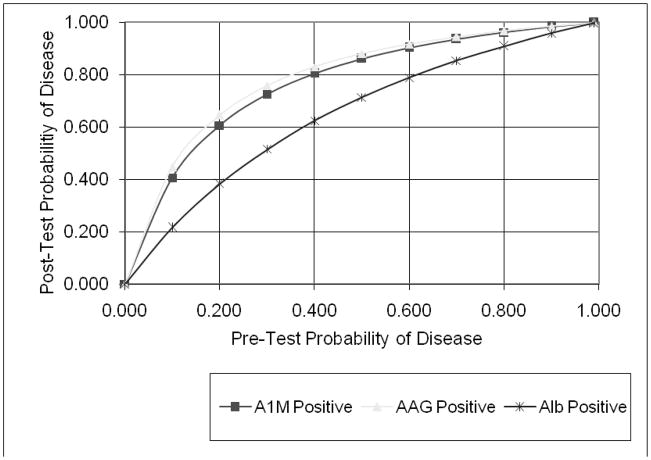
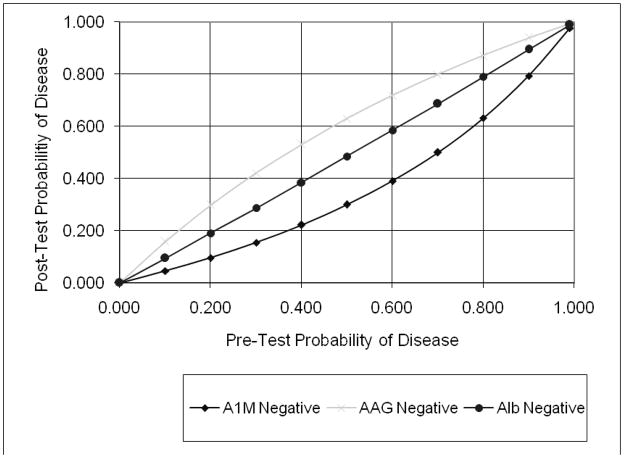
Results: Proteomic profiling using surface-enhanced laser desorption/ionization time-of-flight mass spectrometry (SELDI-TOF MS) showed 3 protein peaks that appeared consistently within 2 hours in children who developed AKI after cardiopulmonary bypass surgery. The proteins were identified as α(1)-microglobulin, α(1)-acid glycoprotein, and albumin. Using clinical assays, results were confirmed in a test set and validated in an independent prospective cohort. In the validation set, 135 (37%) developed AKI, in whom there was a progressive increase in urinary biomarker concentrations with severity of AKI. Areas under the curve for urinary α(1)-microglobulin, α(1)-acid glycoprotein, and albumin at 6 hours after cardiac surgery were 0.84 (95% CI, 0.79-0.89), 0.87 (95% CI, 0.83-0.91), and 0.76 (95% CI, 0.71-0.81), respectively. Participants with increasing quartiles of biomarkers showed increasing lengths of hospital stays and durations of AKI (P < 0.001).
Limitations: Single-center study of children with normal kidney function at recruitment. The SELDI-TOF MS technique has limited sensitivity for the detection of proteins greater than the 20-kDa range.
Conclusions: Urinary α(1)-microglobulin, α(1)-acid glycoprotein, and albumin represent early, accurate, inexpensive, and widely available biomarkers of AKI after cardiac surgery. They also offer prognostic information about the duration of AKI and length of hospitalization after cardiac surgery.
Copyright © 2010 National Kidney Foundation, Inc. Published by Elsevier Inc. All rights reserved.
Figures
Comment in
-
Urinary biomarkers in acute kidney injury: ready for prime time?Am J Kidney Dis. 2010 Oct;56(4):609-11. doi: 10.1053/j.ajkd.2010.08.004. Am J Kidney Dis. 2010. PMID: 20851316 No abstract available.
-
Antifibrinolytic use during cardiac and hepatic surgery makes tubular proteinuria-based early biomarkers poor tools to diagnose perioperative acute kidney injury.Am J Kidney Dis. 2011 Jun;57(6):960; author reply 960-1. doi: 10.1053/j.ajkd.2011.04.005. Am J Kidney Dis. 2011. PMID: 21601130 No abstract available.
References
-
- Chertow GM, Soroko SH, Paganini EP, et al. Mortality after acute renal failure: models for prognostic stratification and risk adjustment. Kidney Int. 2006;70:1120–1126. - PubMed
-
- Lameire N, Van Biesen W, Vanholder R. Acute renal failure. Lancet. 2005;365:417–430. - PubMed
-
- Uchino S, Kellum JA, Bellomo R, et al. Acute renal failure in critically ill patients: a multinational, multicenter study. JAMA. 2005;294:813–818. - PubMed
-
- Lameire N, Van Biesen W, Vanholder R. Acute kidney injury. Lancet. 2008;372:1863–1865. - PubMed
Publication types
MeSH terms
Substances
Grants and funding
LinkOut - more resources
Full Text Sources
Other Literature Sources
