


Differential effects of Heparitinase I and Heparitinase III on endothelial tube formation in vitro
- PMID: 20599743
- PMCID: PMC2924581
- DOI: 10.1016/j.bbrc.2010.06.055
Differential effects of Heparitinase I and Heparitinase III on endothelial tube formation in vitro
Abstract
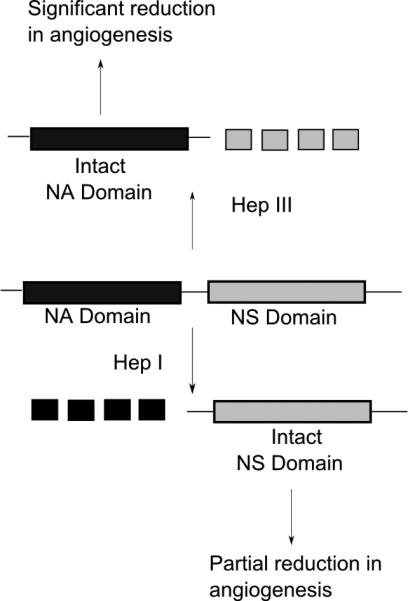
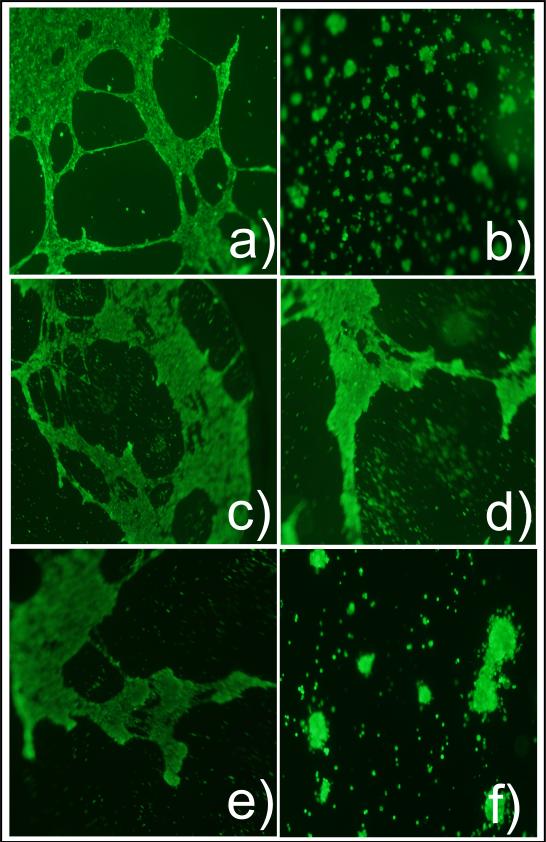
Heparan sulfate proteoglycans (HSPGs) play vital roles in many steps of angiogenesis under physiological and pathological conditions. HSPGs on endothelial cell surfaces act as co-receptors for a variety of pro-angiogenic growth factors such as FGF and VEGF and anti-angiogenic factors such as endostatin. However, the fine structural requirements of these binding interactions are dependent on the sulfation patterns of HSPGs. Previous studies have shown that Heparitinases, heparin lyases isolated from Flavobacterium heparinum, can cleave heparan sulfate chains. These enzymes have been shown to reduce tumor-derived neovascularization in vivo in mice. However, the results from these experiments could not conclusively pinpoint the origin of the HS fragments. Thus, in this study we utilized an in vitro assay to assess the differential effects of Heparitinase I (Hep I) and Heparitinase III (Hep III) on endothelial tube formation. Hep III was found to be a more potent inhibitor of tube formation than Hep I. In conclusion, differential cleavage of endothelial cell surface bound HS can affect the extent of inhibition of tube formation.
Copyright (c) 2010 Elsevier Inc. All rights reserved.
Figures
References
-
- Folkman J. Tumor angiogensis: role in regulation of tumor growth. Symp Soc Dev Biol. 1974;30:43–52. - PubMed
-
- Vlodavsky I, Eldor A, Bar-Ner M, Fridman R, Cohen IR, Klagsbrun M. Heparan sulfate degradation in tumor cell invasion and angiogenesis. Adv Exp Med Biol. 1988;233:201–10. - PubMed
-
- Gallagher JT, Hampson IN. Proteoglycans in cellular differentiation and neoplasia. Biochem Soc Trans. 1984;12:541–3. - PubMed
-
- Guimond S, Maccarana M, Olwin BB, Lindahl U, Rapraeger AC. Activating and inhibitory heparin sequences for FGF-2 (basic FGF). Distinct requirements for FGF-1, FGF-2, and FGF-4. J Biol Chem. 1993;268:23906–14. - PubMed
Publication types
MeSH terms
Substances
Grants and funding
LinkOut - more resources
Full Text Sources
