


Review
doi: 10.1016/j.exppara.2010.06.023.
Epub 2010 Jun 18.
Molecular mechanisms of host cell invasion by Trypanosoma cruzi
Affiliations
- PMID: 20599990
- PMCID: PMC3443968
- DOI: 10.1016/j.exppara.2010.06.023
Item in Clipboard
Review
Molecular mechanisms of host cell invasion by Trypanosoma cruzi
Exp Parasitol.
2010 Nov.
Erratum in
- Exp Parasitol. 2011 Feb;127(2):607
Abstract
The protozoan parasite Trypanosoma cruzi, the etiologic agent of Chagas disease, is an obligate intracellular protozoan pathogen. Overlapping mechanisms ensure successful infection, yet the relationship between these cellular events and clinical disease remains obscure. This review explores the process of cell invasion from the perspective of cell surface interactions, intracellular signaling, modulation of the host cytoskeleton and endosomal compartment, and the intracellular innate immune response to infection.
(c) 2010 Elsevier Inc. All rights reserved.
Figures
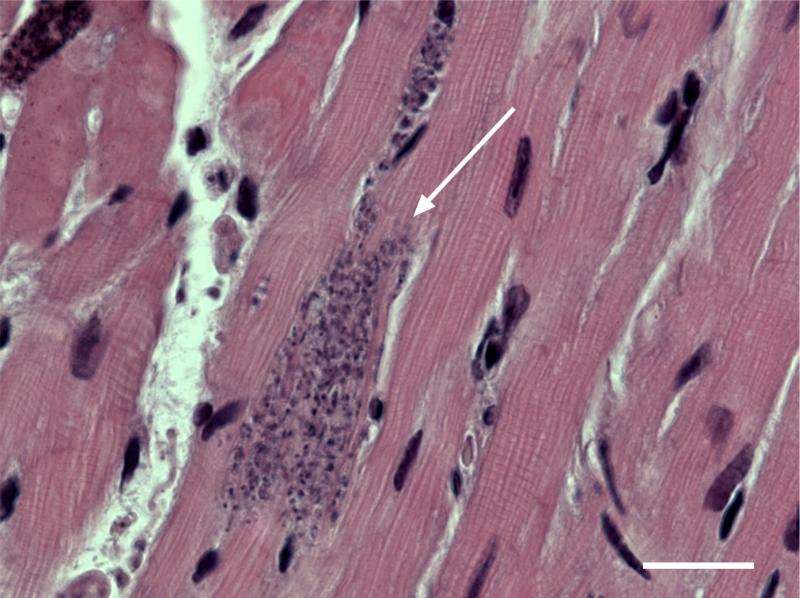
Trypanosoma cruzi forms nests of intracellular parasites (white arrow) when it infects mammalian cells, especially cardiac and skeletal muscle. Shown here is an H&E stained section of a mouse heart demonstrating parasitosis of adjacent cardiac myocytes. Bar = 20 micrometers.
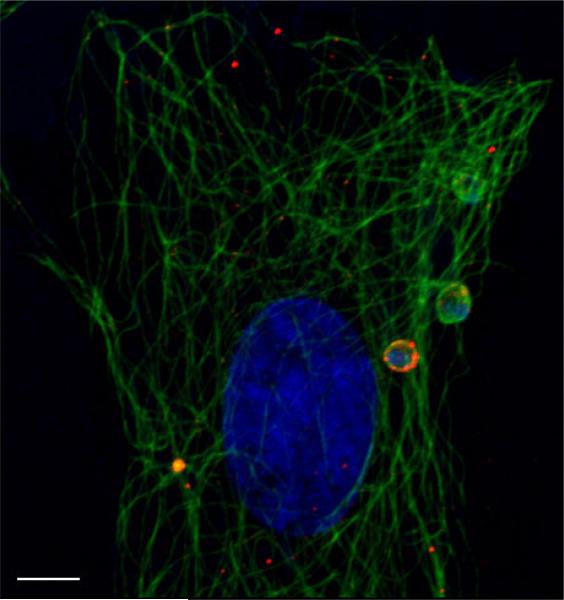
T. cruzi interacts with the host cytoskeleton during cell invasion. Shown here are H9C2 rat cardiomyoblasts during invasion with Trypanosoma cruzi. Host and parasite DNA in blue (DAPI) host lysosomes in red, host α-tubulin in green. Bar = 5 micrometers
References
-
- Coura JR, Dias JC. Epidemiology, control and surveillance of Chagas disease--100 years after its discovery. Mem Inst Oswaldo Cruz. 2009;104:31–40. - PubMed
-
- Coura JR. Chagas disease: what is known and what is needed--a background article. Mem Inst Oswaldo Cruz. 2007;102(Suppl 1):113–122. - PubMed
-
- Moncayo A, Silveira AC. Current epidemiological trends for Chagas disease in Latin America and future challenges in epidemiology, surveillance and health policy. Mem Inst Oswaldo Cruz. 2009;104(Suppl 1):17–30. - PubMed
-
- Milei J, Guerri-Guttenberg RA, Grana DR, Storino R. Prognostic impact of Chagas disease in the United States. Am Heart J. 2009;157:22–29. - PubMed
-
- Schmunis GA. Epidemiology of Chagas disease in non-endemic countries: the role of international migration. Mem Inst Oswaldo Cruz. 2007;102(Suppl 1):75–85. - PubMed
Publication types
MeSH terms
Substances
Grants and funding
LinkOut - more resources
Full Text Sources
Medical
