


The face of Noonan syndrome: Does phenotype predict genotype
- PMID: 20602484
- PMCID: PMC3115585
- DOI: 10.1002/ajmg.a.33518
The face of Noonan syndrome: Does phenotype predict genotype
Abstract
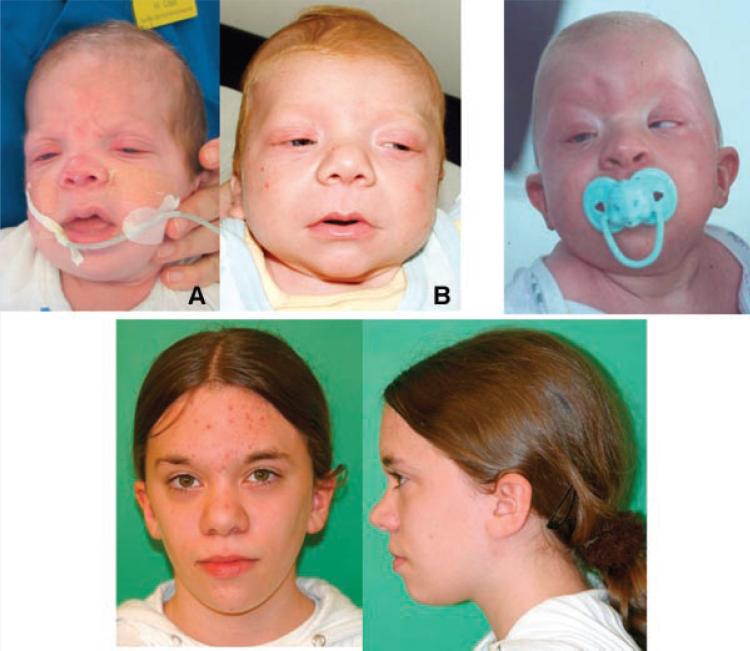
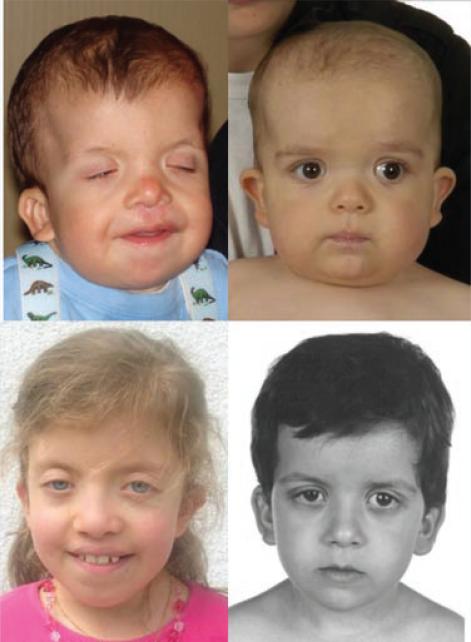
The facial photographs of 81 individuals with Noonan syndrome, from infancy to adulthood, have been evaluated by two dysmorphologists (JA and MZ), each of whom has considerable experience with disorders of the Ras/MAPK pathway. Thirty-two of this cohort have PTPN11 mutations, 21 SOS1 mutations, 11 RAF1 mutations, and 17 KRAS mutations. The facial appearance of each person was judged to be typical of Noonan syndrome or atypical. In each gene category both typical and unusual faces were found. We determined that some individuals with mutations in the most commonly affected gene, PTPN11, which is correlated with the cardinal physical features, may have a quite atypical face. Conversely, some individuals with KRAS mutations, which may be associated with a less characteristic intellectual phenotype and a resemblance to Costello and cardio-facio-cutaneous syndromes, can have a very typical face. Thus, the facial phenotype, alone, is insufficient to predict the genotype, but certain facial features may facilitate an educated guess in some cases.
Figures






References
-
- Allanson JE, Hall JG, Hughes HE, Preus M, Witt RD. Noonan syndrome: The changing phenotype. Am J Med Genet. 1985;21:507–514. - PubMed
-
- Aoki Y, Niihori T, Kawame H, Kurosawa K, Ohashi H, Tanaka Y, Filocamo M, Kato K, Suzuki Y, Kure S, Matsubara Y. Germline mutations in HRAS proto-oncogene cause Costello syndrome. Nat Genet. 2005;37:1038–1040. - PubMed
-
- Carta C, Pantaleoni F, Bocchinfuso G, Stella L, Vasta I, Sarkozy A, Digilio C, Palleschi A, Pizzuti A, Grammatico P, Zampino G, Dallapiccola B, Gelb BD, Tartaglia M. Germline missense mutations affecting KRAS isoform B are associated with a severe Noonan syndrome phenotype. Am J Hum Genet. 2006;79:129–135. - PMC - PubMed
-
- Cirstea IC, Kutsche K, Dvorsky R, Gremer L, Carta C, Horn D, Roberts AE, Lepri F, Merbitz-Zahradnik T, König R, Kratz CP, Pantaleoni F, Dentici ML, Joshi VA, Kucherlapati RS, Mazzanti L, Mundlos S, Patton MA, Silengo MC, Rossi C, Zampino G, Digilio C, Stuppia L, Seemanova E, Pennacchio LA, Gelb BD, Dallapiccola B, Wittinghofer A, Ahmadian MR, Tartaglia M, Zenker M. A restricted spectrum of NRAS mutations causes Noonan syndrome. Nat Genet. 2010;42:27–29. - PMC - PubMed
Publication types
MeSH terms
Substances
Grants and funding
LinkOut - more resources
Full Text Sources
Other Literature Sources
Research Materials
Miscellaneous
