


Outcome effectiveness of the lay health advisor model among Latinos in the United States: an examination by role
- PMID: 20603384
- PMCID: PMC2948840
- DOI: 10.1093/her/cyq035
Outcome effectiveness of the lay health advisor model among Latinos in the United States: an examination by role
Abstract
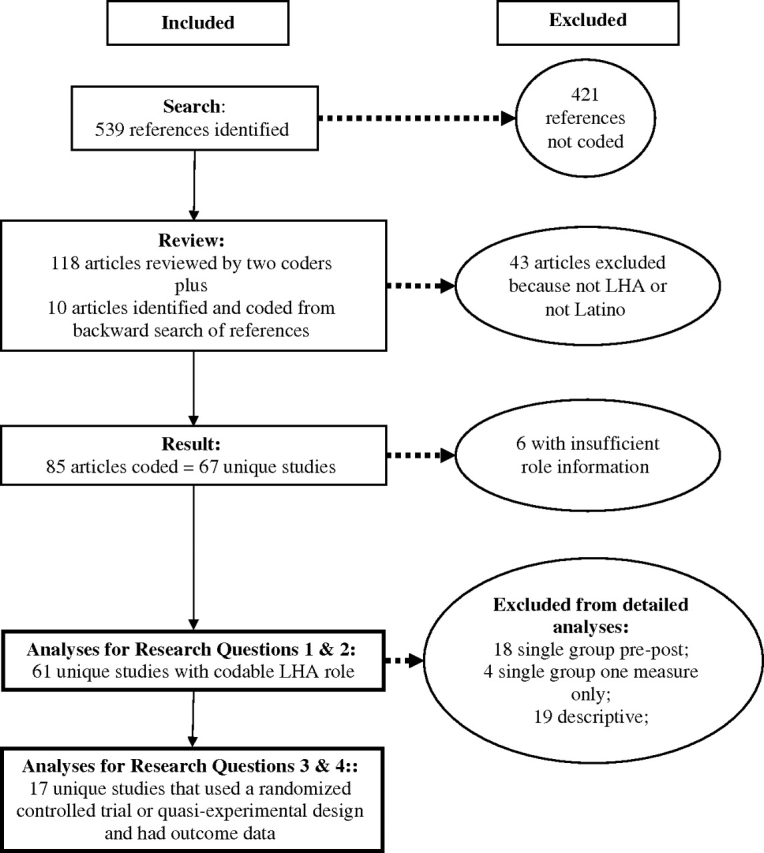
The objective of this study was to examine lay health advisor (LHA) programs designed to promote health among US Latinos and the extent to which educator-only versus educator-plus-bridge programs differed in designs and outcomes achieved. Two independent coders reviewed 128 published articles on LHAs yielding information at two levels: (i) study design and participant and LHA characteristics from 61 studies that broadly compared educator-only versus educator-plus-bridge programs and (ii) implementation features and outcomes from 17 randomized controlled trials or quasi-experimental studies with outcome data. LHA programs have been widely used with Latinos in certain US regions; our findings indicate that LHAs are effective intervention agents. We identified differences between educator-only and educator-plus-bridge LHA programs, although the small number of educator-plus-bridge programs with outcome data limited comparisons. Major gaps remain in research targeting Latino subgroups other than Mexican immigrants/Mexican Americans. Sufficient research has evaluated LHA programs among Latinos on their ability to achieve health behavior and/or health status changes. In the future, more of a focus on organizational and policy changes is warranted. Questions remain about diversity in LHAs' characteristics and roles, which influence not only outcomes but also program sustainability and dissemination.
Figures
References
-
- US Census Bureau. Hispanics in the United States. Washington, DC: US Department of Commerce; 2006.
-
- National Council of La Raza. The State of Hispanic America, 2004. Washington, DC: NCLR; 2004.
-
- Pew Hispanic Center and The Henry J. Kaiser Family Foundation. Survey Brief: Health Care Experiences. Washington, DC: Pew Hispanic Center and the Henry J. Kaiser Family Foundation; 2004.
-
- Liebman J, Heffernan D, Sarvela P. Establishing diabetes self-management in a community health center serving low-income Latinos. Diabetes Educ. 2007;33(Suppl. 6) 132S–8S. - PubMed
-
- Moore A, Earp JA. The long reach to basic healthcare services: partnering with lay health advisors to improve health equity. In: Earp JA, French EA, Gilkey MB, editors. Patient Advocacy for Healthcare Quality: Strategies for Achieving Patient-Centered Care. Sudbury, MA: Jones and Bartlett; 2007. pp. 121–50.
Publication types
MeSH terms
Grants and funding
LinkOut - more resources
Full Text Sources
Medical
