


Targeting RANKL to a specific subset of murine mammary epithelial cells induces ordered branching morphogenesis and alveologenesis in the absence of progesterone receptor expression
- PMID: 20605949
- PMCID: PMC2974417
- DOI: 10.1096/fj.10-157982
Targeting RANKL to a specific subset of murine mammary epithelial cells induces ordered branching morphogenesis and alveologenesis in the absence of progesterone receptor expression
Abstract
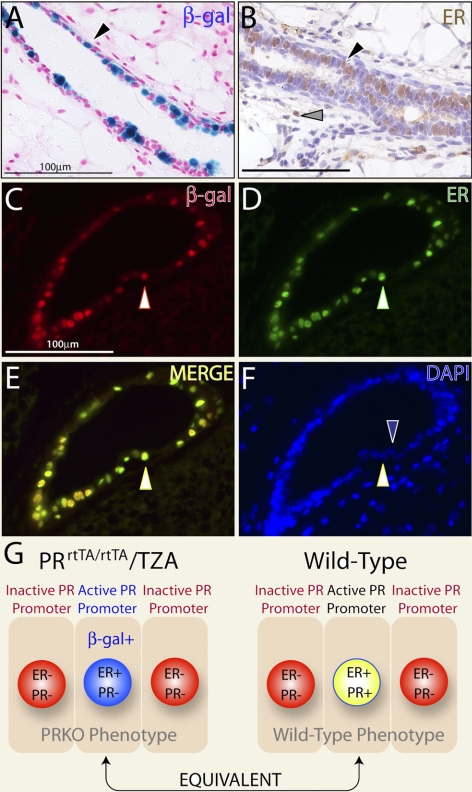
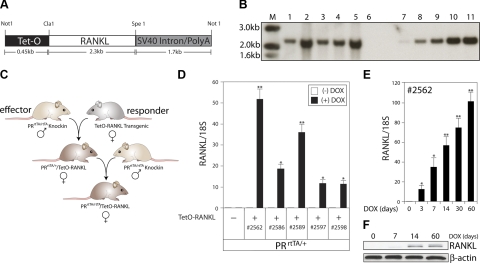
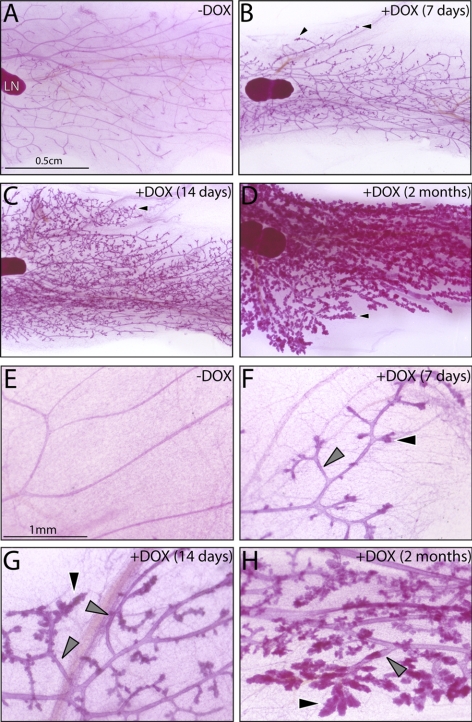
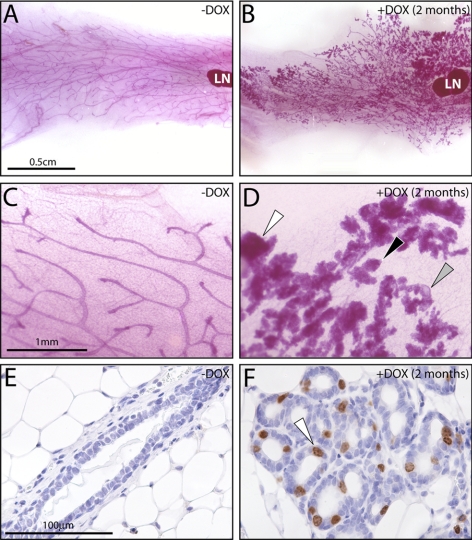
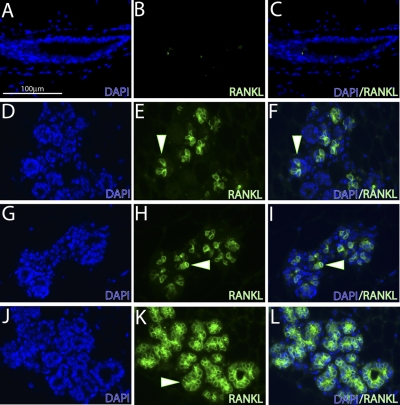
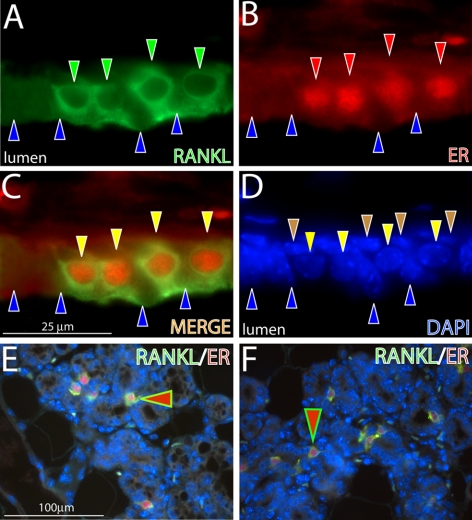
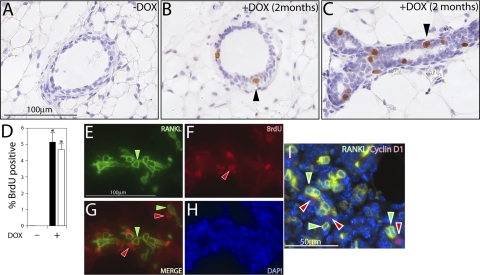
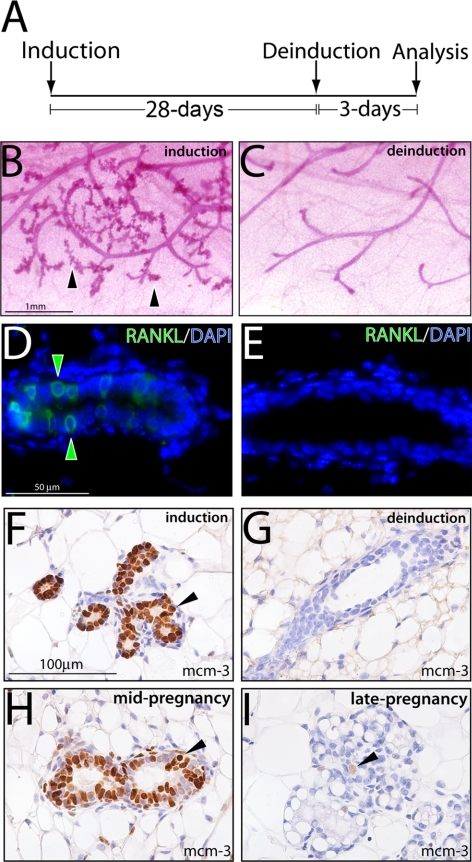
Despite support for receptor of activated NF-κB ligand (RANKL) as a mediator of mammary progesterone action, the extent to which this cytokine can functionally contribute to established progesterone-induced mammary morphogenetic responses in the absence of other presumptive effectors is still unclear. To address this uncertainty, we developed an innovative bigenic system for the doxycycline-inducible expression of RANKL in the mammary epithelium of the progesterone receptor knockout (PRKO) mouse. In response to acute doxycycline exposure, RANKL is specifically expressed in the estrogen receptor α (ER) positive/progesterone receptor negative (ER(+)/PR(-)) cell type in the PRKO mammary epithelium, a cell type that is equivalent to the ER(+)/PR(+) cell type in the wild-type (WT) mammary epithelium. Notably, the ER(+)/PR(+) mammary cell normally expresses RANKL in the WT mammary epithelium during pregnancy. In this PRKO bigenic system, acute doxycycline-induced expression of RANKL results in ordered mammary ductal side branching and alveologenesis, morphological changes that normally occur in the parous WT mouse. This mammary epithelial expansion is accompanied by significant RANKL-induced luminal epithelial proliferation, which is driven, in part, by indirect induction of cyclin D1. Collectively, our findings support the conclusion that RANKL represents a critical mediator of mammary PR action and that restricted expression of this effector to the ER(+)/PR(+) mammary cell-type is necessary for a spatially ordered morphogenetic response to progesterone.
Figures
References
-
- Russo J., Ao X., Grill C., Russo I. H. (1999) Pattern of distribution of cells positive for estrogen receptor-α and progesterone receptor in relation to proliferating cells in the mammary gland. Breast Cancer Res. Treatment. 53, 217– 227 - PubMed
-
- Seagroves T. N., Lydon J. P., Hovey R. C., Vonderhaar B. K., Rosen J. M. (2000) C/EBPβ(CCAAT/enhancer binding protein) controls cell fate determination during mammary gland development. Mol. Endocrinol. 14, 359– 368 - PubMed
-
- Rosen J. M. (2003) Hormone receptor patterning plays a critical role in normal lobuloalveolar development and breast cancer progression. Breast Dis. 18, 3– 9 - PubMed
-
- Clarke R. B., Howell A., Potten C. S., Anderson E. (1997) Dissociation between steroid receptor expression and cell proliferation in the human breast. Cancer Res. 57, 4987– 4991 - PubMed
Publication types
MeSH terms
Substances
Grants and funding
LinkOut - more resources
Full Text Sources
Molecular Biology Databases
Research Materials
