


Role of prolylcarboxypeptidase in angiotensin II type 2 receptor-mediated bradykinin release in mouse coronary artery endothelial cells
- PMID: 20606103
- PMCID: PMC2924447
- DOI: 10.1161/HYPERTENSIONAHA.110.155051
Role of prolylcarboxypeptidase in angiotensin II type 2 receptor-mediated bradykinin release in mouse coronary artery endothelial cells
Abstract
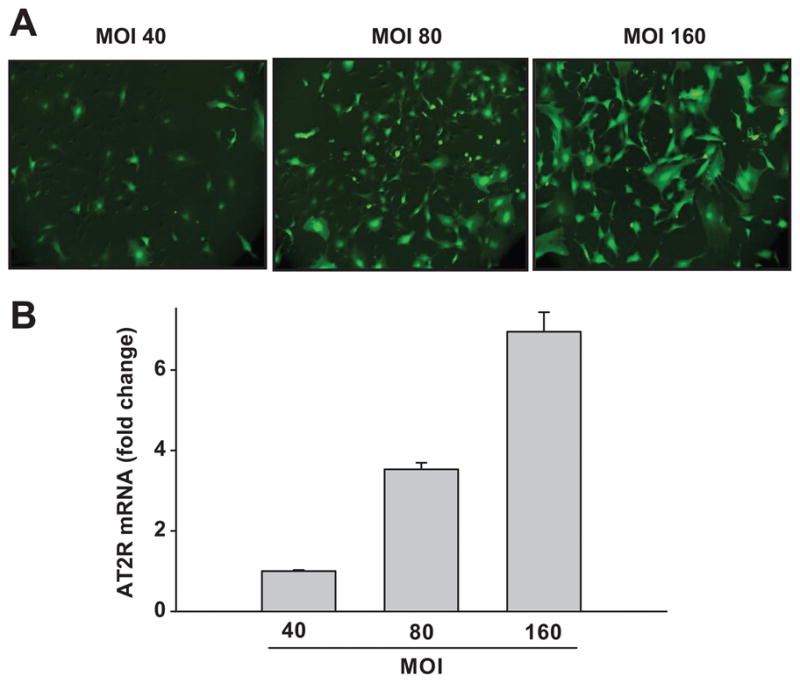
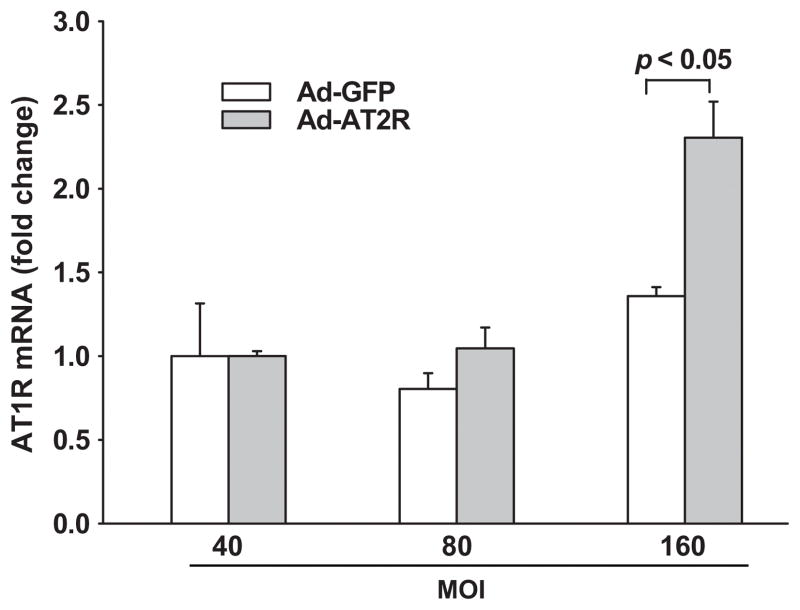
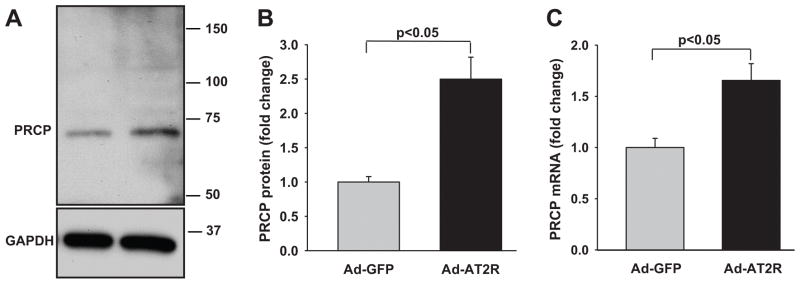
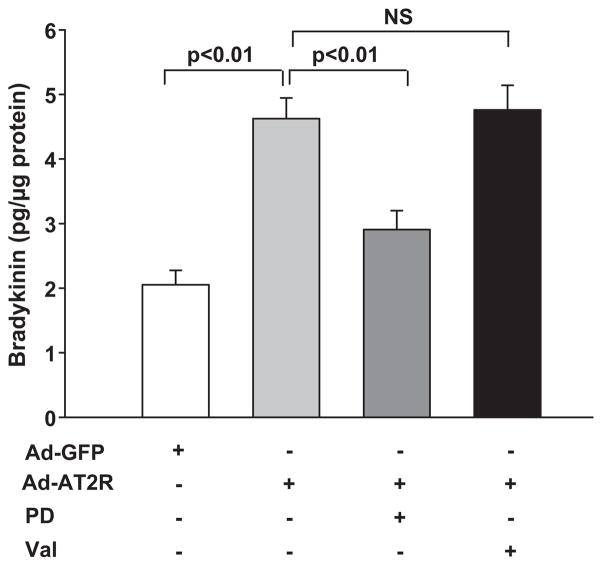
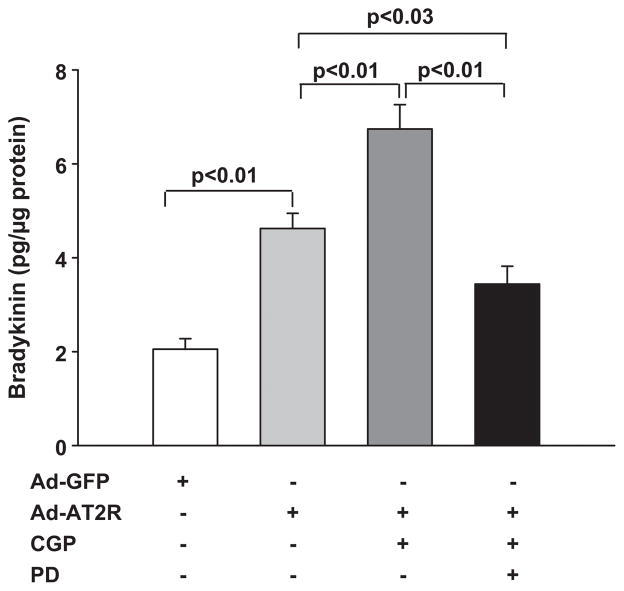
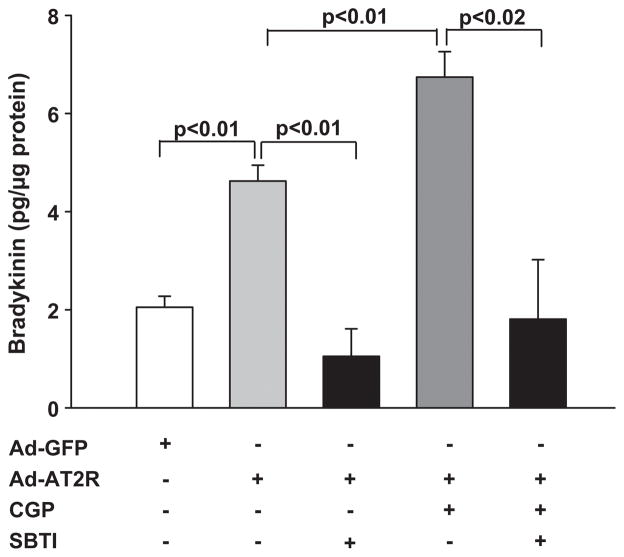
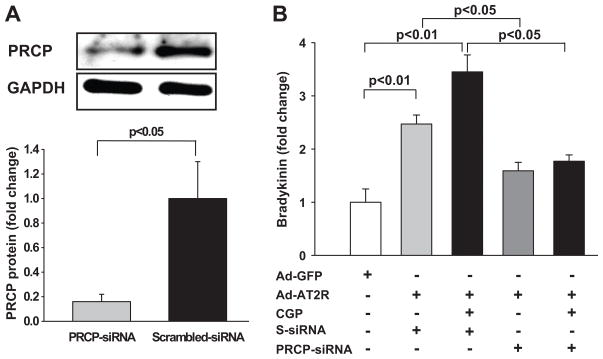
Activation of angiotensin II type 2 receptors (AT(2)R) causes the release of kinins, which have beneficial effects on the cardiovascular system. However, it is not clear how AT(2)R interact with the kallikrein-kinin system to generate kinins. Prolylcarboxypeptidase is an endothelial membrane-bound plasma prekallikrein activator that converts plasma prekallikrein to kallikrein, leading to generation of bradykinin from high-molecular-weight kininogen. We hypothesized that AT(2)R-induced bradykinin release is at least in part mediated by activation of prolylcarboxypeptidase. Cultures of mouse coronary artery endothelial cells were transfected with an adenoviral vector containing the AT(2)R gene (Ad-AT(2)R) or green fluorescent protein only (Ad-GFP) as control. We found that overexpression of AT(2)R increased prolylcarboxypeptidase mRNA by 1.7-fold and protein 2.5-fold compared with Ad-GFP controls. AT(2)R overexpression had no effect on angiotensin II type 1 receptor mRNA. Bradykinin release was increased 2.2-fold in AT(2)R-transfected cells. Activation of AT(2)R by CGP42112A, a specific AT(2)R agonist, increased bradykinin further in AT(2)R-transfected cells. These effects were diminished or abolished by AT(2)R blockade or a plasma kallikrein inhibitor. Furthermore, blocking prolylcarboxypeptidase with a small interfering RNA partially but significantly reduced bradykinin release by transfected AT(2)R cells either at the basal condition or when stimulated by the AT(2)R agonist CGP42112A. These findings suggest that overexpression of AT(2)R in mouse coronary artery endothelial cells increases expression of prolylcarboxypeptidase, which may contribute to kinin release.
Figures
References
-
- Schulman IH, Raij L. The angiotensin II type 2 receptor: what is its clinical significance? Curr Hypertens Rep. 2008;10:188–193. - PubMed
-
- Wharton J, Morgan K, Rutherford RAD, Catravas JD, Chester A, Whitehead BF, De Leval MR, Yacoub MH, Polak JM. Differential distribution of angiotensin AT2 receptors in the normal and failing human heart. J Pharmacol Exp Ther. 1998;284:323–336. - PubMed
-
- Hutchinson HG, Hein L, Fujinaga M, Pratt RE. Modulation of vascular development and injury by angiotensin II. Cardiovasc Res. 1999;41:689–700. - PubMed
-
- Gallinat S, Busche S, Raizada MK, Sumners C. The angiotensin II type 2 receptor: an enigma with multiple variations. Am J Physiol Endocrinol Metab. 2000;278:E357–E374. - PubMed
-
- Anavekar NS, Solomon SD. Angiotensin II receptor blockade and ventricular remodelling. J Renin Angiotensin Aldosterone Syst. 2005;6:43–48. - PubMed
Publication types
MeSH terms
Substances
Grants and funding
LinkOut - more resources
Full Text Sources
Molecular Biology Databases
