


Sphingolipids in multiple sclerosis
- PMID: 20607622
- PMCID: PMC2987401
- DOI: 10.1007/s12017-010-8128-4
Sphingolipids in multiple sclerosis
Abstract
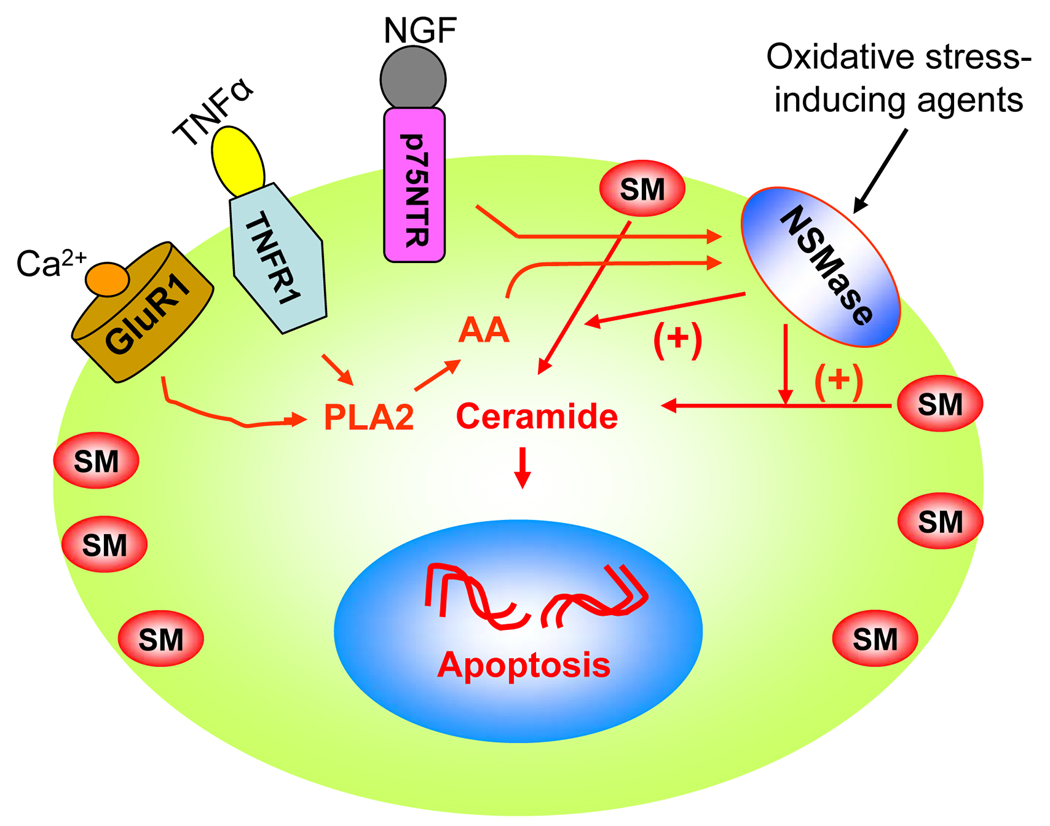
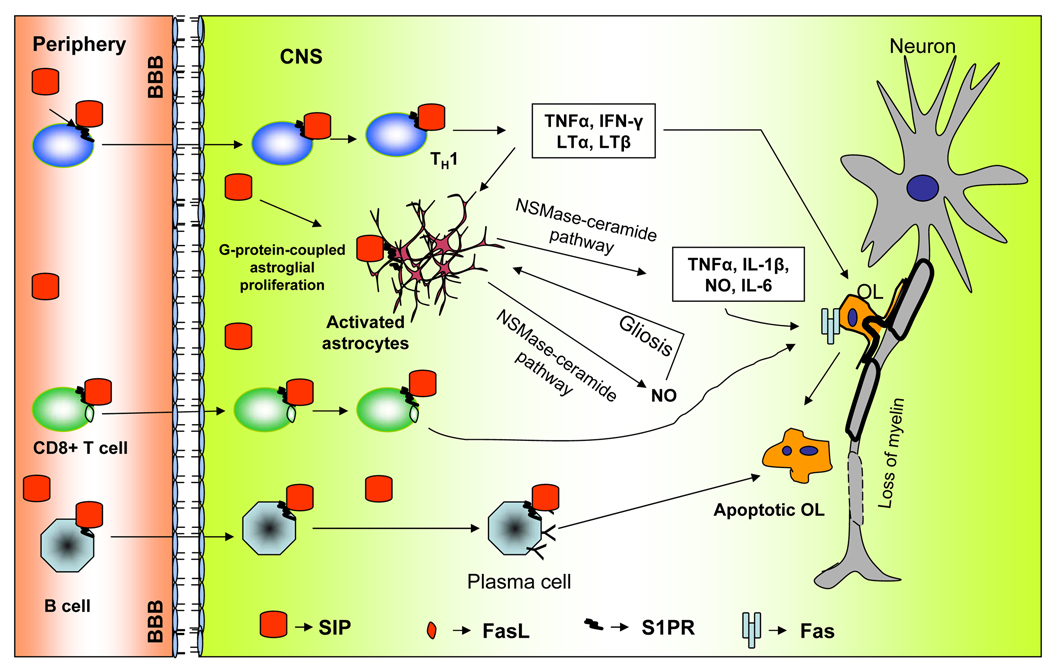
Multiple sclerosis (MS) is a chronic autoimmune demyelinating disease of the CNS. Oligodendrocytes, the myelin-forming cells of the central nervous system (CNS), are target cells in MS. Although the etiology of MS is poorly known, new insights suggest oligodendrocyte apoptosis as one of the critical events followed by glial activation and infiltration of lymphocytes and macrophages. A major breakthrough in delineation of the mechanism of cell death, perivascular cuffing, and glial activation came from elucidation of the sphingolipid signal transduction pathway. The sphingolipid signal transduction pathway induces apoptosis, differentiation, proliferation, and growth arrest depending upon cell and receptor types, and downstream targets. Sphingomyelin, a major component of myelin membrane formed by mature oligodendrocytes, is abundant in the CNS and ceramide, its primary catabolic product released by activation of either neutral or acidic sphingomyelinase, serves as a potential lipid second messenger or mediator molecule modulating diverse cellular signaling pathways. Similarly, under certain conditions, sphingosine produced from ceramide by ceramidase is phosphorylated by sphingosine kinases to sphingosine-1 phosphate, another potent second messenger molecule. Both ceramide and sphingosine-1 phosphate regulate life and death of many cell types including brain cells and participate in pathogenic processes of MS. In this review, we have made an honest attempt to compile recent findings made by others and us relating to the role of sphingolipids in the disease process of MS.
Figures
References
-
- Abo-Krysha N, Rashed L. The role of iron dysregulation in the pathogenesis of multiple sclerosis: an Egyptian study. Mult Scler. 2008;14:602–608. - PubMed
-
- Alberdi E, Sanchez-Gomez MV, Marino A, Matute C. Ca(2+) influx through AMPA or kainate receptors alone is sufficient to initiate excitotoxicity in cultured oligodendrocytes. Neurobiol Dis. 2002;9:234–243. - PubMed
-
- Bansal R, Gard AL, Pfeiffer SE. Stimulation of oligodendrocyte differentiation in culture by growth in the presence of a monoclonal antibody to sulfated glycolipid. J Neurosci Res. 1988;21:260–267. - PubMed
Publication types
MeSH terms
Substances
Grants and funding
LinkOut - more resources
Full Text Sources
Other Literature Sources
Medical
