


The interaction of gestational and postnatal ethanol experience on the adolescent and adult odor-mediated responses to ethanol in observer and demonstrator rats
- PMID: 20608909
- PMCID: PMC2950905
- DOI: 10.1111/j.1530-0277.2010.01257.x
The interaction of gestational and postnatal ethanol experience on the adolescent and adult odor-mediated responses to ethanol in observer and demonstrator rats
Abstract
Background: Gestational ethanol exposure enhances the adolescent reflexive sniffing response to ethanol odor. Postnatal exposures of naïve animals as either an observer (i.e., conspecific) or demonstrator (i.e., intoxicated peer) using a social transmission of food odor preference paradigm also yields enhanced odor-mediated responses. Studies on the interaction of fetal and postnatal exposures using the social transmission paradigm have been limited to the responses of observers. When combined, the enhanced response is greater than either form of exposure alone and, in observer females, yields adult persistence. The absence of a male effect is noteworthy, given that chemosensory mechanisms are suggested to be an important antecedent factor in the progression of ethanol preference. Observers gain odor information on the breath of the demonstrator through social interaction. Demonstrators experience the pharmacologic properties of ethanol along with retronasal and hematogenic olfaction. Thus, we tested whether augmentation of the fetal ethanol-induced behavioral response with postnatal exposure as a demonstrator differed from that as an observer. We also examined whether re-exposure as a demonstrator yields persistence in both sexes.
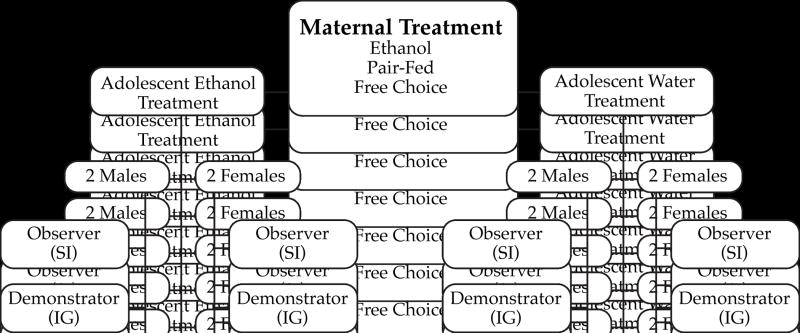
Methods: Pregnant dams were fed an ethanol containing or control liquid diet throughout gestation. Progeny received four ethanol or water exposures: one every 48 hours through either intragastric infusion or social interaction with the infused peer beginning on P29. The reflexive behavioral sniffing response to ethanol odor was tested at postnatal (P) day 37 or P90, using whole-body plethysmography.
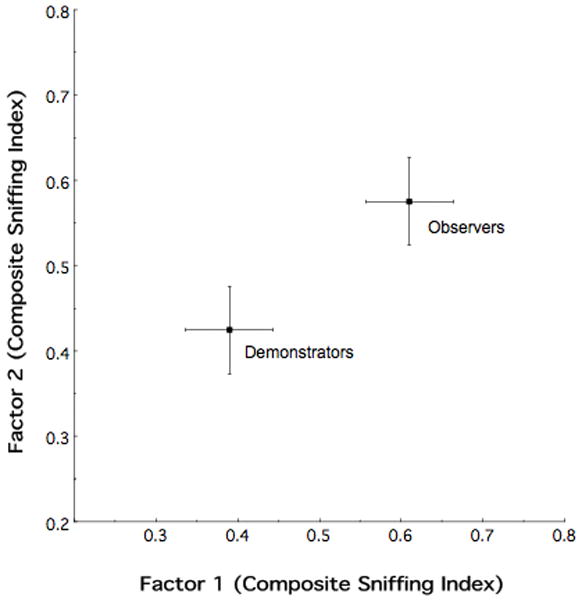
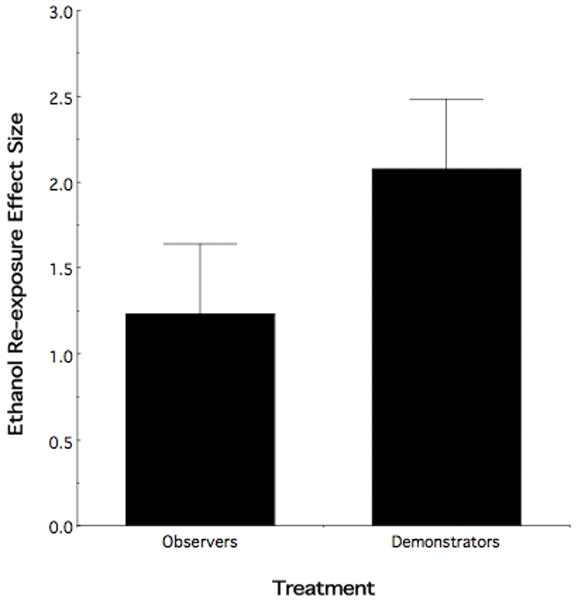
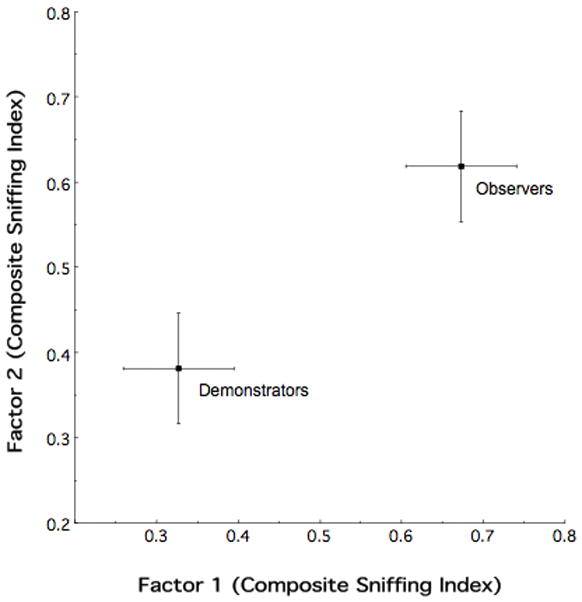
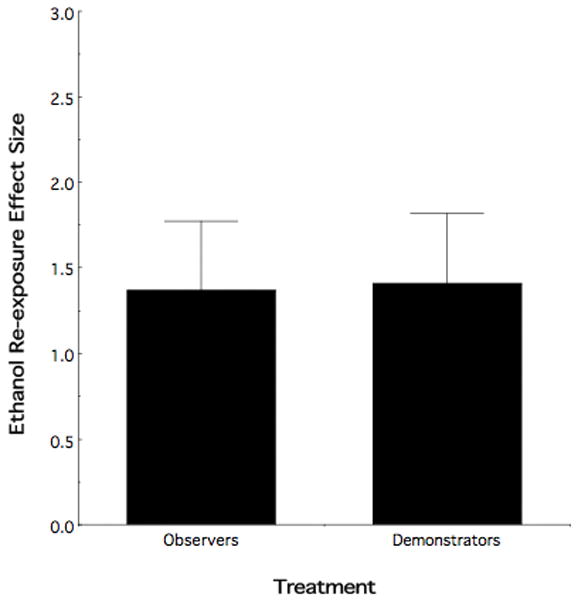
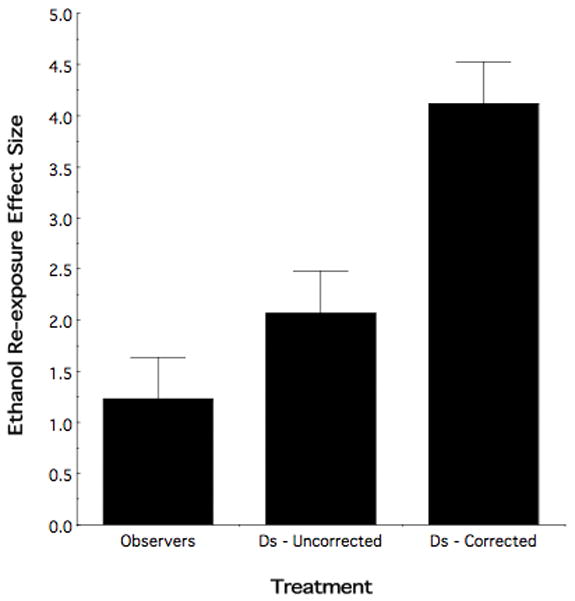
Results: When tested in either adolescence or adulthood - fetal ethanol exposed adolescent ethanol observers and demonstrators significantly differed in their odor-mediated response to ethanol odor both between themselves and from their respective water controls. Nonetheless, adolescent ethanol re-exposure as a demonstrator, like an observer, enhanced the reflexive sniffing response to ethanol odor at both testing ages by augmenting the known effects of prior fetal ethanol experience. At each age, the magnitude of the enhanced odor response in demonstrators was similar to that of observers. Interestingly, only re-exposure as a demonstrator resulted in persistence of the behavioral response into adulthood in both sexes.
Conclusions: The method of ethanol re-exposure plays an important role in prolonging the odor-mediated effects of fetal exposure. While ethanol odor-specific exposure through social interaction is important, additional factors such as the pairing of retronasal and hematogenic olfaction with ethanol's intoxicating properties appear necessary to achieve persistence in both sexes.
Copyright © 2010 by the Research Society on Alcoholism.
Figures
References
-
- Alati R, Al Mamum A, Williams GM, O’Callagham M, Najman JM, Bor W. In utero alcohol exposure and prediction of alcohol disorders in early adulthood: a birth cohort study. Arch Gen Psychiatry. 2006;63:1009–1016. - PubMed
-
- Baer JS, Barr HM, Bookstein FL, Sampson PD, Streissguth AP. Prenatal alcohol exposure and family history of alcoholism in the etiology of adolescent alcohol problems. J Stud Alcohol. 1998;59:533–543. - PubMed
-
- Baer JS, Sampson PD, Barr HM, Connor PD, Streissguth AP. A 21-year longitudinal analysis of the effects of prenatal alcohol exposure on young adult drinking. Arch Gen Psychiatry. 2003;60:377–385. - PubMed
-
- Chotro MC, Arias C, Laviola G. Increased ethanol intake after prenatal ethanol exposure: studies with animals. Neurosci Biobehav Rev. 2007;31:181–191. - PubMed
Publication types
MeSH terms
Substances
Grants and funding
LinkOut - more resources
Full Text Sources
