


Identifying loci for the overlap between attention-deficit/hyperactivity disorder and autism spectrum disorder using a genome-wide QTL linkage approach
- PMID: 20610137
- PMCID: PMC2929476
- DOI: 10.1016/j.jaac.2010.03.015
Identifying loci for the overlap between attention-deficit/hyperactivity disorder and autism spectrum disorder using a genome-wide QTL linkage approach
Abstract
Objective: The genetic basis for autism spectrum disorder (ASD) symptoms in children with attention-deficit/hyperactivity disorder (ADHD) was addressed using a genome-wide linkage approach.
Method: Participants of the International Multi-Center ADHD Genetics study comprising 1,143 probands with ADHD and 1,453 siblings were analyzed. The total and subscale scores of the Social Communication Questionnaire (SCQ) were used as quantitative traits for multipoint regression-based linkage analyses on 5,407 autosomal single-nucleotide polymorphisms applying MERLIN-regress software, both without and with inclusion of ADHD symptom scores as covariates.
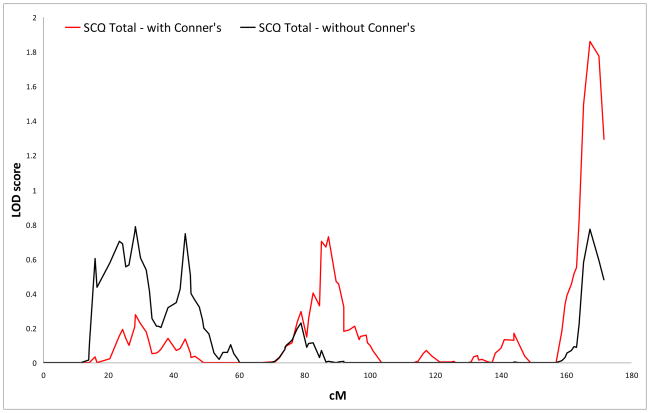
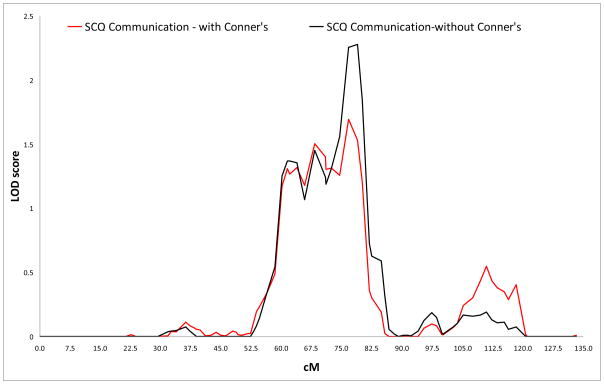
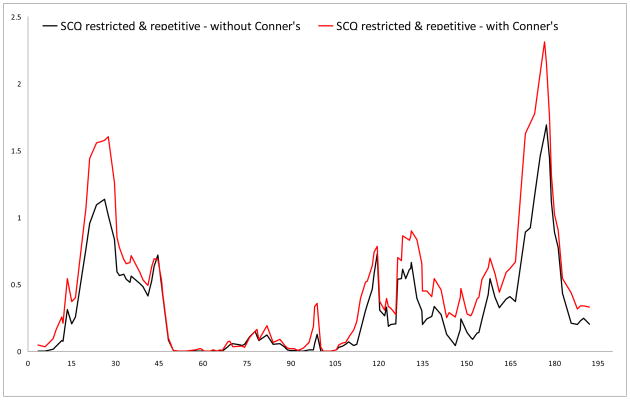
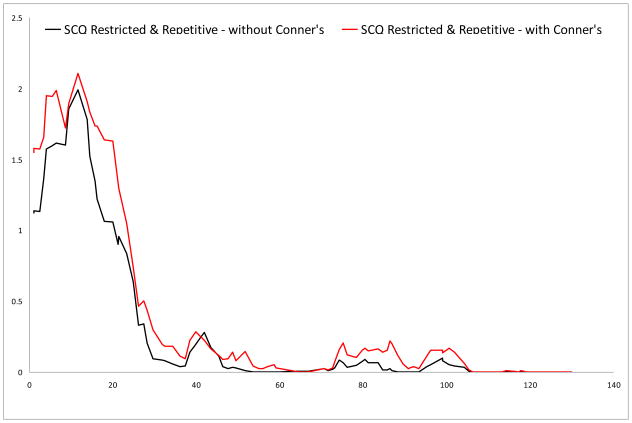
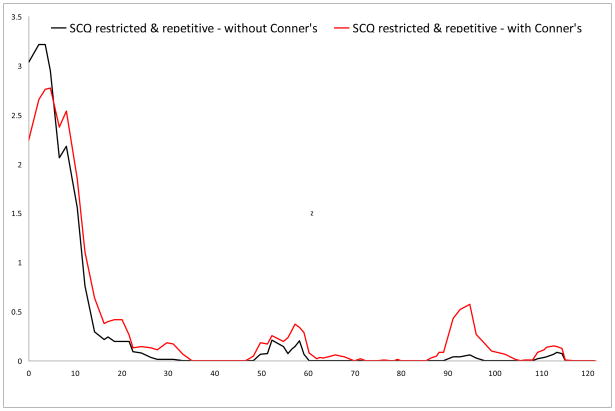
Results: The analyses without ADHD symptom scores as covariates resulted in three suggestive linkage signals, i.e., on chromosomes 15q24, 16p13, and 18p11. Inclusion of ADHD symptom scores as covariates resulted in additional suggestive loci on chromosomes 7q36 and 12q24, whereas the LOD score of the locus on chromosome 15q decreased below the threshold for suggestive linkage. The loci on 7q, 16p, and 18p were found for the SCQ restricted and repetitive subscale, that on 15q was found for the SCQ communication subscale, and that on 12q for the SCQ total score.
Conclusions: Our findings suggest that QTLs identified in this study are ASD specific, although the 15q QTL potentially has pleiotropic effects for ADHD and ASD. This study confirms that genetic factors influence ASD traits along a continuum of severity, as loci potentially underlying ASD symptoms in children with ADHD were identified even though subjects with autism had been excluded from the IMAGE sample, and supports the hypothesis that differential genetic factors underlie the three ASD dimensions.
2010 American Academy of Child and Adolescent Psychiatry. Published by Elsevier Inc. All rights reserved.
Figures
References
-
- American Psychiatric Association. Diagnostic and statistical manual of mental disorders. 4. Washington DC: 1994.
-
- Reiersen AM, Constantino JN, Volk HE, Todd RD. Autistic traits in a population-based ADHD twin sample. J Child Psychol Psychiatry. 2007;48(5):464–472. - PubMed
-
- Ronald A, Simonoff E, Kuntsi J, Asherson P, Plomin R. Evidence for overlapping genetic influences on autistic and ADHD behaviours in a community twin sample. J Child Psychol Psychiatry. 2008;49(5):535–542. - PubMed
-
- Nijmeijer JS, Hoekstra PJ, Minderaa RB, et al. PDD Symptoms in ADHD, an Independent Familial Trait? J Abn Child Psychol. 2009;32(3):443–453. - PubMed
Publication types
MeSH terms
Grants and funding
LinkOut - more resources
Full Text Sources
Medical
