


Remarkable lethal G-to-A mutations in vif-proficient HIV-1 provirus by individual APOBEC3 proteins in humanized mice
- PMID: 20610708
- PMCID: PMC2937654
- DOI: 10.1128/JVI.00823-10
Remarkable lethal G-to-A mutations in vif-proficient HIV-1 provirus by individual APOBEC3 proteins in humanized mice
Abstract
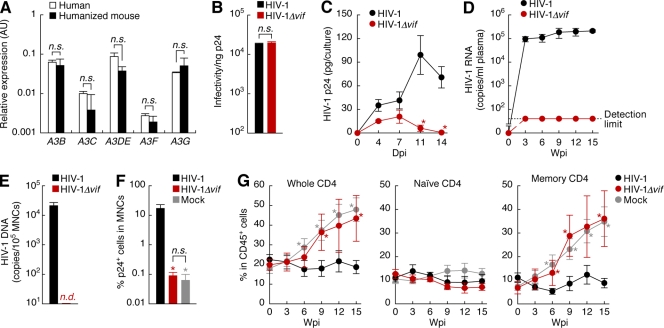
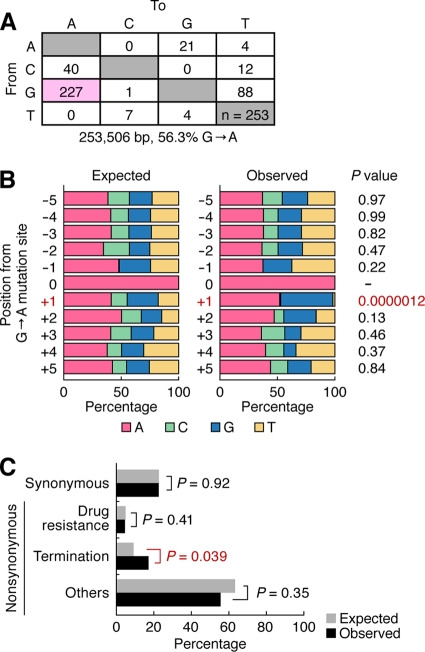
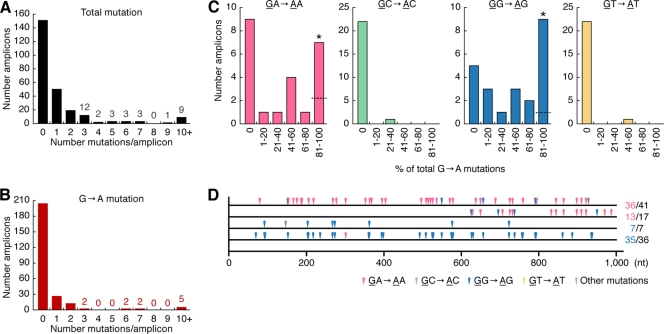
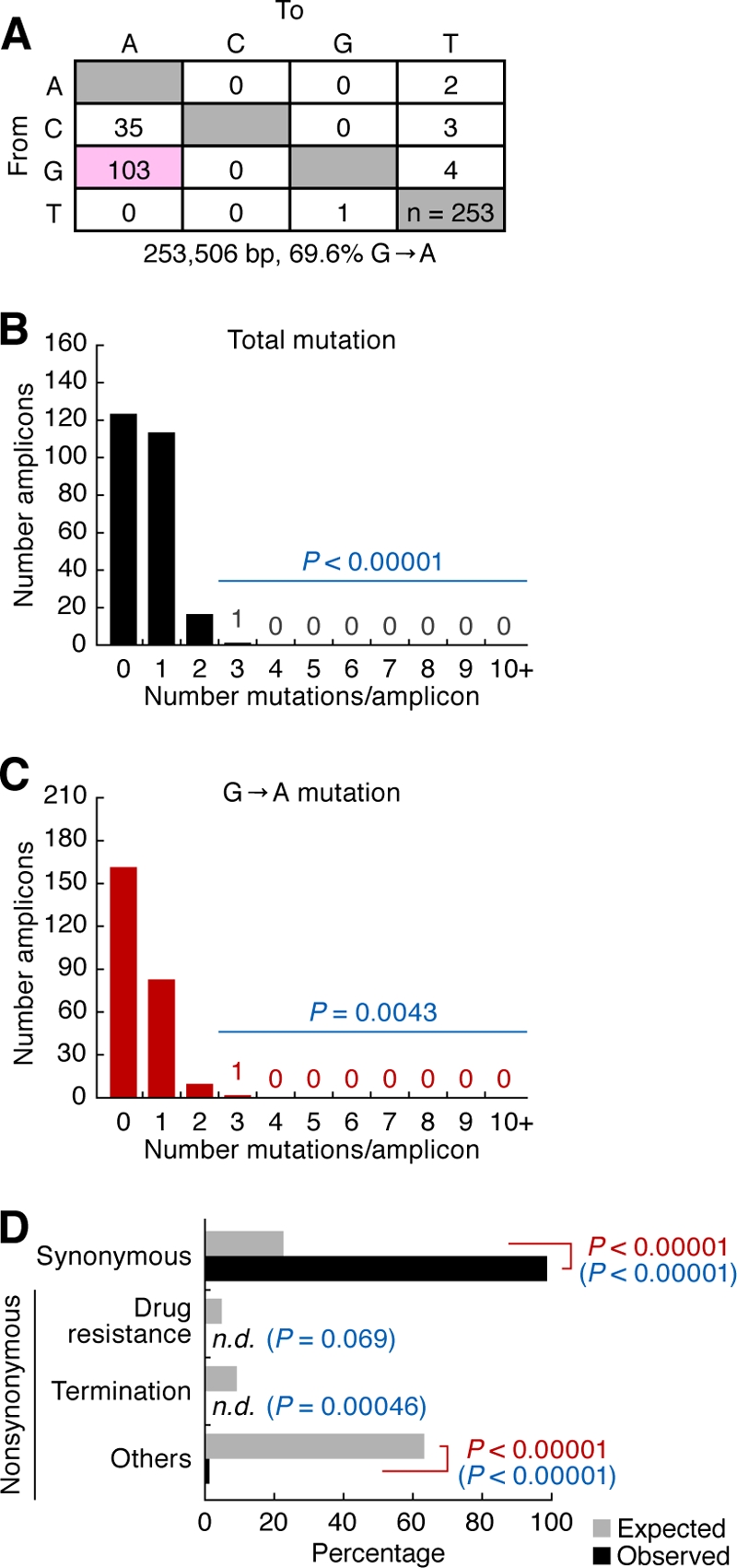
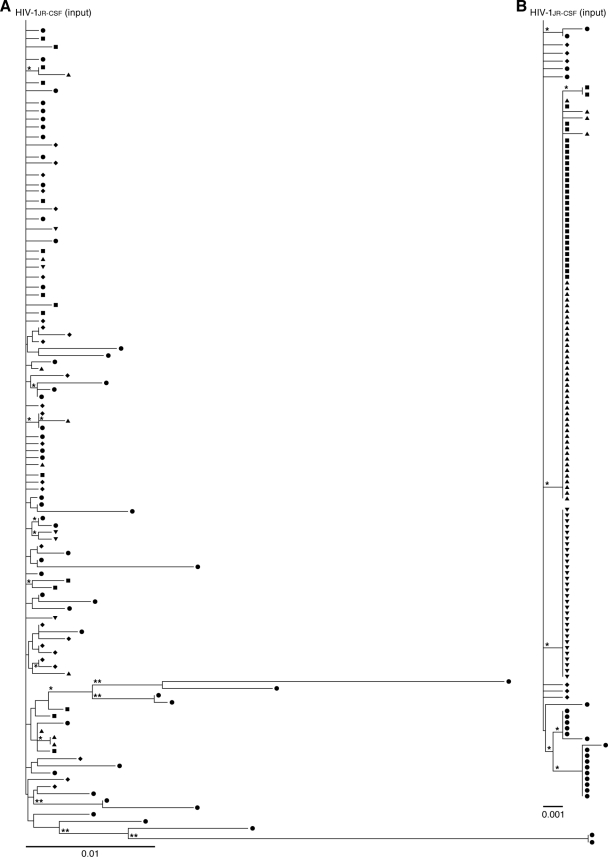
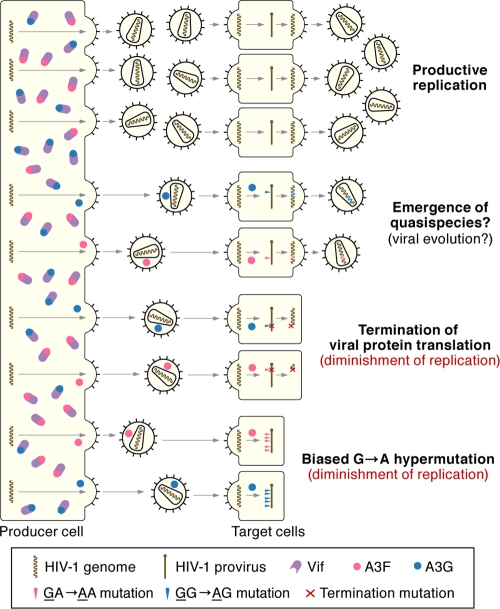
Genomic hypermutation of RNA viruses, including human immunodeficiency virus type 1 (HIV-1), can be provoked by intrinsic and extrinsic pressures, which lead to the inhibition of viral replication and/or the progression of viral diversity. Human APOBEC3G was identified as an HIV-1 restriction factor, which edits nascent HIV-1 DNA by inducing G-to-A hypermutations and debilitates the infectivity of vif-deficient HIV-1. On the other hand, HIV-1 Vif protein has the robust potential to degrade APOBEC3G protein. Although subsequent investigations have revealed that lines of APOBEC3 family proteins have the capacity to mutate HIV-1 DNA, it remains unclear whether these endogenous APOBEC3s, including APOBEC3G, contribute to mutations of vif-proficient HIV-1 provirus in vivo and, if so, what is the significance of these mutations. In this study, we use a human hematopoietic stem cell-transplanted humanized mouse (NOG-hCD34 mouse) model and demonstrate the predominant accumulation of G-to-A mutations in vif-proficient HIV-1 provirus displaying characteristics of APOBEC3-mediated mutagenesis. Notably, the APOBEC3-associated G-to-A mutation of HIV-1 DNA that leads to the termination of translation was significantly observed. We further provide a novel insight suggesting that HIV-1 G-to-A hypermutation is independently induced by individual APOBEC3 proteins. In contrast to the prominent mutation in intracellular proviral DNA, viral RNA in plasma possessed fewer G-to-A mutations. Taken together, these results provide the evidence indicating that endogenous APOBEC3s are associated with G-to-A mutation of HIV-1 provirus in vivo, which can result in the abrogation of HIV-1 infection.
Figures
References
-
- Bishop, K. N., R. K. Holmes, A. M. Sheehy, N. O. Davidson, S. J. Cho, and M. H. Malim. 2004. Cytidine deamination of retroviral DNA by diverse APOBEC proteins. Curr. Biol. 14:1392-1396. - PubMed
-
- Chiu, Y. L., and W. C. Greene. 2008. The APOBEC3 cytidine deaminases: an innate defensive network opposing exogenous retroviruses and endogenous retroelements. Annu. Rev. Immunol. 26:317-353. - PubMed
Publication types
MeSH terms
Substances
LinkOut - more resources
Full Text Sources
