


miRNA malfunction causes spinal motor neuron disease
- PMID: 20616011
- PMCID: PMC2919953
- DOI: 10.1073/pnas.1006151107
miRNA malfunction causes spinal motor neuron disease
Abstract
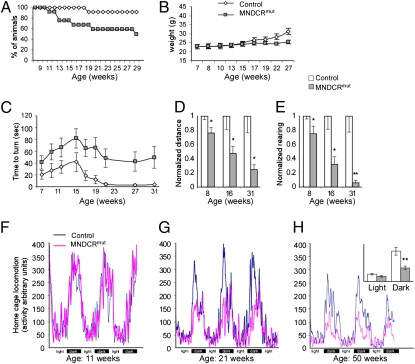
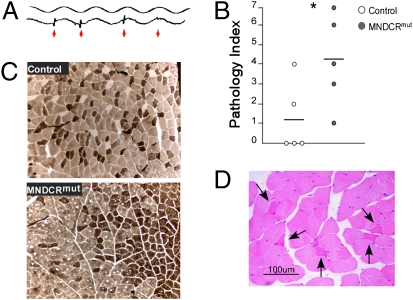
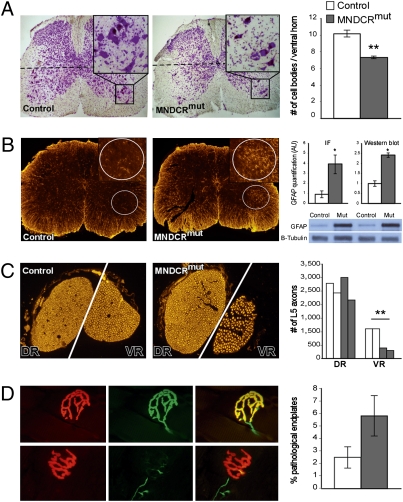
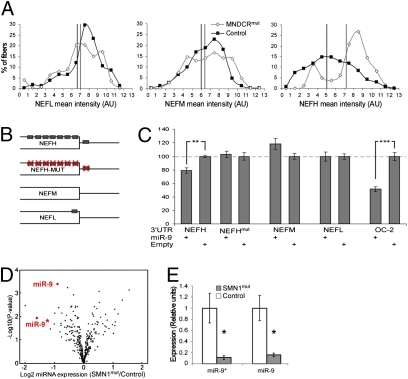
Defective RNA metabolism is an emerging mechanism involved in ALS pathogenesis and possibly in other neurodegenerative disorders. Here, we show that microRNA (miRNA) activity is essential for long-term survival of postmitotic spinal motor neurons (SMNs) in vivo. Thus, mice that do not process miRNA in SMNs exhibit hallmarks of spinal muscular atrophy (SMA), including sclerosis of the spinal cord ventral horns, aberrant end plate architecture, and myofiber atrophy with signs of denervation. Furthermore, a neurofilament heavy subunit previously implicated in motor neuron degeneration is specifically up-regulated in miRNA-deficient SMNs. We demonstrate that the heavy neurofilament subunit is a target of miR-9, a miRNA that is specifically down-regulated in a genetic model of SMA. These data provide evidence for miRNA function in SMN diseases and emphasize the potential role of miR-9-based regulatory mechanisms in adult neurons and neurodegenerative states.
Conflict of interest statement
The authors declare no conflict of interest.
Figures
References
-
- Denli AM, Tops BB, Plasterk RH, Ketting RF, Hannon GJ. Processing of primary microRNAs by the Microprocessor complex. Nature. 2004;432:231–235. - PubMed
-
- Gregory RI, et al. The Microprocessor complex mediates the genesis of microRNAs. Nature. 2004;432:235–240. - PubMed
-
- Lee Y, et al. The nuclear RNase III Drosha initiates microRNA processing. Nature. 2003;425:415–419. - PubMed
-
- Grishok A, et al. Genes and mechanisms related to RNA interference regulate expression of the small temporal RNAs that control C. elegans developmental timing. Cell. 2001;106:23–34. - PubMed
Publication types
MeSH terms
Substances
Grants and funding
LinkOut - more resources
Full Text Sources
Other Literature Sources
Medical
Molecular Biology Databases
Miscellaneous
