


Biological and conformational evaluation of bifunctional compounds for opioid receptor agonists and neurokinin 1 receptor antagonists possessing two penicillamines
- PMID: 20617791
- PMCID: PMC2943425
- DOI: 10.1021/jm100157m
Biological and conformational evaluation of bifunctional compounds for opioid receptor agonists and neurokinin 1 receptor antagonists possessing two penicillamines
Abstract
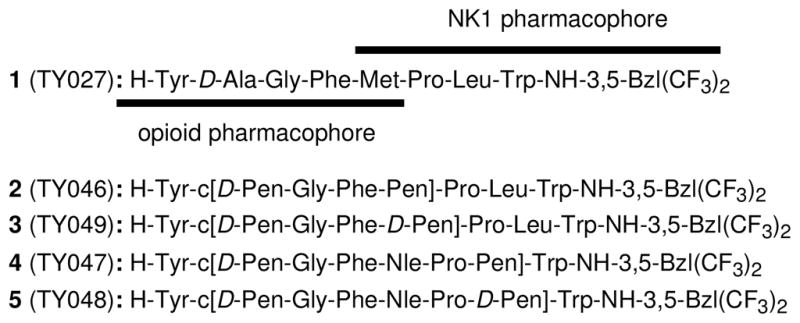
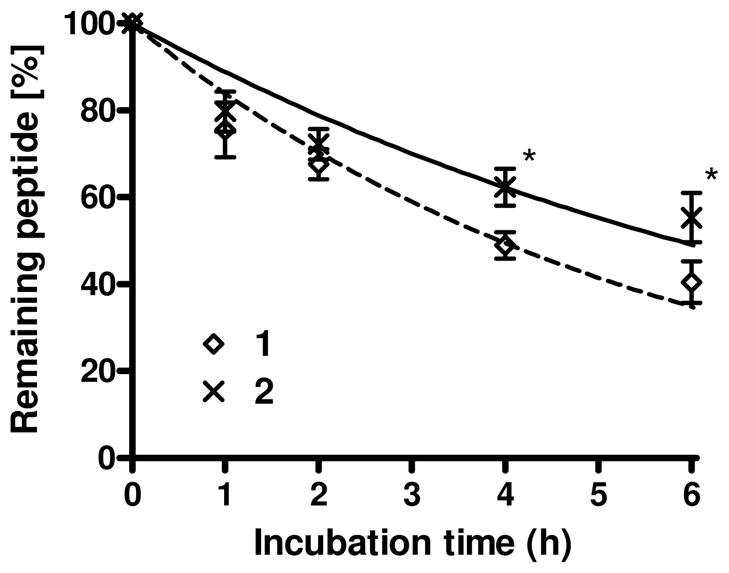
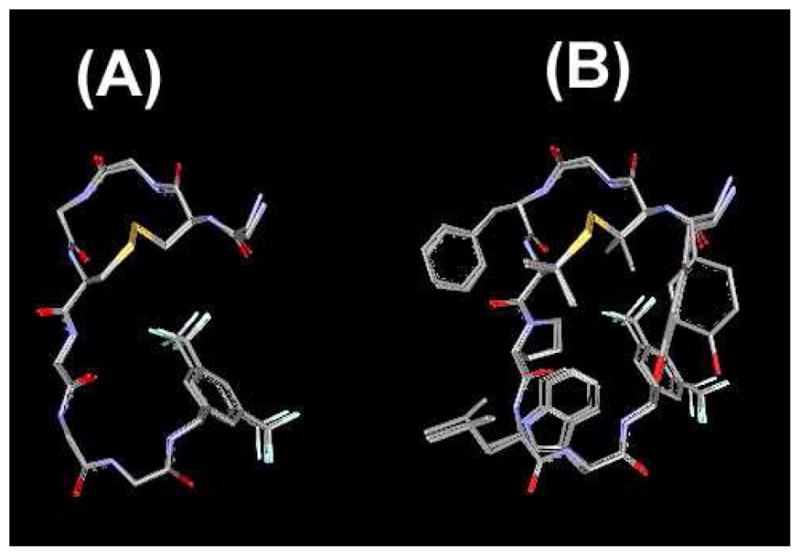
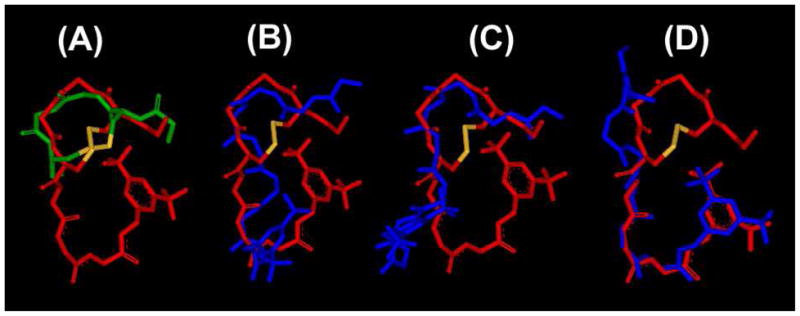
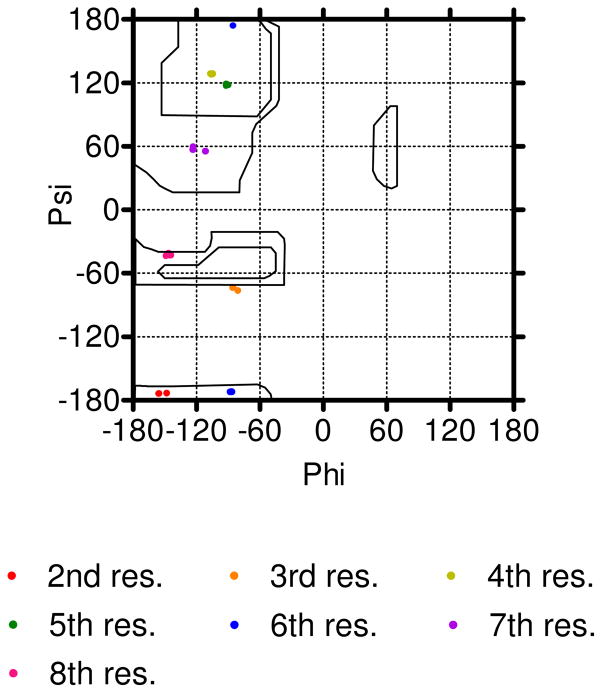
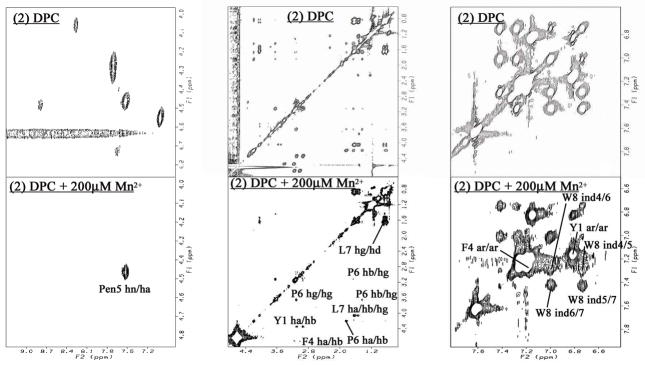
Neuropathic pain states and tolerance to opioids can result from system changes in the CNS, such as up-regulation of the NK1 receptor and substance P, lead to antiopioid effects in ascending or descending pain-signaling pathways. Bifunctional compounds, possessing both the NK1 antagonist pharmacophore and the opioid agonist pharmacophore with delta-selectivity, could counteract these system changes to have significant analgesic efficacy without undesirable side effects. As a result of the introduction of cyclic and topological constraints with penicillamines, 2 (Tyr-cyclo[d-Pen-Gly-Phe-Pen]-Pro-Leu-Trp-NH-[3',5'-(CF(3))(2)-Bzl]) was found as the best bifunctional compound with effective NK1 antagonist and potent opioid agonist activities, and 1400-fold delta-selectivity over the mu-receptor. The NMR structural analysis of 2 revealed that the relative positioning of the two connected pharmacophores as well as its cyclic and topological constraints might be responsible for its excellent bifunctional activities as well as its significant delta-opioid selectivity. Together with the observed high metabolic stability, 2 could be considered as a valuable research tool and possibly a promising candidate for a novel analgesic drug.
Figures
References
-
- Kalso E. Improving opioid effectiveness: from ideas to evidence. Eur J Pain. 2005;9:131–135. - PubMed
-
- King T, Ossipov MH, Vanderah TW, Porreca F, Lai J. Is paradoxical pain induced by sustained opioid exposure an underlying mechanism of opioid antinociceptive tolerance? Neurosignals. 2005;14:194–205. - PubMed
-
- Yamamoto T, Nair P, Davis P, Ma SW, Navratilova E, Moye M, Tumati S, Vanderah TW, Lai J, Porreca F, Yamamura HI, Hruby VJ. Design, Synthesis and Biological Evaluation of Novel Bifunctional C-terminal Modified Peptides for δ/μ Opioid Receptor Agonists and Neurokinin-1 Receptor Antagonists. J Med Chem. 2007;50:2779–2786. - PMC - PubMed
-
- Yamamoto T, Nair P, Jacobsen NE, Davis P, Ma SW, Navratilova E, Lai J, Yamamura HI, Vanderah TW, Porreca F, Hruby VJ. The Importance of Micelle-Bound States for the Bioactivities of Bifunctional Peptide Derivatives for δ/μ Opioid Receptor Agonists and Neurokinin 1 Receptor Antagonists. J Med Chem. 2008;51:6334–6347. - PMC - PubMed
Publication types
MeSH terms
Substances
Grants and funding
LinkOut - more resources
Full Text Sources
Chemical Information
Research Materials
