


Therapeutic Interactive Voice Response (TIVR) to reduce analgesic medication use for chronic pain management
- PMID: 20620119
- PMCID: PMC3045626
- DOI: 10.1016/j.jpain.2010.03.019
Therapeutic Interactive Voice Response (TIVR) to reduce analgesic medication use for chronic pain management
Abstract
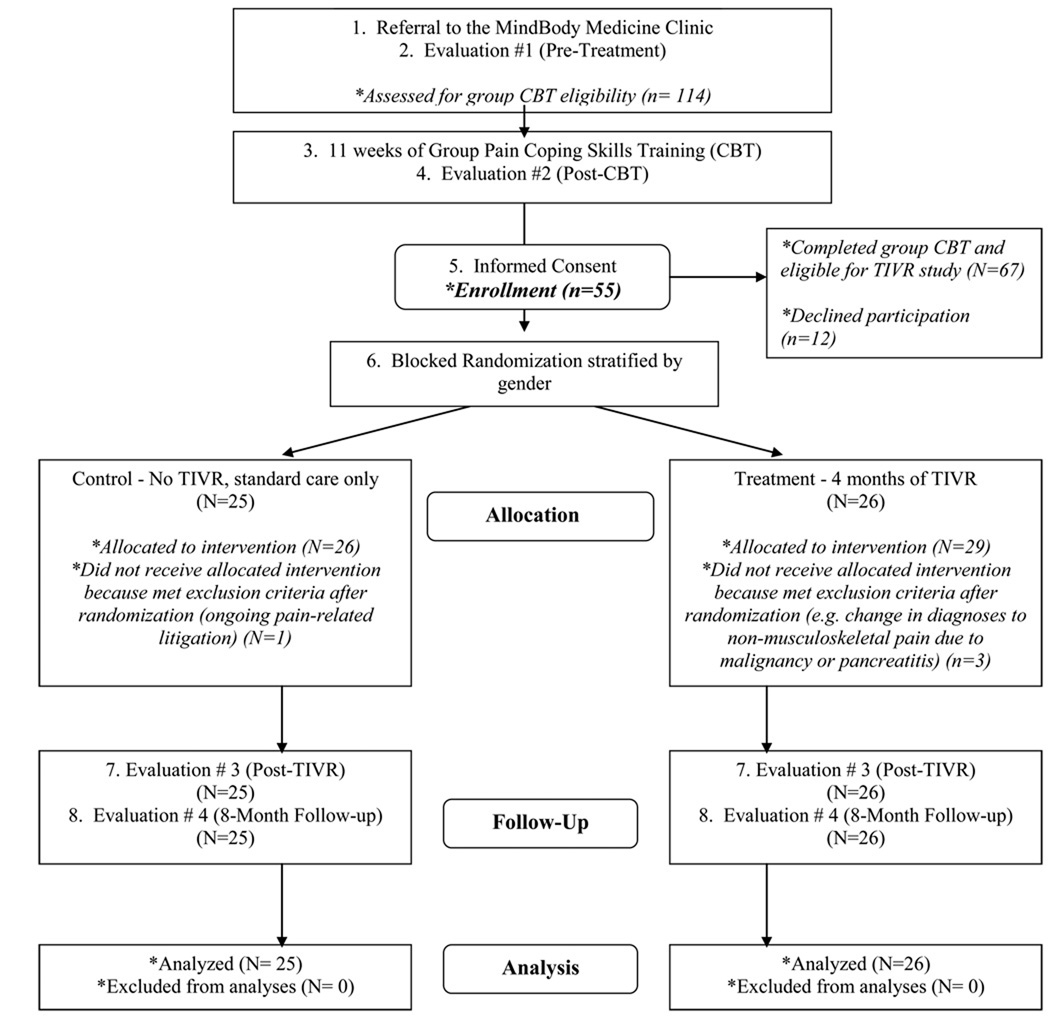
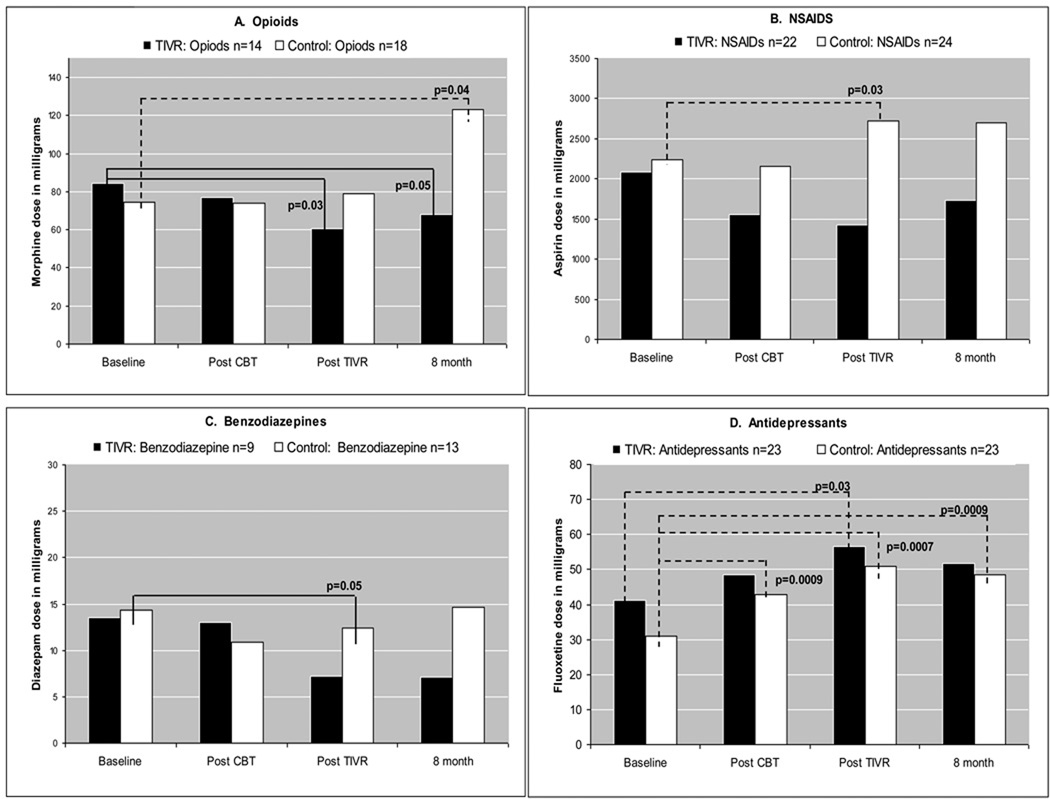
This paper examines whether a telephone-based, automated maintenance enhancement program can help to reduce opioid and nonsteroidal anti-inflamatory drugs (NSAID) analgesic use in patients with chronic pain. Following 11 weeks of group cognitive-behavioral therapy (CBT), 51 subjects with chronic musculoskeletal pain were randomized to 1 of 2 study groups. Twenty-six subjects participated in 4 months of a Therapeutic Interactive Voice Response (TIVR) program in addition to standard follow-up care, while a control group of 25 subjects received standard follow-up care only. TIVR is an automated, telephone-based tool developed for the maintenance and enhancement of CBT skills. Opioid analgesic use decreased in the experimental group in both follow-ups: 4 and 8 months postCBT. In addition, at 8-month follow-up, 21% of the TIVR subjects had discontinued the use of opioid analgesics, 23% had discontinued NSAIDS, and 10% had discontinued antidepressant medications. In contrast, the control group showed increases in opioid and NSAIDS use. Analysis of covariance (ANCOVA) revealed significant between-group differences in opioid analgesic use at 8-month follow up (P = .004). We have previously demonstrated the efficacy of TIVR to decrease pain and improve coping; this analysis demonstrates that the use of TIVR may also result in concurrent reductions in opioid analgesic and NSAID medications use.
Perspective: This article demonstrates that the Therapeutic Interactive Voice Response maintenance enhancement program can help to reduce opioid analgesic use in patients with chronic pain. This automated maintenance enhancement program could potentially assist patients not only to decrease pain and improve coping, but also to diminish the likelihood of opioid dependence.
Copyright © 2010 American Pain Society. Published by Elsevier Inc. All rights reserved.
Figures
References
-
- Basler H. Group treatment for pain and discomfort. Patient Educ Couns. 1993;20:167–175. - PubMed
-
- Basler H, Jakle C, Kroner-Herwig B. Incorporation of cognitive-behavioral treatment into the medical care of chronic low back patients: A controlled randomized study in German pain treatment centers. Patient Educ Couns. 1997;31:113–124. - PubMed
-
- Bezchlibnyk-Butler K, Jeffries J, Martin B, editors. Clinical handbook of psychotropic drugs. Toronto: Hogrefe & Huber Publications; 1997. [Accessed March 12, 2010]. Available at: www.mental-health-today.com/rx/benzo.htm.
-
- Compas B, Haaga D, Keefe F, Leitenberg H, Williams D. A sampling of empirically supported psychological treatments for health psychology: Smoking, chronic pain, cancer, & bulimia nervosa. J Consult Clin Psychol. 1998;66:89–112. - PubMed
-
- Connally G, Sanders S. Predicting low back pain patients' response to lumbar sympathetic nerve blocks and interdisciplinary rehabilitation: The role of pretreatment overt pain behavior and cognitive coping strategies. Pain. 1991;44:139–146. - PubMed
Publication types
MeSH terms
Substances
Grants and funding
LinkOut - more resources
Full Text Sources
Medical
