


High-throughput engineering and analysis of peptide binding to class II MHC
- PMID: 20622157
- PMCID: PMC2922119
- DOI: 10.1073/pnas.1006344107
High-throughput engineering and analysis of peptide binding to class II MHC
Abstract
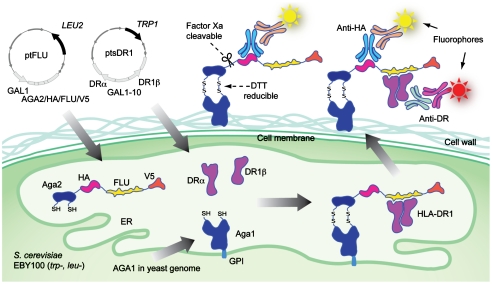
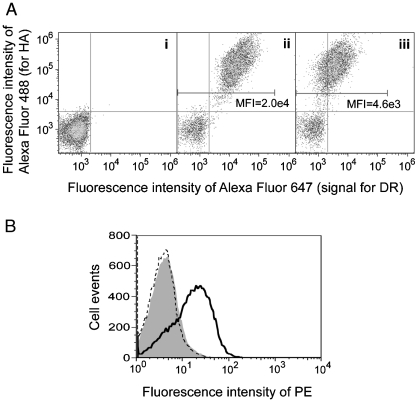
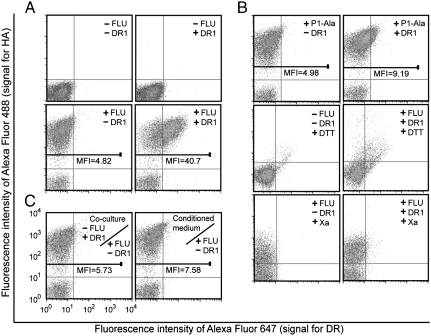
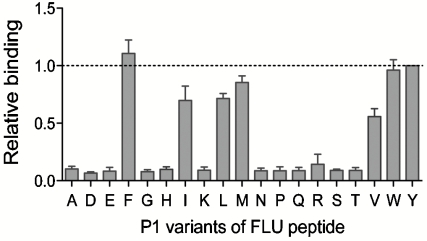
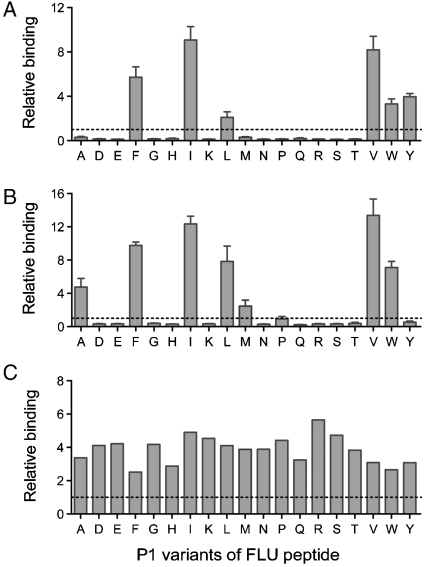
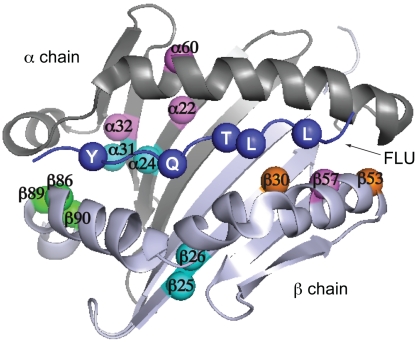
Class II major histocompatibility complex (MHC-II) proteins govern stimulation of adaptive immunity by presenting antigenic peptides to CD4+ T lymphocytes. Many allelic variants of MHC-II exist with implications in peptide presentation and immunity; thus, high-throughput experimental tools for rapid and quantitative analysis of peptide binding to MHC-II are needed. Here, we present an expression system wherein peptide and MHC-II are codisplayed on the surface of yeast in an intracellular association-dependent manner and assayed by flow cytometry. Accordingly, the relative binding of different peptides and/or MHC-II variants can be assayed by genetically manipulating either partner, enabling the application of directed evolution approaches for high-throughput characterization or engineering. We demonstrate the application of this tool to map the side-chain preference for peptides binding to HLA-DR1 and to evolve novel HLA-DR1 mutants with altered peptide-binding specificity.
Conflict of interest statement
The authors declare no conflict of interest.
Figures
References
-
- Brown JH, et al. Three-dimensional structure of the human class II histocompatibility antigen HLA-DR1. Nature. 1993;364:33–39. - PubMed
-
- Watts C. The exogenous pathway for antigen presentation on major histocompatibility complex class II and CD1 molecules. Nat Immunol. 2004;5:685–692. - PubMed
-
- Hammer J, et al. Promiscuous and allele-specific anchors in HLA-DR-binding peptides. Cell. 1993;74:197–203. - PubMed
-
- Stern LJ, et al. Crystal structure of the human class II MHC protein HLA-DR1 complexed with an influenza virus peptide. Nature. 1994;368:215–221. - PubMed
Publication types
MeSH terms
Substances
Grants and funding
LinkOut - more resources
Full Text Sources
Other Literature Sources
Research Materials
