


The effects of aspiration status, liquid type, and bolus volume on pharyngeal peak pressure in healthy older adults
- PMID: 20623303
- PMCID: PMC4411635
- DOI: 10.1007/s00455-010-9290-4
The effects of aspiration status, liquid type, and bolus volume on pharyngeal peak pressure in healthy older adults
Abstract
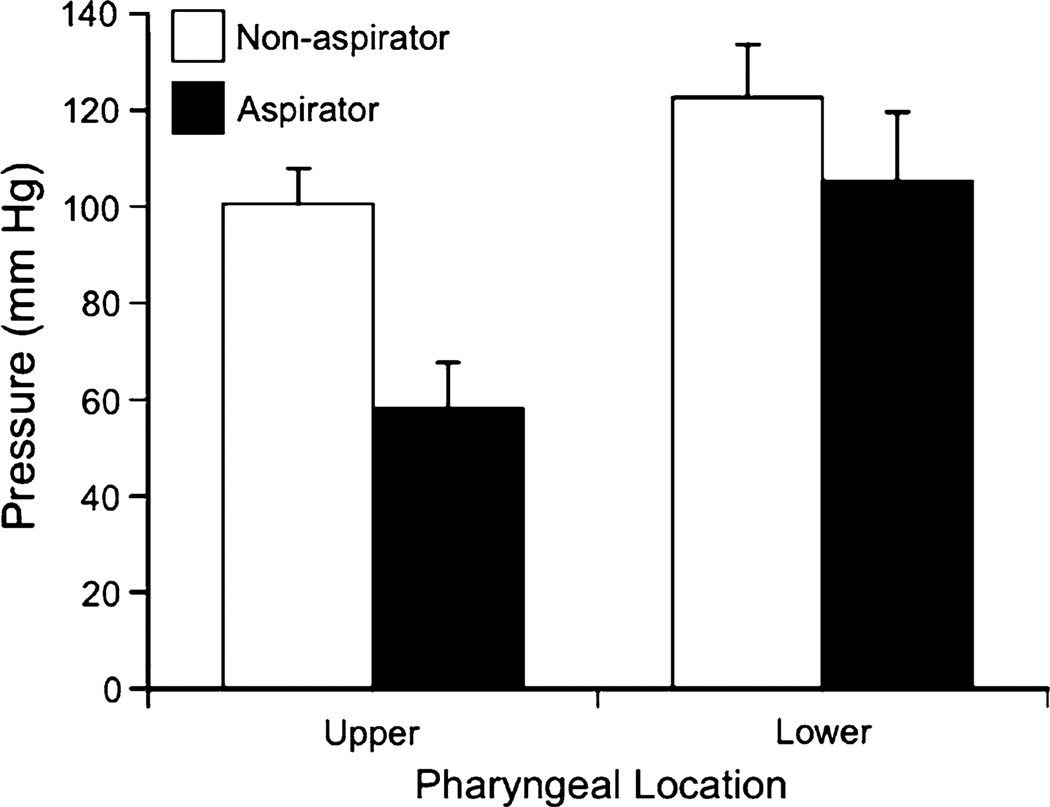
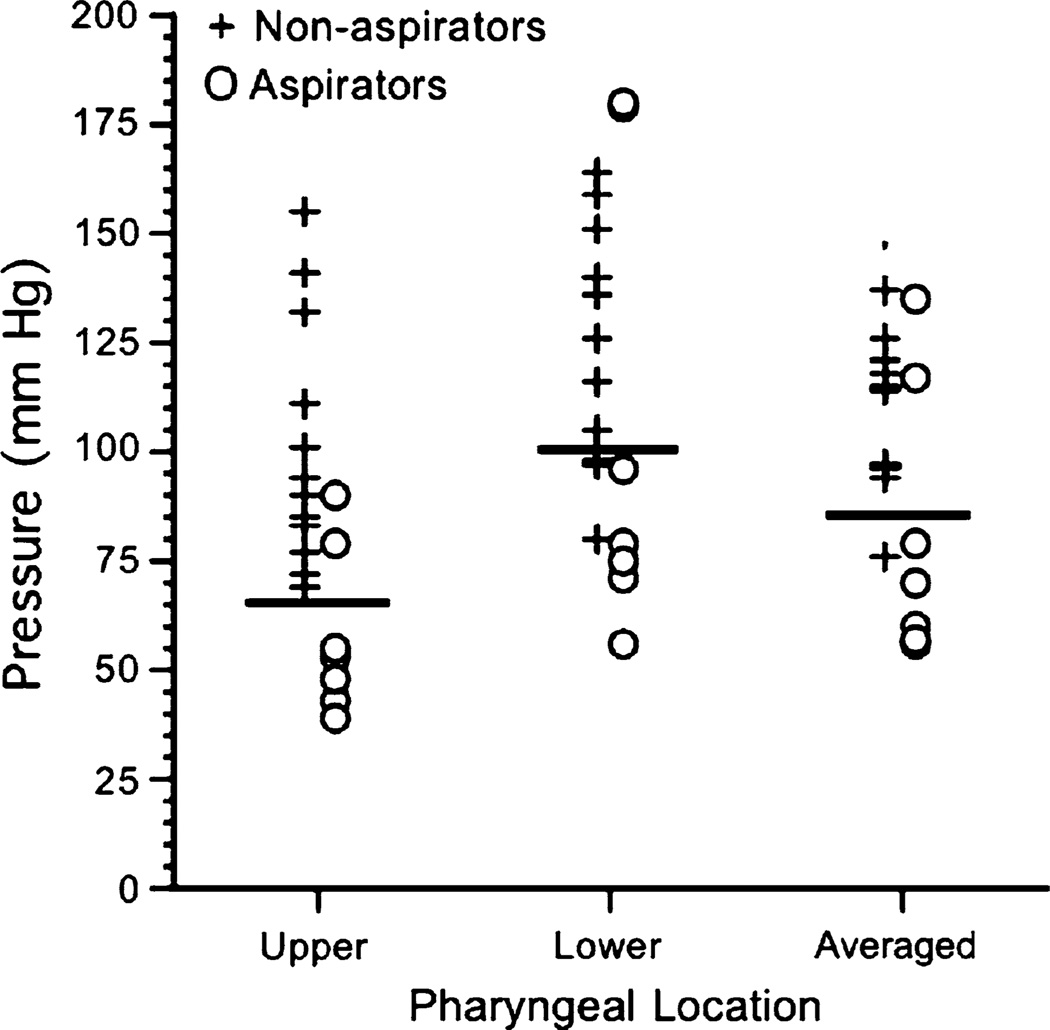
The reasons for aspiration in healthy adults remain unknown. Given that the pharyngeal phase of swallowing is a key component of the safe swallow, it was hypothesized that healthy older adults who aspirate are likely to generate less pharyngeal peak pressures when swallowing. Accordingly, pharyngeal and upper esophageal sphincter pressures were examined as a function of aspiration status (i.e., nonaspirator vs. aspirator), sensor location (upper vs. lower pharynx), liquid type (i.e., water vs. milk), and volume (i.e., 5 vs. 10 ml) in healthy older adults. Manometric measurements were acquired with a 2.1-mm catheter during flexible endoscopic evaluation. Participants (N = 19, mean age = 79.2 years) contributed 28 swallows; during 8 swallows, simultaneous manometric measurements of upper and lower pharyngeal and upper esophageal pressures were obtained. Pharyngeal manometric peak pressure was significantly less for aspirators (mean = 82, SD = 31 mmHg) than for nonaspirators (mean = 112, SD = 20 mmHg), and upper pharyngeal pressures (mean = 85, SD = 32 mmHg) generated less pressure than lower pharyngeal pressures (mean = 116, SD = 38 mmHg). Manometric measurements vary with respect to aspiration status and sensor location. Lower pharyngeal pressures in healthy older adults may predispose them to aspiration.
Figures
References
-
- Witte U, Huckabee ML, Doeltgen SH, Gumbley F, Robb M. The effect of effortful swallow on pharyngeal manometric measurements during saliva and water swallowing in healthy participants. Arch Phys Med Rehabil. 2008;89(5):822–828. - PubMed
-
- Castell JA, Dalton CB, Castell DO. Pharyngeal and upper esophageal sphincter manometry in humans. Am J Physiol. 1990;258(2 Pt 1):G173–G178. - PubMed
-
- Perlman AL, Schultz JG, VanDaele DJ. Effects of age, gender, bolus volume, and bolus viscosity on oropharyngeal pressure during swallowing. J Appl Physiol. 1993;75(1):33–37. - PubMed
-
- Dodds WJ, Hogan WJ, Lydon SB, Stewart ET, Stef JJ, Arndorfer RC. Quantitation of pharyngeal motor function in normal human subjects. J Appl Physiol. 1975;39(4):692–696. - PubMed
-
- Cerenko D, McConnel FM, Jackson RT. Quantitative assessment of pharyngeal bolus driving forces. Otolaryngol Head Neck Surg. 1989;100(1):57–63. - PubMed
Publication types
MeSH terms
Substances
Grants and funding
LinkOut - more resources
Full Text Sources
