


The reduced genome of the parasitic microsporidian Enterocytozoon bieneusi lacks genes for core carbon metabolism
- PMID: 20624735
- PMCID: PMC2942035
- DOI: 10.1093/gbe/evq022
The reduced genome of the parasitic microsporidian Enterocytozoon bieneusi lacks genes for core carbon metabolism
Abstract
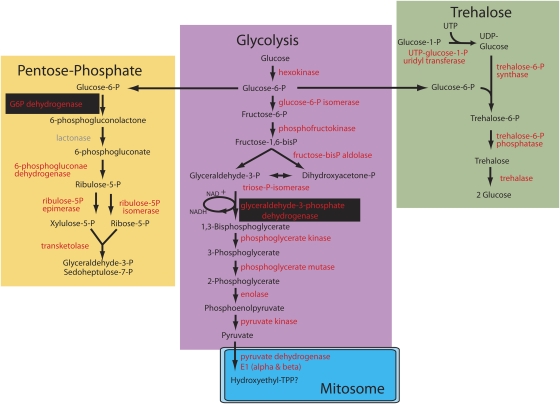
Reduction of various biological processes is a hallmark of the parasitic lifestyle. Generally, the more intimate the association between parasites and hosts the stronger the parasite relies on its host's physiology for survival and reproduction. However, some systems have been held to be indispensable, for example, the core pathways of carbon metabolism that produce energy from sugars. Even the most hardened anaerobes that lack oxidative phosphorylation and the tricarboxylic acid cycle have retained glycolysis and some downstream means to generate ATP. Here we describe the deep-coverage genome resequencing of the pathogenic microsporidiian, Enterocytozoon bieneusi, which shows that this parasite has crossed this line and abandoned complete pathways for the most basic carbon metabolism. Comparing two genome sequence surveys of E. bieneusi to genomic data from four other microsporidia reveals a normal complement of 353 genes representing 30 functional pathways in E. bieneusi, except that only 2 out of 21 genes collectively involved in glycolysis, pentose phosphate, and trehalose metabolism are present. Similarly, no genes encoding proteins involved in the processing of spliceosomal introns were found. Altogether, E. bieneusi appears to have no fully functional pathway to generate ATP from glucose. Therefore, this intracellular parasite relies on transporters to import ATP from its host.
Figures
References
Publication types
MeSH terms
Substances
Grants and funding
LinkOut - more resources
Full Text Sources
Other Literature Sources
