


Improvement of sidestream dark field imaging with an image acquisition stabilizer
- PMID: 20626888
- PMCID: PMC2915944
- DOI: 10.1186/1471-2342-10-15
Improvement of sidestream dark field imaging with an image acquisition stabilizer
Abstract
Background: In the present study we developed, evaluated in volunteers, and clinically validated an image acquisition stabilizer (IAS) for Sidestream Dark Field (SDF) imaging.
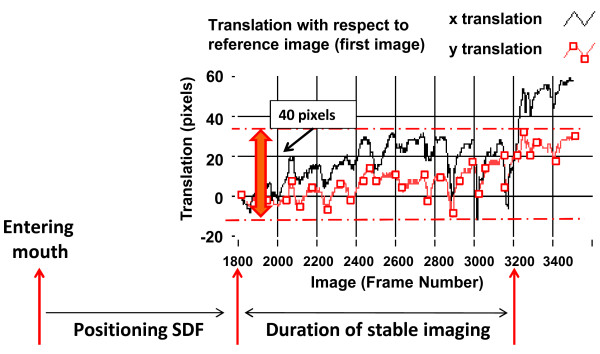
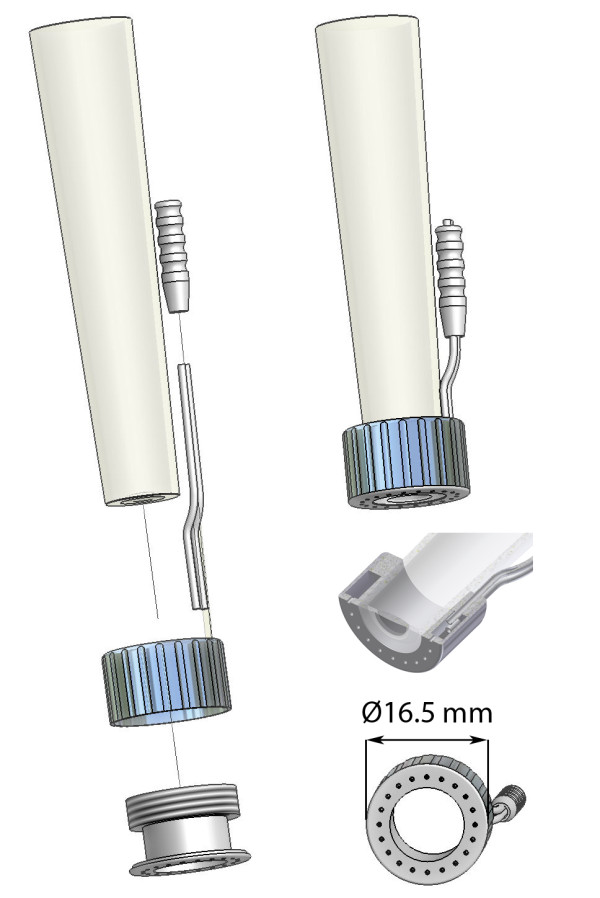
Methods: The IAS is a stainless steel sterilizable ring which fits around the SDF probe tip. The IAS creates adhesion to the imaged tissue by application of negative pressure. The effects of the IAS on the sublingual microcirculatory flow velocities, the force required to induce pressure artifacts (PA), the time to acquire a stable image, and the duration of stable imaging were assessed in healthy volunteers. To demonstrate the clinical applicability of the SDF setup in combination with the IAS, simultaneous bilateral sublingual imaging of the microcirculation were performed during a lung recruitment maneuver (LRM) in mechanically ventilated critically ill patients. One SDF device was operated handheld; the second was fitted with the IAS and held in position by a mechanic arm. Lateral drift, number of losses of image stability and duration of stable imaging of the two methods were compared.
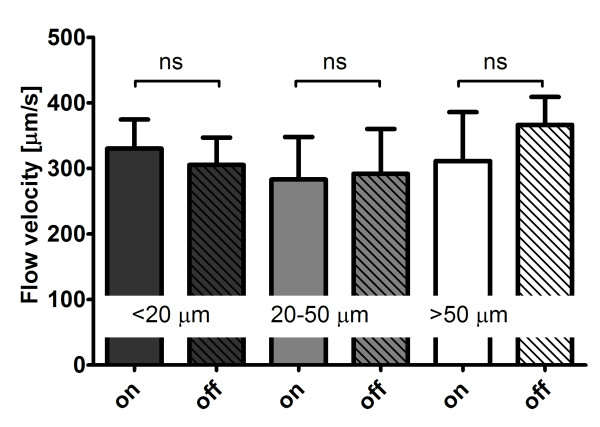
Results: Five healthy volunteers were studied. The IAS did not affect microcirculatory flow velocities. A significantly greater force had to applied onto the tissue to induced PA with compared to without IAS (0.25 +/- 0.15 N without vs. 0.62 +/- 0.05 N with the IAS, p < 0.001). The IAS ensured an increased duration of a stable image sequence (8 +/- 2 s without vs. 42 +/- 8 s with the IAS, p < 0.001). The time required to obtain a stable image sequence was similar with and without the IAS. In eight mechanically ventilated patients undergoing a LRM the use of the IAS resulted in a significantly reduced image drifting and enabled the acquisition of significantly longer stable image sequences (24 +/- 5 s without vs. 67 +/- 14 s with the IAS, p = 0.006).
Conclusions: The present study has validated the use of an IAS for improvement of SDF imaging by demonstrating that the IAS did not affect microcirculatory perfusion in the microscopic field of view. The IAS improved both axial and lateral SDF image stability and thereby increased the critical force required to induce pressure artifacts. The IAS ensured a significantly increased duration of maintaining a stable image sequence.
Figures
References
MeSH terms
LinkOut - more resources
Full Text Sources
