Green tea polyphenols and metabolites in prostatectomy tissue: implications for cancer prevention
- PMID: 20628004
- PMCID: PMC3163459
- DOI: 10.1158/1940-6207.CAPR-09-0210
Green tea polyphenols and metabolites in prostatectomy tissue: implications for cancer prevention
Abstract
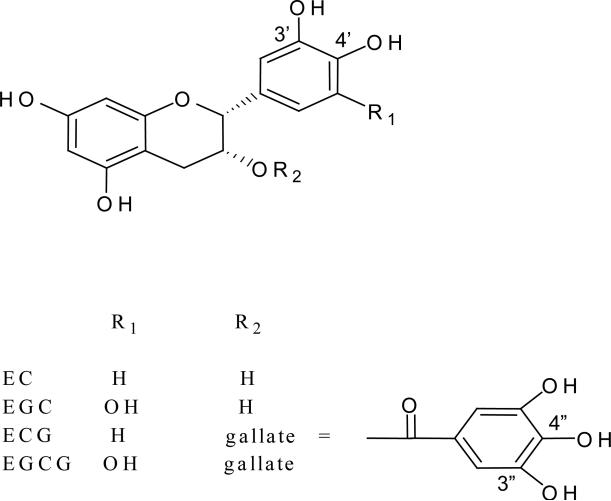
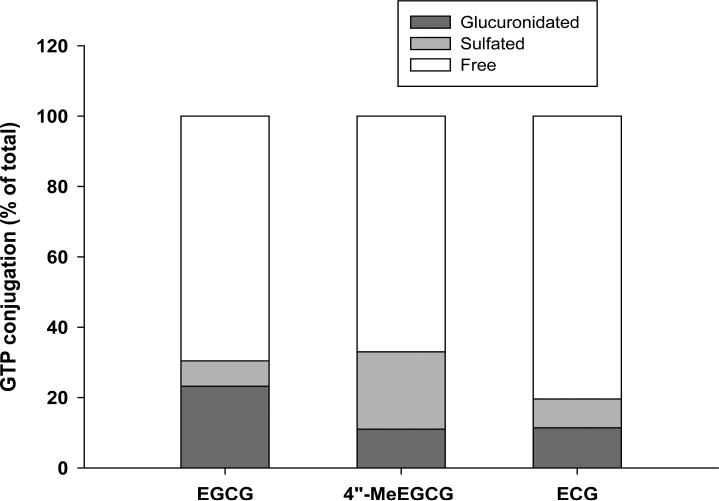
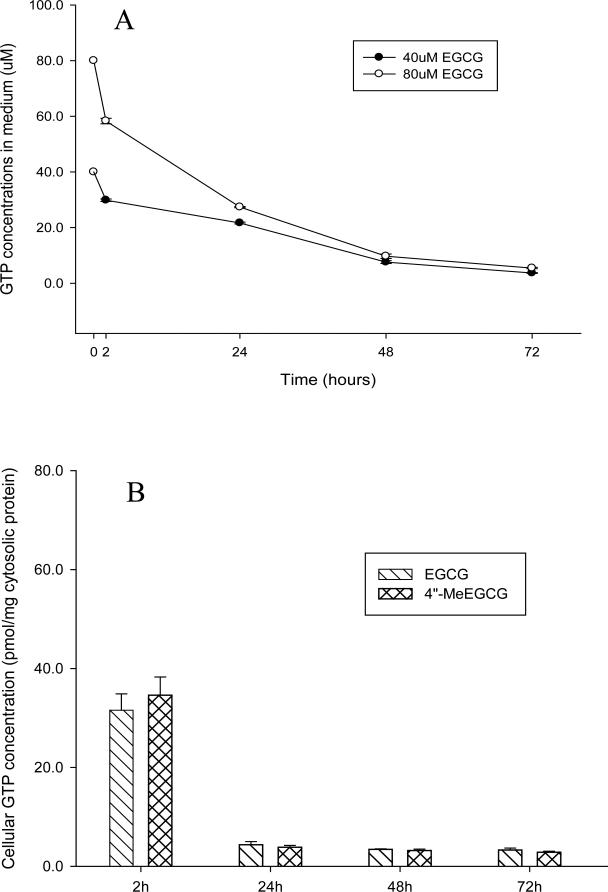
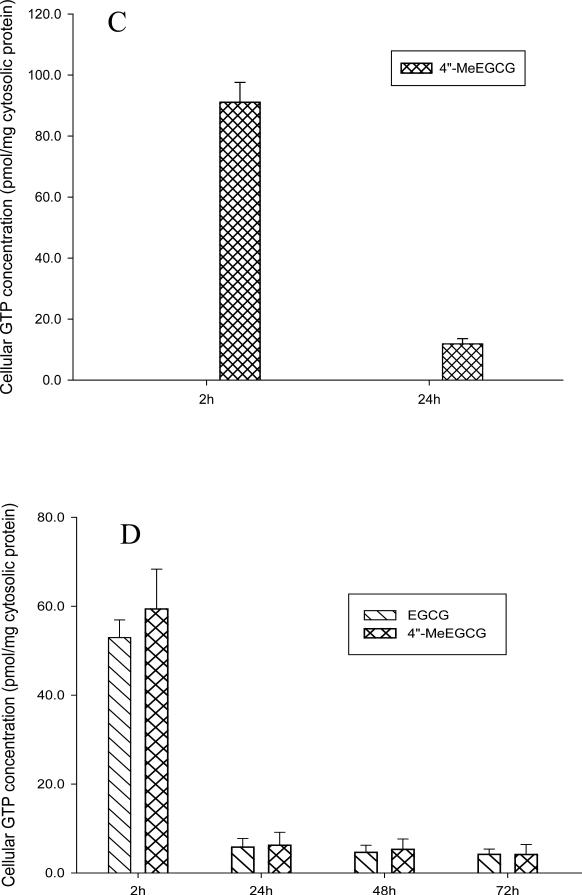
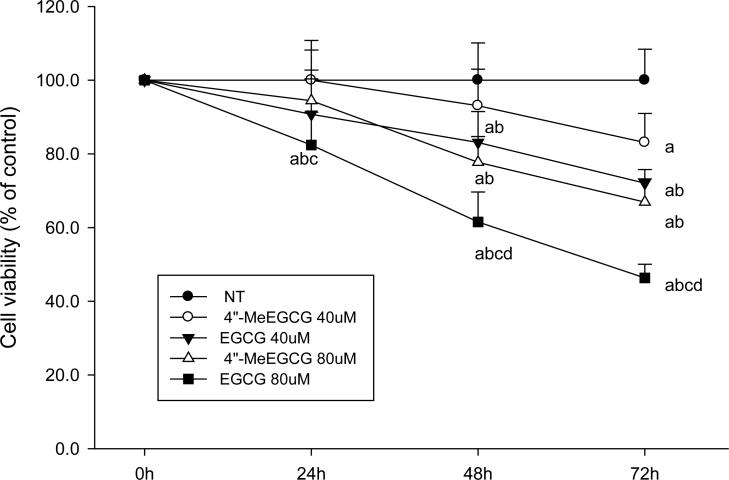
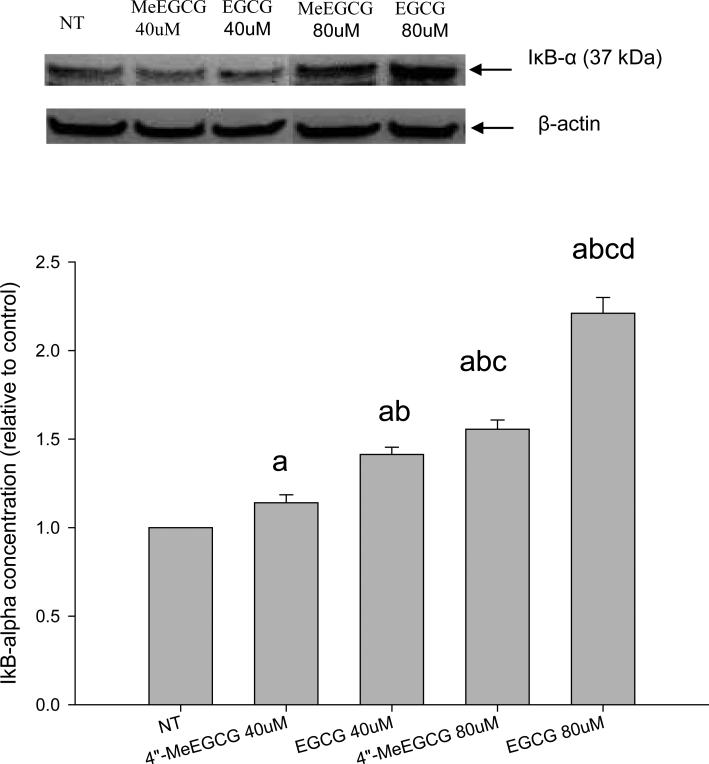
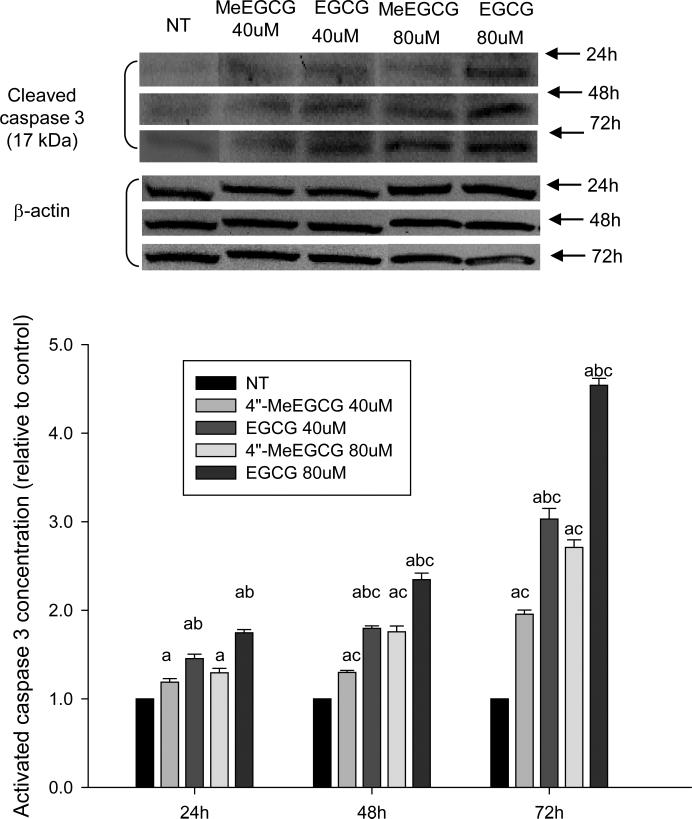
Epidemiologic, preclinical, and clinical trials suggest that green tea consumption may prevent prostate cancer through the action of green tea polyphenols including (-)-epigallocatechin-3-gallate (EGCG). To study the metabolism and bioactivity of green tea polyphenols in human prostate tissue, men with clinically localized prostate cancer consumed six cups of green tea (n = 8) daily or water (n = 9) for 3 to 6 weeks before undergoing radical prostatectomy. Using high-performance liquid chromatography, 4''-O-methyl EGCG (4''-MeEGCG) and EGCG were identified in comparable amounts, and (-)-epicatechin-3-gallate was identified in lower amounts in prostatectomy tissue from men consuming green tea (38.9 +/- 19.5, 42.1 +/- 32.4, and 17.8 +/- 10.1 pmol/g tissue, respectively). The majority of EGCG and other green tea polyphenols were not conjugated. Green tea polyphenols were not detected in prostate tissue or urine from men consuming water preoperatively. In the urine of men consuming green tea, 50% to 60% of both (-)-epigallocatechin and (-)-epicatechin were present in methylated form with 4'-O-MeEGC being the major methylated form of (-)-epigallocatechin. When incubated with EGCG, LNCaP prostate cancer cells were able to methylate EGCG to 4''-MeEGCG. The capacity of 4''-MeEGCG to inhibit proliferation and NF-kappaB activation and induce apoptosis in LNCaP cells was decreased significantly compared with EGCG. In summary, methylated and nonmethylated forms of EGCG are detectable in prostate tissue following a short-term green tea intervention, and the methylation status of EGCG may potentially modulate its preventive effect on prostate cancer, possibly based on genetic polymorphisms of catechol O-methyltransferase.
2010 AACR.
Figures
References
-
- Suzuki J, Ogawa M, Futamatsu H, Kosuge H, Sagesaka YM, Isobe M. Tea catechins improve left ventricular dysfunction, suppress myocardial inflammation and fibrosis, and alter cytokine expression in rat autoimmune myocarditis. Eur J Heart Fail. 2007;9:152–9. - PubMed
-
- Kalfon L, Youdim MB, Mandel SA. Green tea polyphenol (-) -epigallocatechin-3-gallate promotes the rapid protein kinase C- and proteasome-mediated degradation of Bad: implications for neuroprotection. J Neurochem. 2007;100:992–1002. - PubMed
-
- Shen CL, Wang P, Guerrieri J, Yeh JK, Wang JS. Protective effect of green tea polyphenols on bone loss in middle-aged female rats. Osteoporos Int. 2008;19:979–90. - PubMed
-
- Yuan JM, Gao YT, Yang CS, Yu MC. Urinary biomarkers of tea polyphenols and risk of colorectal cancer in the Shanghai Cohort Study. Int J Cancer. 2007;120:1344–50. - PubMed
-
- Balentine DA, Wiseman SA, Bouwens LC. The chemistry of tea flavonoids. Crit Rev Food Sci Nutr. 1997;37:693–704. - PubMed
Publication types
MeSH terms
Substances
Grants and funding
LinkOut - more resources
Full Text Sources
Medical