


Novel insights for systemic inflammation in sepsis and hemorrhage
- PMID: 20628562
- PMCID: PMC2902015
- DOI: 10.1155/2010/642462
Novel insights for systemic inflammation in sepsis and hemorrhage
Abstract
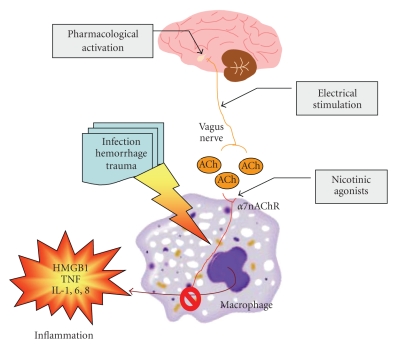
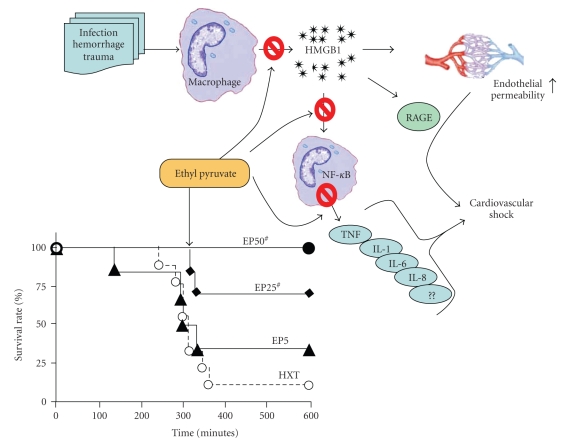
The inflammatory responses in sepsis and hemorrhage remain a major cause of death. Clinically, it is generally accepted that shock in sepsis or hemorrhage differs in its mechanisms. However, the recognition of inflammatory cytokines as a common lethal pathway has become consent. Proinflammatory cytokines such as tumor necrosis factor (TNF) or high-mobility group box1 (HMGB1) are fanatically released and cause lethal multiorgan dysfunction. Inhibition of these cytokines can prevent the inflammatory responses and organ damage. In seeking potential anti-inflammatory strategies, we reported that ethyl pyruvate and alpha7 nicotinic acetylcholine receptor (alpha7nAChR) agonists effectively restrained cytokine production to provide therapeutic benefits in both experimental sepsis and hemorrhage. Here, we review the inflammatory responses and the anti-inflammatory strategies in experimental models of sepsis and hemorrhage, as they may have a consistent inflammatory pathway in spite of their different pathophysiological processes.
Figures
References
-
- Sands KE, Bates DW, Lanken PN, et al. Epidemiology of sepsis syndrome in 8 academic medical centers. Journal of the American Medical Association. 1997;278(3):234–240. - PubMed
-
- Friedman G, Silva E, Vincent J-L. Has the mortality of septic shock changed with time? Critical Care Medicine. 1998;26(12):2078–2086. - PubMed
-
- Abraham E, Matthay MA, et al. Consensus conference definitions for sepsis, septic shock, acute lung injury, and acute respiratory distress syndrome: time for a reevaluation. Critical Care Medicine. 2000;28(1):232–235. - PubMed
-
- Matot I, Sprung CL. Definition of sepsis. Intensive Care Medicine. 2001;27(7):S3–S9. - PubMed
Publication types
MeSH terms
Substances
LinkOut - more resources
Full Text Sources
Other Literature Sources
Medical
