. 2010 Jul;104 Suppl 1(Suppl 1):S45-58.
doi: 10.1016/j.rmed.2010.03.017.

Lymphangioleiomyomatosis (LAM): molecular insights lead to targeted therapies

Affiliations

Lymphangioleiomyomatosis (LAM): molecular insights lead to targeted therapies

Connie G Glasgow et al. Respir Med. 2010 Jul.

Abstract

LAM is a rare lung disease, found primarily in women of childbearing age, characterized by cystic lung destruction and abdominal tumors (e.g., renal angiomyolipoma, lymphangioleiomyoma). The disease results from proliferation of a neoplastic cell, termed the LAM cell, which has mutations in either of the tuberous sclerosis complex (TSC) 1 or TSC2 genes. Molecular phenotyping of LAM patients resulted in the identification of therapeutic targets for drug trials. Loss of TSC gene function leads to activation of mammalian target of rapamycin (mTOR), and thereby, effects on cell size and number. The involvement of mTOR in LAM pathogenesis is the basis for initiation of therapeutic trials of mTOR inhibitors (e.g., sirolimus). Occurrence of LAM essentially entirely in women is consistent with the hypothesis that anti-estrogen agents might prevent disease progression (e.g., gonadotropin-releasing hormone analogues). Levels of urinary matrix metalloproteinases (MMPs) were elevated in LAM patients, and MMPs were found in LAM lung nodules. In part because of these observations, effects of doxycycline, an anti-MMP, and anti-angiogenic agent, are under investigation. The metastatic properties of LAM cells offer additional potential for targets. Thus, insights into the molecular and biological properties of LAM cells and molecular phenotyping of patients with LAM have led to clinical trials of targeted therapies. Funded by the Intramural Research Program, NIH/NHLBI.


Conflict of interest statement

Conflict of interest statements

The authors have no financial conflicts of interest to disclose.

Figures
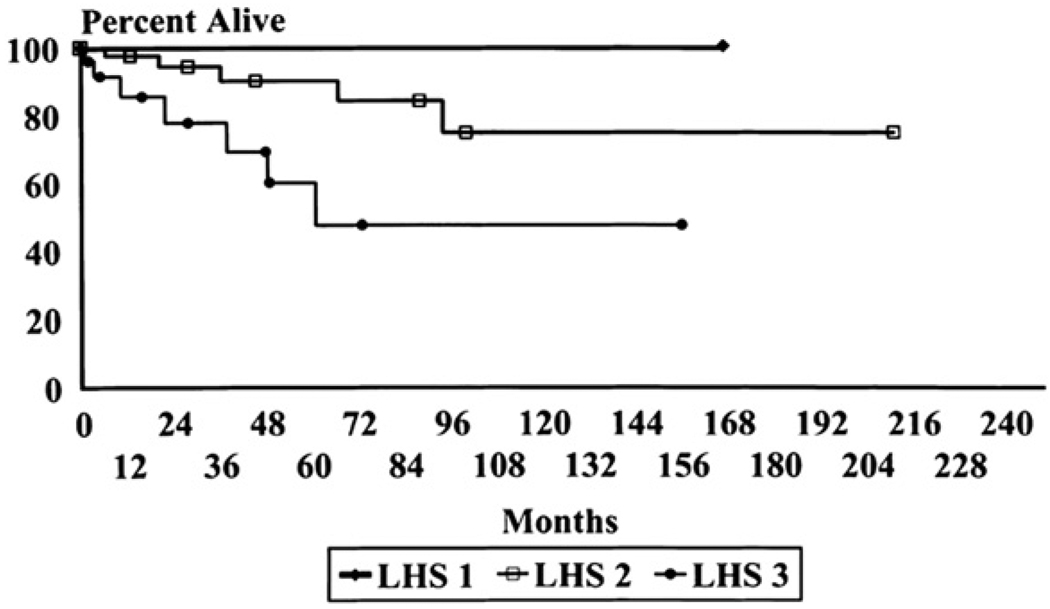
Figure 1
Figure 1
Kaplan–Meier survival curves of patients with pulmonary lymphangioleiomyomatosis staged according to the lymphangioleiomyomatosis histologic score (LHS). Patients with LHS-1 have nearly 100% survival. Patients with LHS-3 have the worst survival, and those with LHS-2 have an intermediate survival (p < 0.002) (From reference 27).
Figure 2
Figure 2
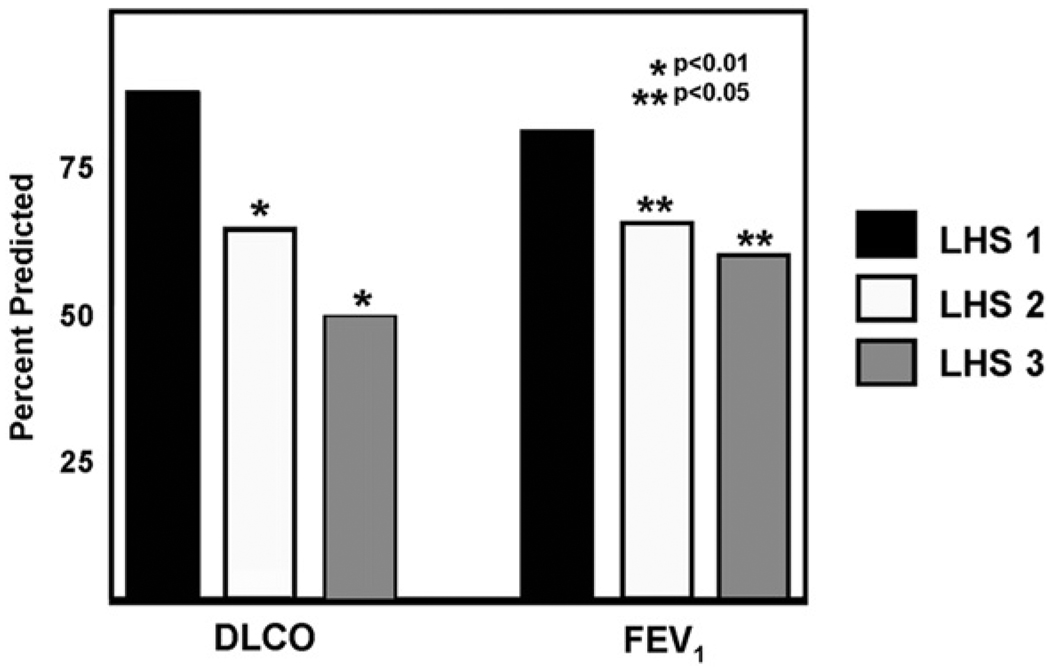
Relationship between LHS and lung function at the time of biopsy. Patients with an LHS of 2 (white bars) or 3 (gray bars) have significantly lower DLCO than those with an LHS of 1 (black bars). Patients with an LHS of 2 (white bars) or 3 (gray bars) also have lower FEV1 than patients with an LHS of 1 (From reference 8).
Figure 3
Figure 3
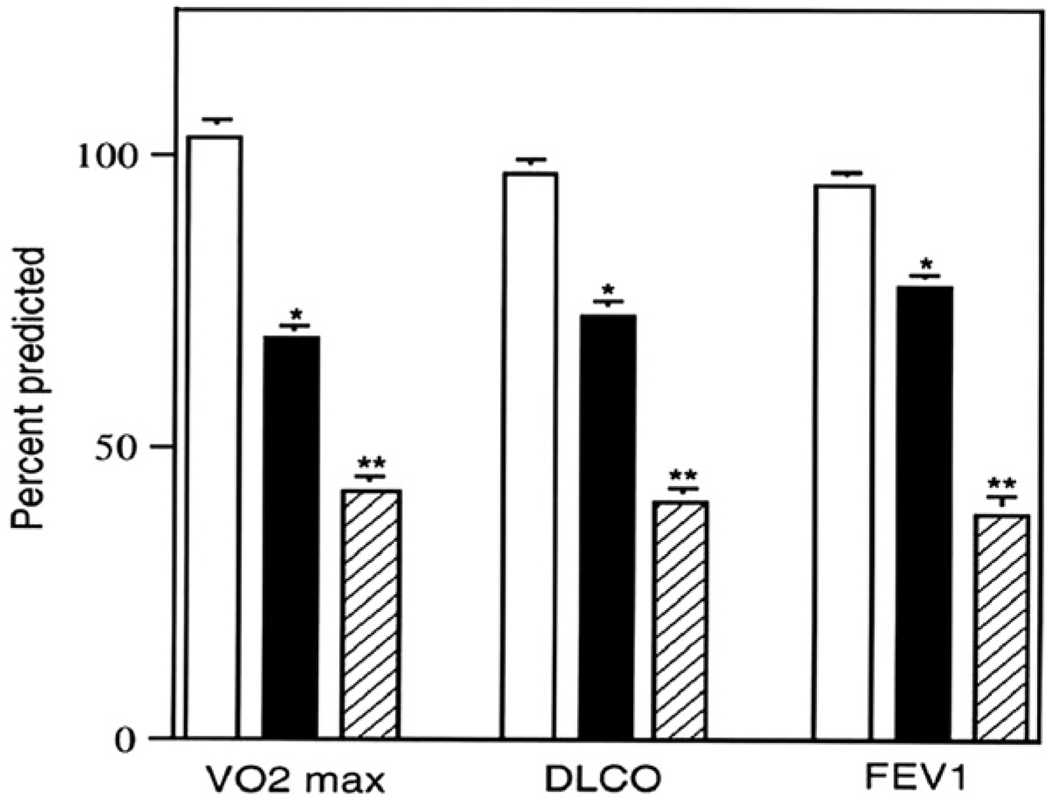
Relationship between VO2max, FEV1, and DLCO and CT grade of disease severity. Grade I, white bars; grade II, black bars; grade III, cross-hatched bars (From reference 33).
Figure 4
Figure 4
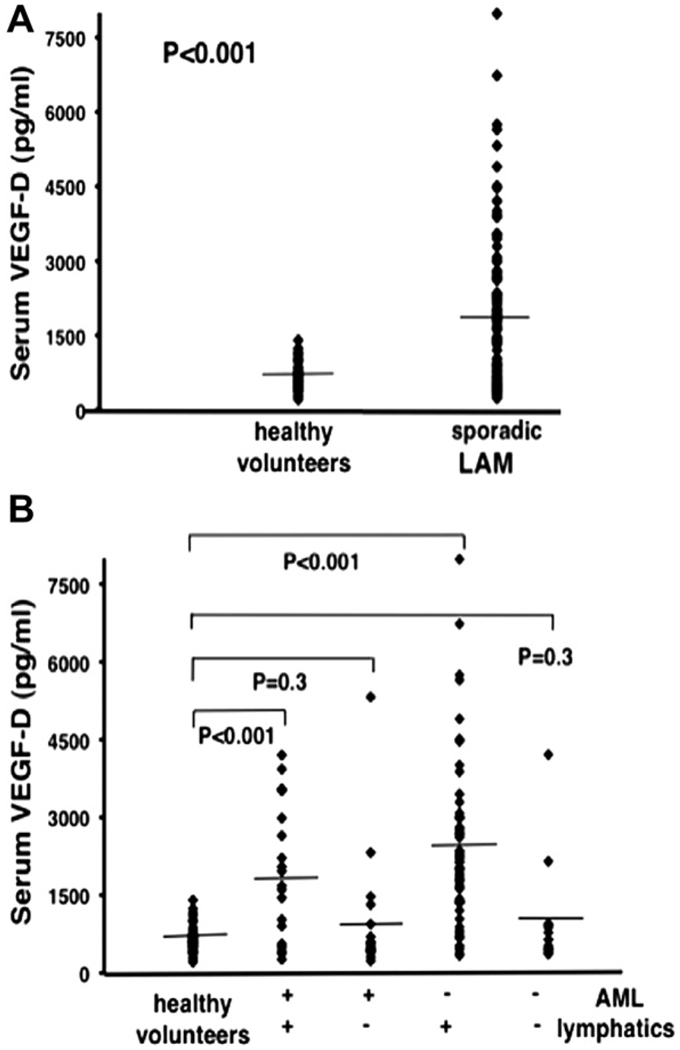
Serum Levels of VEGF-D in Lymphangioleiomyomatosis. In Panel A, serum VEGF-D levels in all patients with sporadic lymphangioleiomyomatosis (LAM) (n = 111) were compared to those of healthy volunteers (n = 40). Panel B shows patient samples compared on the basis of thoracic or abdominal lymphatic involvement (presence (n = 77) or absence (n = 34) of lymphangioleiomyomas and/or adenopathy) and the presence (n = 40) or absence (n = 71) of renal angiomyolipomas (AMLs). All groups were compared to healthy volunteers (n = 40). (+) = presence of, (−) = absence of. Each ♦ represents serum measurement of VEGF-D from one patient or healthy volunteer. Lines represent mean values (From reference 74).
Figure 5
Figure 5
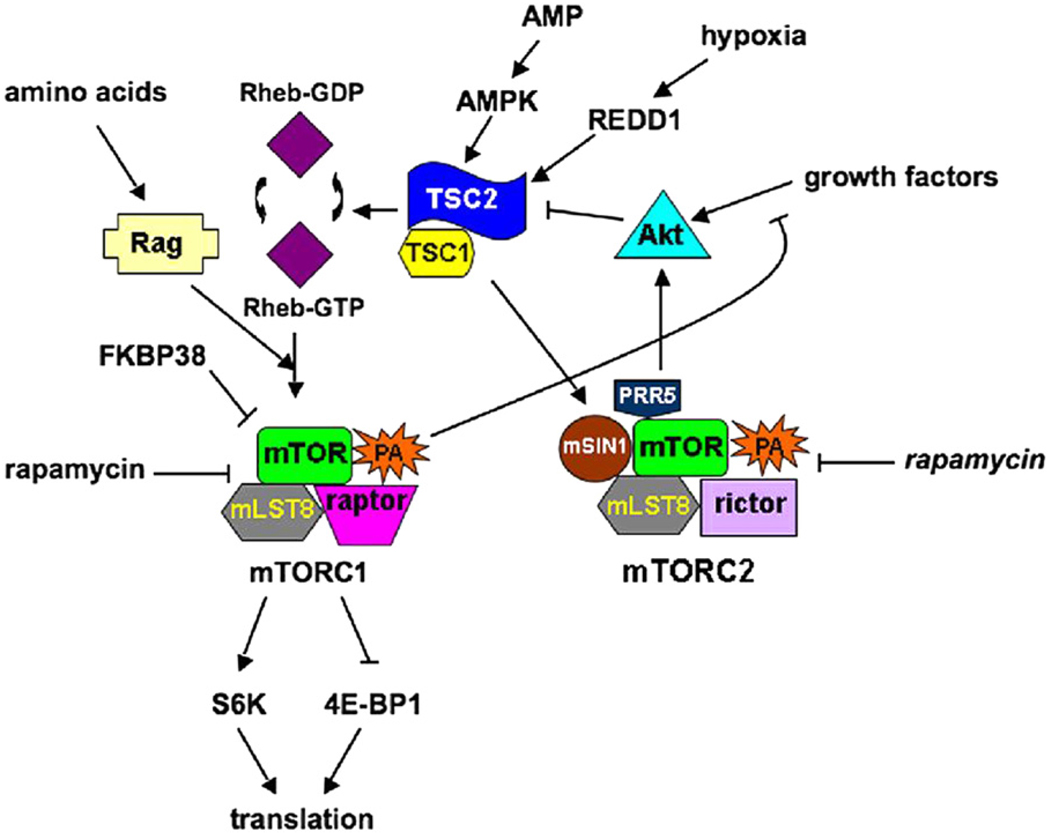
mTOR dependent pathways. Two different complexes contain mTOR: mTORC1, which is acutely sensitive to rapamycin, and mTORC2, which is inhibited by rapamycin (in italics) after prolonged exposure. Activation of mTORC1 leads to protein translation, and thereby cell growth and proliferation, while activation of mTORC2 results in the phosphorylation of Akt. Growth factors, hypoxia, and energy stress affect the status of the TSC1/2 complex, leading to inactivation of the tumor suppressor complex in the presence of growth factors and activation in the presence of stress. TSC1/2 inhibits mTORC1 through its Rheb-GAP activity: Rheb-GTP is necessary for the activation of mTORC1, preventing the interaction of MTOR with its endogenous inhibitor FKBP38. The presence of amino acids stimulates the localization of mTORC1 in Rheb-containing compartments through the actions of Rag-GTPases. mTORC1 is also involved in a negative feedback loop, which blocks growth factor-stimulated phosphorylation of Akt. TSC1/2 activates mTORC2, which then phosphorylates Akt.

References

    1. Kitaichi M, Nishimura K, Itoh H, Izumi T. Pulmonary lymphangioleiomyomatosis: a report of 46 patients including a clinicopathologic study of prognostic factors. Am J Respir Crit Care Med. 1995 Feb;151(2 Pt 1):527–533. - PubMed
    1. Chu SC, Horiba K, Usuki J, Avila NA, Chen CC, Travis WD, et al. Comprehensive evaluation of 35 patients with lymphangioleiomyomatosis. Chest. 1999 Apr;115(4):1041–1052. - PubMed
    1. Urban T, Lazor R, Lacronique J, Murris M, Labrune S, Valeyre D, et al. Pulmonary lymphangioleiomyomatosis. A study of 69 patients. Groupe d’Etudes et de Recherche sur les Maladies “Orphelines” Pulmonaires (GERM“O”P) Medicine (Baltimore) 1999 Sep;78(5):321–337. - PubMed
    1. Johnson SR, Tattersfield AE. Clinical experience of lymphangioleiomyomatosis in the UK. Thorax. 2000 Dec;55(12):1052–1057. - PMC - PubMed
    1. Ryu JH, Moss J, Beck GJ, Lee JC, Brown KK, Chapman JT, et al. The NHLBI lymphangioleiomyomatosis registry: characteristics of 230 patients at enrollment. Am J Respir Crit Care Med. 2006 Jan 1;173(1):105–111. - PMC - PubMed

Publication types

MeSH terms

Substances