


Idiopathic systemic capillary leak syndrome (Clarkson's disease): the Mayo clinic experience
- PMID: 20634497
- PMCID: PMC2947962
- DOI: 10.4065/mcp.2010.0159
Idiopathic systemic capillary leak syndrome (Clarkson's disease): the Mayo clinic experience
Abstract
Objective: To determine clinical features, natural history, and outcome of a well-defined cohort of 25 consecutive patients with idiopathic systemic capillary leak syndrome (SCLS) evaluated at a tertiary care center.
Patients and methods: Records of patients diagnosed as having SCLS from November 1, 1981, through April 30, 2008, were reviewed. Descriptive statistics were used to analyze patient demographics, clinical features, complications, and therapeutic interventions.
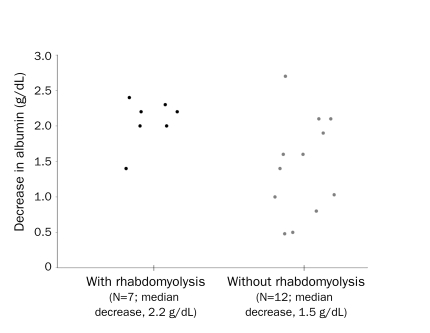
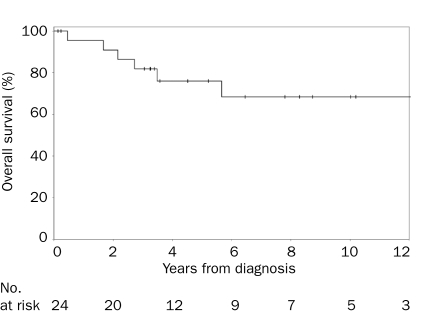
Results: Of the 34 patients whose records were reviewed, 25 fulfilled all diagnostic criteria for SCLS. The median age at diagnosis of SCLS was 44 years. Median follow-up of surviving patients was 4.9 years, and median time to diagnosis from symptom onset was 1.1 years (interquartile range, 0.5-4.1 years). Flulike illness or myalgia was reported by 14 patients (56%) at onset of an acute attack of SCLS, and rhabdomyolysis developed in 9 patients (36%). Patients with a greater decrease in albumin level had a higher likelihood of developing rhabdomyolysis (p=.03). Monoclonal gammopathy, predominantly of the IgG-κ type, was found in 19 patients (76%). The progression rate to multiple myeloma was 0.7% per person-year of follow-up. The overall response rate to the different therapies was 76%, and 24% of patients sustained durable (>2 years) complete remission. The estimated 5-year overall survival rate was 76% (95% confidence interval, 59%-97%).
Conclusion: Systemic capillary leak syndrome, a rare disease that occurs in those of middle age, is usually diagnosed after a considerable delay from onset of symptoms. The degree of albumin decrement during an attack correlates with development of rhabdomyolysis. A reduction in the frequency and/or the severity of attacks was seen in nearly three-fourths of patients who were offered empirical therapies. The rate of progression to multiple myeloma appears to be comparable to that of monoclonal gammopathy of undetermined significance.
Figures
References
-
- Takabatake T. Systemic capillary leak syndrome. Intern Med. 2002;41(11):909-910 - PubMed
-
- Vigneau C, Haymann JP, Khoury N, Sraer JD, Rondeau E. An unusual evolution of the systemic capillary leak syndrome. Nephrol Dial Transplant. 2002;17(3):492-494 - PubMed
-
- Dhir V, Arya V, Malav IC, Suryanarayanan BS, Gupta R, Dey AB. Idiopathic systemic capillary leak syndrome (SCLS): case report and systematic review of cases reported in the last 16 years. Intern Med. 2007;46(12):899-904 - PubMed
-
- Bonadies N, Baud P, Peter HJ, Buergi U, Mueller BU. A case report of Clarkson's disease: if you don't know it, you'll miss it. Eur J Intern Med. 2006;17(5):363-365 - PubMed
-
- Chihara R, Nakamoto H, Arima H, et al. Systemic capillary leak syndrome. Intern Med. 2002;41(11):953-956 - PubMed
Publication types
MeSH terms
Substances
LinkOut - more resources
Full Text Sources
Miscellaneous
