. 2010 Aug 10;20(15):1336-44.
doi: 10.1016/j.cub.2010.06.068. Epub 2010 Jul 15.

The hippocampus plays a selective role in the retrieval of detailed contextual memories

Affiliations

The hippocampus plays a selective role in the retrieval of detailed contextual memories

Brian J Wiltgen et al. Curr Biol. .

Abstract

Background: It is widely believed that the hippocampus plays a temporary role in the retrieval of episodic and contextual memories. Initial research indicated that damage to this structure produced amnesia for newly acquired memories but did not affect those formed in the distant past. A number of recent studies, however, have found that the hippocampus is required for the retrieval of episodic and contextual memories regardless of their age. These findings are currently the subject of intense debate, and a satisfying resolution has yet to be identified.

Results: The current experiments address this issue by demonstrating that detailed memories require the hippocampus, whereas memories that lose precision become independent of this structure. First, we show that the dorsal hippocampus is preferentially activated by the retrieval of detailed contextual fear memories. We then establish that the hippocampus is necessary for the retrieval of detailed memories by using a context-generalization procedure. Mice that exhibit high levels of generalization to a novel environment show no memory loss when the hippocampus is subsequently inactivated. In contrast, mice that discriminate between contexts are significantly impaired by hippocampus inactivation.

Conclusions: Our data suggest that detailed contextual memories require the hippocampus, whereas memories that lose precision can be retrieved without this structure. These findings can account for discrepancies in the literature-memories of our distant past can be either lost or retained after hippocampus damage depending on their quality-and provide a new framework for understanding memory consolidation.


Figures

Figure 1
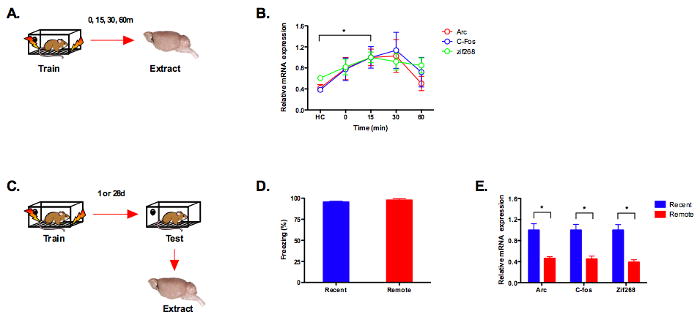
Figure 1. Immediate early gene expression is increased in the dorsal hippocampus following the retrieval of recent context fear memories
(a) Experimental design. (b) Immediate early gene expression (Arc, C-fos, Zif268) (n = 4 per group) was significantly increased 15 minutes after training relative to homecage controls (p < .05). (c) Experimental design. (d) Freezing levels during 1d (recent, n =4) and 28d (remote, n = 4) context fear tests were equivalent (p > .05). (e) Immediate early gene expression (Arc, c-fos, zif268) was reduced in the dorsal hippocampus during the retrieval of remote memory (p < .05). Note: mRNA expression is shown relative to the recent memory test.
Figure 2
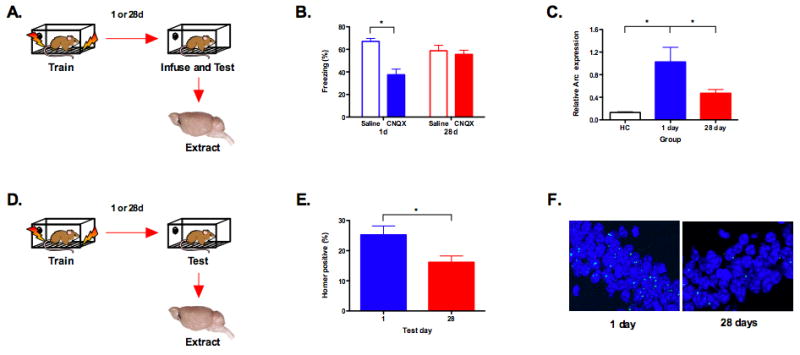
Figure 2. The retrieval of remote context fear memories does not require the dorsal hippocampus
(a) Experimental design. (b) Inactivation of the dorsal hippocampus with CNQX impaired memory retrieval at day 1 (saline, n = 16, CNQX, n = 16) but not day 28 (saline, n = 20, CNQX, n = 20) (p < .05). (c) Arc expression in the saline animals increased during the day 1 test compared to homecage controls (HC) (n =3) (p < .05) and decreased during the day 28 test (p < .05). Note: mRNA expression is shown relative to the 1 day test. (d) Experimental design. (e) Fewer cells expressed Homer 1A in the CA1 region of the hippocampus during the day 28 test (n = 4) compared to the day 1 test (n = 4) (p < .05). (f) Representative samples of Homer1A expression following retrieval at 1 day and 28 days.
Figure 3
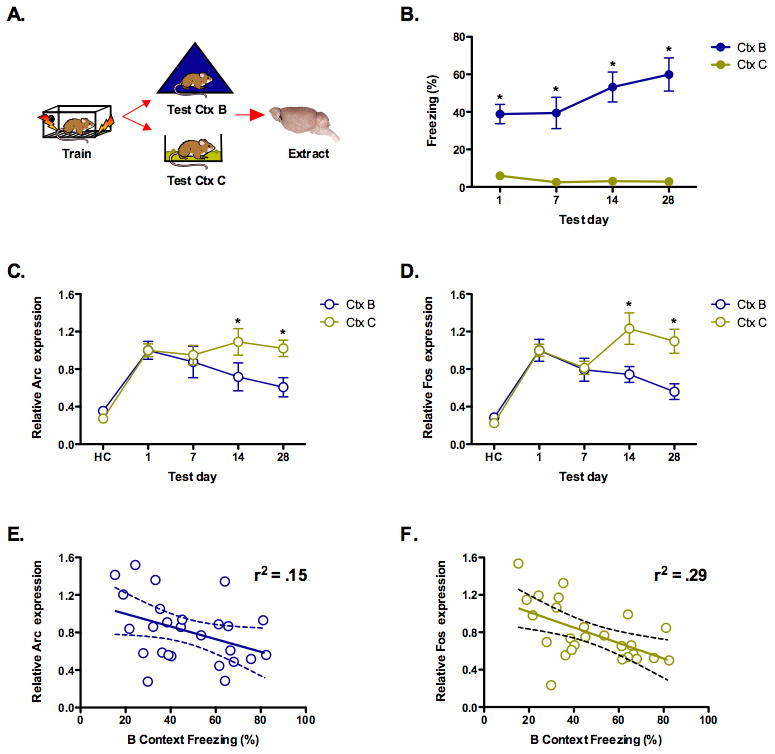
Figure 3. The dorsal hippocampus is less activated during the retrieval of generalized context fear memories
(a) Experimental design. (b) Mice showed more generalized fear to a context that was similar to the training environment (context B) than a distinct context (context C) (p < .05). Fear generalization to the similar environment increased over time (days 1, 7, 14, and 28, n = 8, 6, 6, 6) (p < .05) whereas fear of the distinct context did not (n = 8, 8, 8, 7) (p > .05). (c) Arc activation in the dorsal hippocampus decreased as generalization to context B increased (p < .05). Activation in context C did not change over time (p > .05). (d) C-fos activation in the dorsal hippocampus decreased as generalization to context B increased (p < .05). Activation in context C did not change (p > .05). (e) Linear regression analysis found a significant relationship between freezing in context B and Arc expression in dorsal hippocampus (p < .05). (f) Linear regression analysis found a significant relationship between freezing in context B and dorsal hippocampal c-Fos expression (p < .05). Note: mRNA expression is shown relative to the 1-day test.
Figure 4
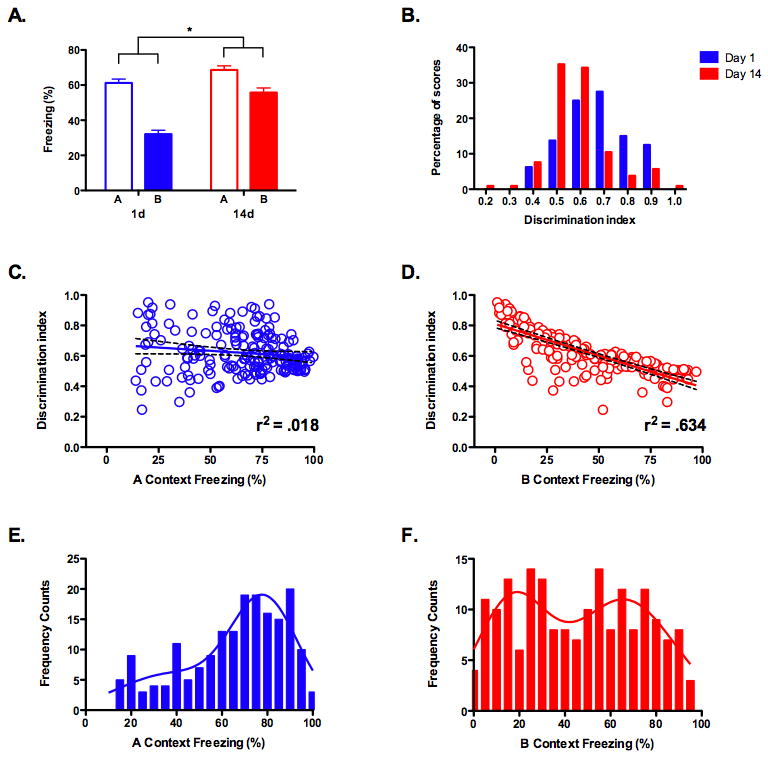
Figure 4. Fear generalization is an excellent predictor of context discrimination
(a) A large group of mice were tested in context A and B, 1 day (n = 80) or 14 days (n = 105) after training. Discrimination was significantly better at day 1 compared to day 14 (p < .05). (b) Frequency distributions of the discrimination index (A/A + B) for mice tested at day 1 or day 14. The mean discrimination index was significantly lower at day 1 compared to day 14 (p < .05). (c) Linear regression analysis found no relationship between freezing in context A and the discrimination index (p > .05). (d) Linear regression analysis found a significant relationship between freezing in context B and the discrimination index (p < .05). (e) Non-linear regression analysis of freezing scores in context A found a single distribution with a mean of 77.72. (f) Non-linear regression analysis of freezing scores in context B found a bimodal distribution with means of 16.7 and 66.1, respectively. The intersection of these two distributions occurred at a freezing value of 42.
Figure 5
Figure 5. The hippocampus is required for the retrieval of detailed but not generalized context memories
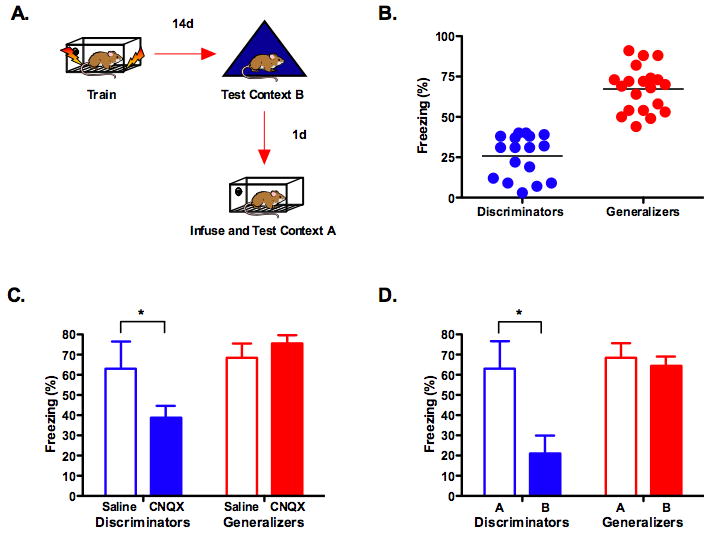
(a) Experimental design. (b) Fourteen days after training mice were tested in context B. Following this test, animals were divided into two groups: discriminators and generalizers. (c) Inactivation of the dorsal hippocampus with CNQX impaired memory retrieval in the discriminators (saline n =4, CNQX n = 13) (p < .05) but had no effect in the generalizers (saline n =10, CNQX n = 10) (p > .05). (d) An analyses of freezing scores in mice that received saline confirmed that discriminators were able to distinguish between context A and context B (p < .05) while generalizers could not (p >.05).
Figure 6
Figure 6. Generalization predicts which mice will be affected by hippocampus inactivation
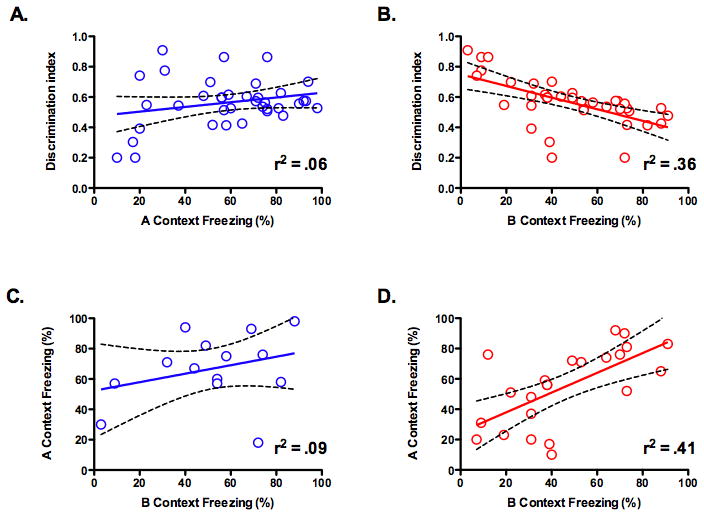
(a) Linear regression analysis found no relationship between freezing in context A and the discrimination index (p > .05). (b) Linear regression analysis found a significant relationship between freezing in context B and the discrimination index (p < .05). (c) Linear regression analysis found no relationship between freezing in context B and freezing in context A for mice that received saline infusions (p > .05). (d) Linear regression analysis found a significant relationship between freezing in context B and freezing in context A for mice that received CNQX infusions (p > .05).

References

    1. Squire LR, Stark CE, Clark RE. The medial temporal lobe. Annu Rev Neurosci. 2004;27:279–306. - PubMed
    1. Moscovitch M, Nadel L, Winocur G, Gilboa A, Rosenbaum RS. The cognitive neuroscience of remote episodic, semantic and spatial memory. Curr Opin Neurobiol. 2006;16:179–190. - PubMed
    1. Anagnostaras SG, Maren S, Fanselow MS. Temporally graded retrograde amnesia of contextual fear after hippocampal damage in rats: within-subjects examination. J Neurosci. 1999;19:1106–1114. - PMC - PubMed
    1. Frankland PW, Bontempi B. The organization of recent and remote memories. Nat Rev Neurosci. 2005;6:119–130. - PubMed
    1. Wiltgen BJ, Sanders MJ, Anagnostaras SG, Sage JR, Fanselow MS. Context fear learning in the absence of the hippocampus. J Neurosci. 2006;26:5484–5491. - PMC - PubMed

Publication types