


Role of caspase-1 and interleukin-1beta in acetaminophen-induced hepatic inflammation and liver injury
- PMID: 20637792
- PMCID: PMC2929281
- DOI: 10.1016/j.taap.2010.07.004
Role of caspase-1 and interleukin-1beta in acetaminophen-induced hepatic inflammation and liver injury
Abstract
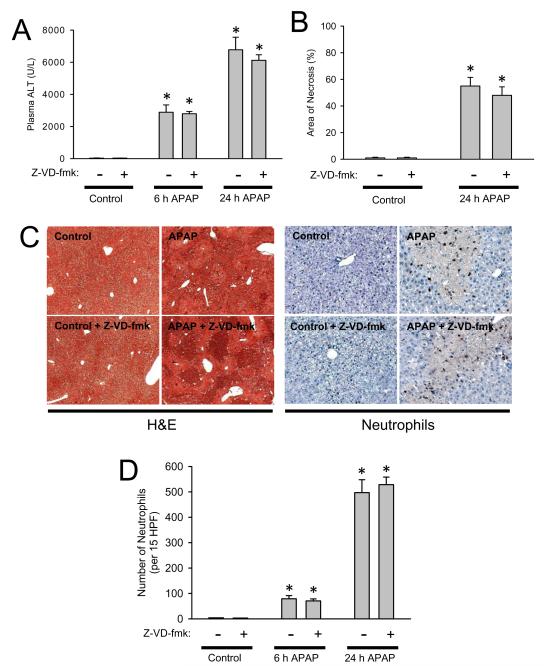
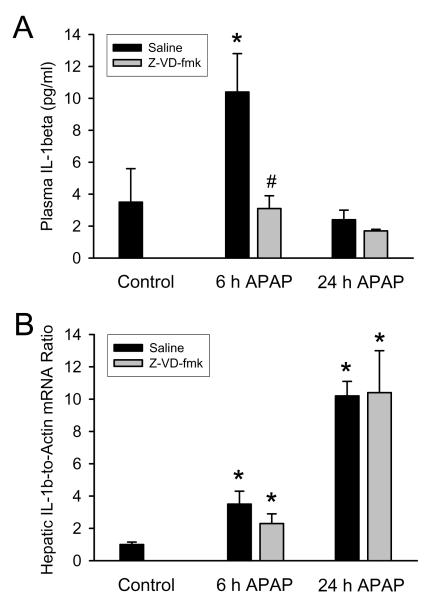
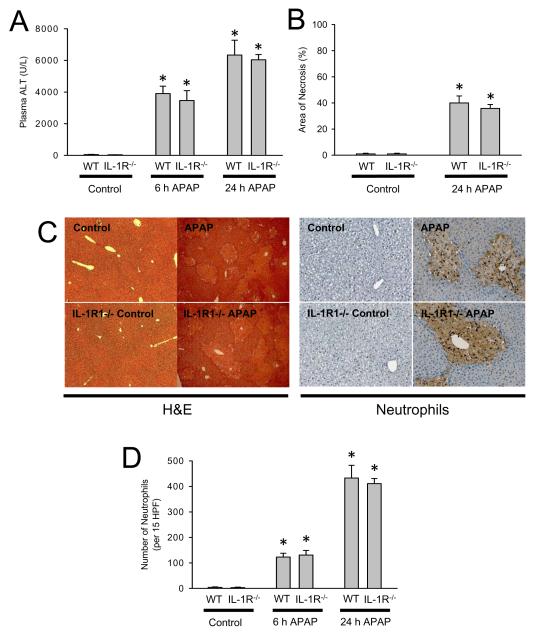
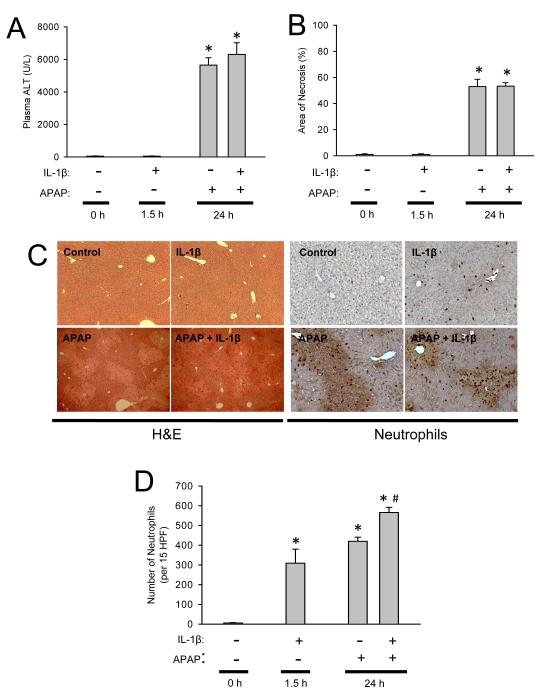
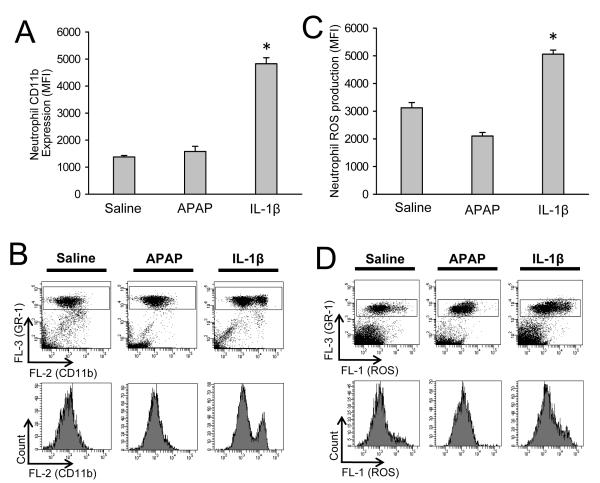
Acetaminophen (APAP) overdose can result in serious liver injury and potentially death. Toxicity is dependent on metabolism of APAP to a reactive metabolite initiating a cascade of intracellular events resulting in hepatocellular necrosis. This early injury triggers a sterile inflammatory response with formation of cytokines and innate immune cell infiltration in the liver. Recently, IL-1beta signaling has been implicated in the potentiation of APAP-induced liver injury. To test if IL-1beta formation through caspase-1 is critical for the pathophysiology, C57Bl/6 mice were treated with the pan-caspase inhibitor Z-VD-fmk to block the inflammasome-mediated maturation of IL-1beta during APAP overdose (300 mg/kg APAP). This intervention did not affect IL-1beta gene transcription but prevented the increase in IL-1beta plasma levels. However, APAP-induced liver injury and neutrophil infiltration were not affected. Similarly, liver injury and the hepatic neutrophilic inflammation were not attenuated in IL-1-receptor-1 deficient mice compared to wild-type animals. To evaluate the potential of IL-1beta to increase injury, mice were given pharmacological doses of IL-1beta after APAP overdose. Despite increased systemic activation of neutrophils and recruitment into the liver, there was no alteration in injury. We conclude that endogenous IL-1beta formation after APAP overdose is insufficient to activate and recruit neutrophils into the liver or cause liver injury. Even high pharmacological doses of IL-1beta, which induce hepatic neutrophil accumulation and activation, do not enhance APAP-induced liver injury. Thus, IL-1 signaling is irrelevant for APAP hepatotoxicity. The inflammatory cascade is a less important therapeutic target than intracellular signaling pathways to attenuate APAP-induced liver injury.
2010 Elsevier Inc. All rights reserved.
Figures
References
-
- Bajt ML, Farhood A, Jaeschke H. Effects of CXC chemokines on neutrophil activation and sequestration in hepatic vasculature. Am. J. Physiol. Gastrointest. Liver Physiol. 2001;281:G1188–G1195. - PubMed
-
- Blazka ME, Elwell MR, Holladay SD, Wilson RE, Luster MI. Histopathology of acetaminophen-induced liver changes: role of interleukin 1 alpha and tumor necrosis factor alpha. Toxicol. Pathol. 1996;24:181–189. - PubMed
-
- Blazka ME, Wilmer JL, Holladay SD, Wilson RE, Luster MI. Role of proinflammatory cytokines in acetaminophen hepatotoxicity. Toxicol. Appl. Pharmacol. 1995;133:43–52. - PubMed
-
- Boess F, Bopst M, Althaus R, Polsky S, Cohen SD, Eugster HP, Boelsterli UA. Acetaminophen hepatotoxicity in tumor necrosis factor/lymphotoxin-alpha gene knockout mice. Hepatology. 1998;27:1021–1029. - PubMed
Publication types
MeSH terms
Substances
Grants and funding
LinkOut - more resources
Full Text Sources
Medical
