


Changes in perfusion-weighted magnetic resonance imaging after carotid angioplasty with stent
- PMID: 20642890
- PMCID: PMC3277971
- DOI: 10.1177/159101991001600207
Changes in perfusion-weighted magnetic resonance imaging after carotid angioplasty with stent
Abstract
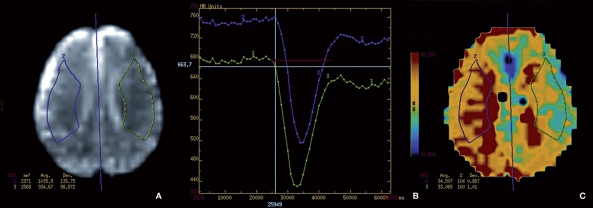
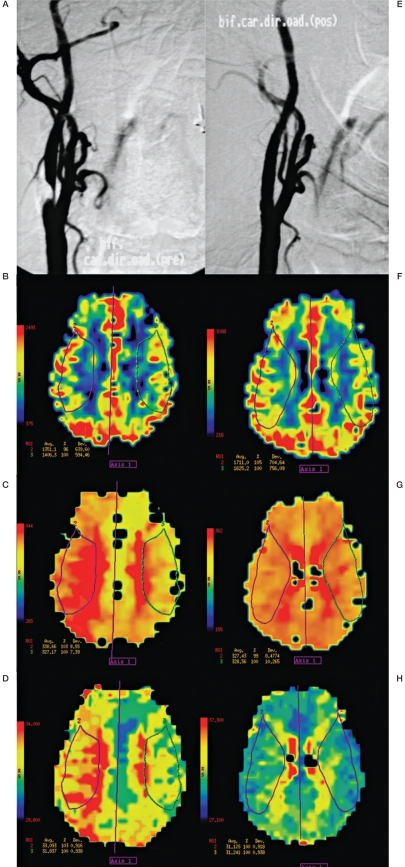
Carotid artery stenosis due to arteriosclerosis increases the risk of cerebral ischemia via embolic phenomena or reduced blood flow. The changes in cerebral perfusion that may occur after treatment are not clearly understood. This study evaluated the changes in cerebral microcirculation following carotid angioplasty with stenting (CAS) under cerebral protection with filters using ultrafast gradient echo (GRE) perfusion weighted imaging (PWI) with magnetic resonance imaging (MRI). Prospectively, 21 cervical carotid stenosis patients, mean age 69.95 years, underwent MRI 12 h before and 72 h after CAS. PWI parameters were collected for statistical analysis: cerebral blood volume (CBV), mean transit time (MTT) and time to peak (TTP). Statistical analysis was applied to absolute parameters and to values normalized against those from the contralateral parenchyma. The main finding of this study was improved hemodynamics for the normalized data after CAS, shown by reduced MTT (p<0.001) and TTP (p=0.019) in the territory fed by the middle cerebral artery ipsilateral to the CAS. Absolute data showed increased blood volume in the cerebral hemispheres after CAS, which was more accentuated on the stent side (p=0.016) than the contralateral side (p=0.029). Early improvements in cerebral perfusion, mainly seen in the normalized data, were clearly demonstrated in the timing parameters - TTP & MTT - after CAS.
Figures
References
-
- Kluytmans M, van der Grond J, Eikelboom BC, et al. Long-term hemodynamic effects of carotid endarterectomy. Stroke. 1998;29:1567–1572. - PubMed
-
- Waaijer A, Leeuwen MS van, Osch MJP van, et al. Changes in cerebral perfusion after revascularization of symptomatic carotid artery stenosis: CT measurement. Radiology. 2007;245(2):541–548. - PubMed
-
- Mohr JP, Albers GW, Amarenco P, et al. Etiology of stroke. Stroke. 1997;28:1501–1506. - PubMed
MeSH terms
LinkOut - more resources
Full Text Sources
Other Literature Sources
Medical
